California lemon law claims generally have a 4-year filing period, but that is not the deadline for every case in 2026. Qualifying claims against manufacturers participating in California’s special statutory procedure face a deadline of 1 year after the applicable express warranty expires, with a 6-year outside limit from original delivery, subject to statutory tolling. Your deadline depends on the governing procedure, when your claim accrued, and whether a legally recognized pause applies.
- How long do I have to file a lemon law claim in California? Identify the applicable deadline before calculating.
- California’s general four-year limitation is not a universal four-year clock from purchase or your last repair.
- Participating-manufacturer claims face special one-year and six-year limits, subject to statutory tolling.
- Khachikyanlawfirm provides lemon law representation in Glendale, California; request a review before relying on a deadline.
Why this matters
A repair appointment, customer-service complaint, or buyback request is not the same as filing a lawsuit. You need to identify the court-filing deadline separately from the manufacturer’s internal review process.
Start with your purchase or lease agreement, warranty booklet, and complete repair history. This guide to documents for a California lemon law claim explains what to organize before a legal review. Keep the dates attached to each document; a stack of repair invoices without a timeline makes deadline analysis harder.
How long do I have to file a lemon law claim in California?
For a 2026 filing, the first question is which legal procedure governs your manufacturer and claim. California Commercial Code section 2725 supplies the general four-year limitations framework used for Song-Beverly warranty claims. California Code of Civil Procedure sections 871.20 and following establish a separate procedure for qualifying claims involving participating manufacturers.
| Filing framework | Time limit | What you must establish | Main caution |
|---|---|---|---|
| General Song-Beverly warranty framework | Generally 4 years | When the particular claim accrued and whether a discovery rule or tolling applies | Do not automatically count from purchase, warranty expiration, or the last repair |
| Special participating-manufacturer procedure | 1 year after the applicable express warranty expires, with a 6-year outside limit from original delivery | Whether the manufacturer and claim fall within that procedure, plus applicable statutory extensions | Do not assume the general four-year framework controls |
These are legal filing frameworks, not recommended waiting periods. Have the earliest plausible deadline reviewed now, even if the manufacturer is still discussing repairs or a repurchase.
What does filing a claim actually mean?
Reporting a defect to a dealership creates a repair record. Asking a manufacturer for a buyback starts a request for relief. Filing a civil complaint starts a lawsuit.
Those actions serve different purposes. When someone tells you that your claim is already open, ask whether they mean a manufacturer case number, an arbitration matter, or a complaint filed in court.
General Song-Beverly claims: 4 years
California’s general warranty limitations framework provides a 4-year period, but determining when that period starts requires more than finding your purchase date. The legal theory, warranty language, and facts surrounding the manufacturer’s alleged failure matter.
For a failure-to-repurchase claim, the analysis concerns when the manufacturer failed to meet its legal obligation after a reasonable opportunity to repair. Other warranty theories can involve different accrual questions. Discovery principles also require legal analysis; they are not permission to choose the date you personally decided the vehicle was a lemon.
Your records should show:
- When you first reported the defect.
- What the dealership diagnosed and attempted to repair.
- Whether the same problem returned.
- When you learned that repair attempts had not resolved the problem.
- What the manufacturer communicated about further repairs or relief.
Do not restart the clock yourself after each repair visit. A later invoice can strengthen the evidence without creating a new filing period for an existing claim.
Participating-manufacturer claims: 1 year, with a 6-year limit
California’s special procedure uses a different framework: filing within 1 year after expiration of the applicable express warranty, with an outside limit of 6 years after original delivery, subject to the statute’s tolling provisions. The outside limit makes the original delivery date important even when your ownership began later.
For a 2026 claim, confirm whether the manufacturer elected to participate and whether that election covers the claim. Manufacturer participation is a legal applicability question, not something established by a dealership employee’s description of its buyback process.
The applicable warranty also needs review. Do not assume a service contract, dealer protection plan, or every separate warranty extends the filing deadline in the same way.
This procedure includes additional rules addressing notice, manufacturer response, and litigation. Ask counsel to identify which requirements apply to the relief you seek, including any request for civil penalties. Meeting a filing deadline does not replace compliance with other applicable requirements.
Why your California lemon law deadline varies
The deadline changes because the governing law and your vehicle’s timeline interact. These factors belong in the analysis:
- Manufacturer participation: The special statutory procedure does not automatically govern every manufacturer.
- Claim type: A failure-to-repurchase claim, another warranty claim, and a dealer-fraud claim are not interchangeable.
- Warranty terms: Coverage dates and the applicable express warranty matter, particularly under the special procedure.
- Original delivery: A later resale does not necessarily reset a deadline measured from original delivery.
- Accrual facts: Repair failures and the manufacturer’s conduct help establish when a particular claim arose.
- Recognized tolling: A statutory extension or another valid tolling basis requires facts supporting its application.
A deadline calculator that asks only for your purchase date leaves out these distinctions. Use your documents to build the timeline, then have the legal starting point and any extensions checked.
How do I work out which deadline applies to my vehicle?
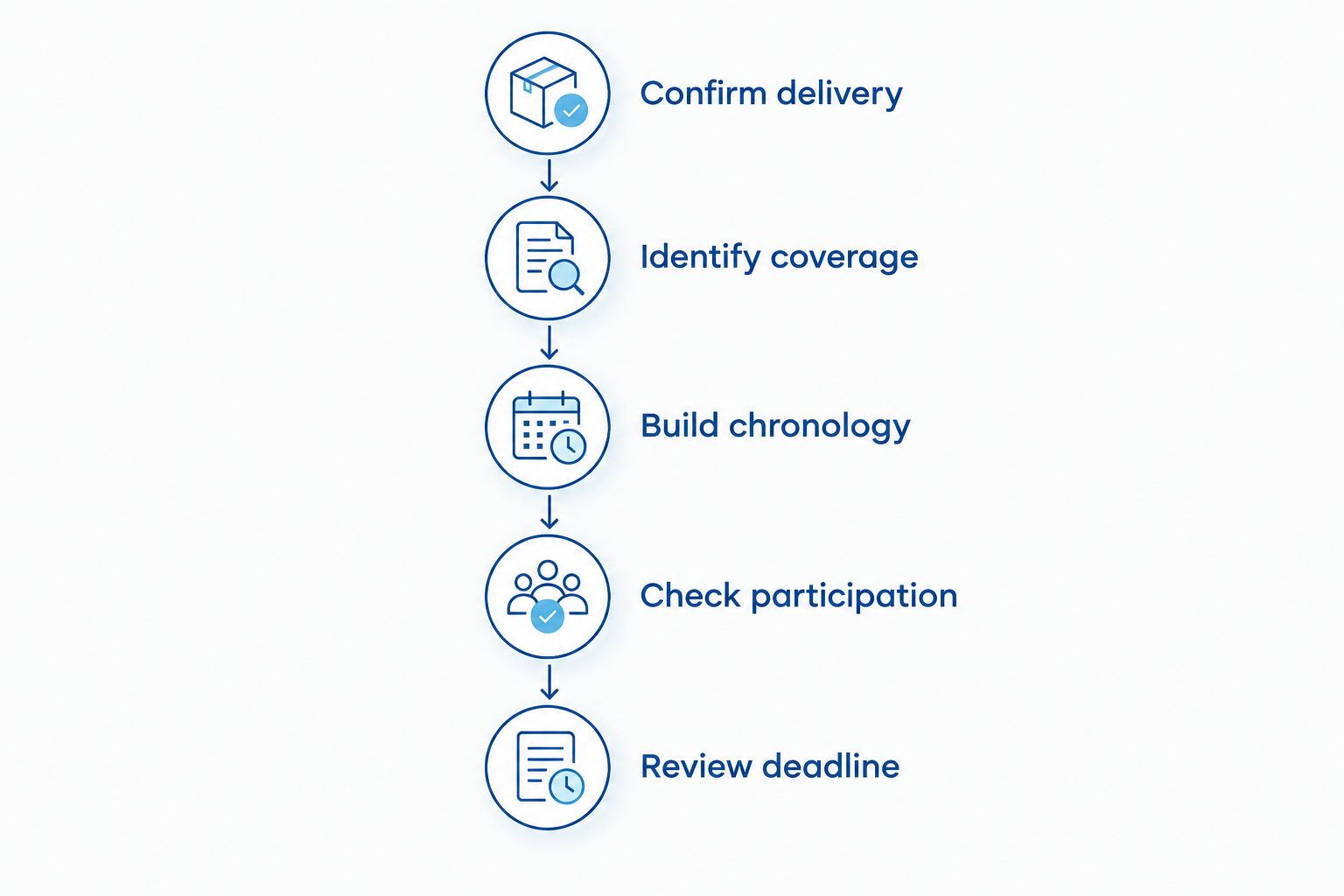
Use this sequence to prepare for a legal review. It organizes the evidence; it does not replace a determination of the filing deadline.
- Confirm delivery. Find the original delivery date and your own purchase or lease date. Preserve both if they differ.
- Identify coverage. Collect the manufacturer’s warranty documents, coverage dates, and relevant mileage limits.
- Build chronology. List every defect report, repair visit, return of the vehicle, and recurring symptom in date order.
- Check participation. Have counsel determine whether the manufacturer’s election and the special procedure govern your claim.
- Review deadline. Ask for the accrual analysis, applicable outside limit, and support for any claimed tolling.
Keep originals and readable copies. If an invoice says the dealership could not duplicate the problem, preserve that invoice alongside your written description, photographs, or videos. Do not rewrite the dealership’s record; provide separate documentation explaining what you experienced.
For a deadline review in 2026, also collect any manufacturer notices, arbitration paperwork, settlement correspondence, and documents showing when the vehicle was unavailable for repair. These records help counsel evaluate procedural requirements and potential extensions.
Can I file after my warranty expires?
Warranty expiration does not automatically eliminate an existing lemon law claim. The warranty-coverage question and the lawsuit-filing question are related but distinct.
You still need to establish a qualifying warranty obligation and the facts supporting the manufacturer’s alleged failure. A defect first presented outside the relevant coverage raises a different issue from an unresolved defect reported during coverage.
The guide to filing a lemon law claim after warranty expiration addresses that distinction. Do not treat the possibility of filing after expiration as a reason to delay reporting a problem or reviewing your deadline.
Does talking to the manufacturer stop the clock?
Ordinary negotiations do not automatically stop the filing clock. An open customer-service case, promised callback, or pending repair approval is not proof that your court deadline has been extended.
A statutory tolling provision, enforceable agreement, or another legally recognized basis requires separate analysis. Preserve written communications and ask exactly which rule supports any proposed extension.
The same caution applies to arbitration. Before relying on an arbitration filing to preserve a court claim, have the program, governing law, and relevant dates reviewed. Participation in one process does not justify assuming every other deadline is protected.
When should I ask a lemon law attorney to review the dates?
Request a review before the earliest plausible deadline, not after the manufacturer finishes its internal process. Bring the complete record even if you are unsure whether the vehicle qualifies. Deadline screening and claim evaluation belong together.
Khachikyanlawfirm is a fit for drivers seeking lemon law representation in Glendale, California. Ask the firm to evaluate the applicable filing framework, repair history, and warranty documents rather than asking only whether California has a four-year rule.
Legal representation does not replace evidence. You still need to provide accurate dates, preserve correspondence, and disclose earlier complaints or arbitration proceedings so the deadline analysis accounts for the full history.
Request a lemon law deadline review
Have Khachikyanlawfirm review your warranty, repair history, and filing timeline.
FAQ
Do I always have four years to file a California lemon law lawsuit?
No. California generally uses a four-year warranty limitations framework, but qualifying claims involving participating manufacturers face a separate one-year deadline tied to warranty expiration and a six-year outside limit from original delivery, subject to statutory tolling. Identify the governing procedure before calculating.
Does California’s lemon law deadline start when I buy the car?
Not automatically. Under the general framework, accrual depends on the particular claim and applicable legal rules; under the special procedure, warranty expiration and original delivery supply specific reference points.
Does another repair appointment restart my lemon law deadline?
Another repair appointment does not automatically restart your filing deadline. Preserve the new repair order, but have counsel determine its effect on accrual or any applicable tolling.
Can I still bring a lemon law claim if my warranty has expired?
Warranty expiration does not automatically bar an existing lemon law claim. Coverage, the timing of your repair reports, the governing procedure, and the filing deadline still require review.
Does a manufacturer buyback case number mean I filed a lawsuit?
No. A manufacturer case number identifies an internal matter, not a court-filed complaint. Confirm separately whether a lawsuit has been filed and which deadline applies.
Does buying a used car reset the six-year outside limit?
A later purchase does not reset an outside limit measured from original delivery. Used-vehicle eligibility and the applicable warranty obligations also require separate analysis.
What should I bring to a lemon law deadline review?
Bring your purchase or lease agreement, warranty documents, complete repair orders, and manufacturer communications. Khachikyanlawfirm provides lemon law representation in Glendale, California; include arbitration papers and any written deadline agreements in the records you provide.
One last thing
The most recent date in your repair file is not necessarily the date that controls your lawsuit. Original delivery, warranty expiration, claim accrual, and a documented tolling event can each matter for different reasons.
Before closing your 2026 deadline review, ask counsel to explain the governing procedure, the starting date, and the basis for every extension being counted. Keep that explanation with your records. Do not substitute an estimated buyback timeline for a court-filing deadline.
This article provides general California legal information, not legal advice about your vehicle or a determination of your filing deadline.


