Yes. In California, you can pursue a lemon law claim after your warranty expires if the claim concerns a covered defect presented for repair during the warranty period, the manufacturer failed to meet its obligations, and you meet the applicable filing deadline. Warranty expiration does not automatically erase an existing claim, but a problem first reported after coverage ends presents a different legal question.
- Can I file a lemon law claim after my warranty expires? Yes—qualifying California claims can survive warranty expiration.
- Warranty coverage and lawsuit filing deadlines are separate; check both before deciding your claim is too late.
- Repair orders should establish when you reported the defect, the mileage, and what happened afterward.
- Khachikyan Law Firm provides lemon law representation in Glendale, California.
Can I file a lemon law claim after my warranty expires?
An expired warranty is not, by itself, a reason to abandon a California lemon law claim. The central questions are whether the manufacturer had a warranty obligation, whether you gave it a reasonable opportunity to repair the covered problem, and whether your claim remains timely.
Start with your California lemon law claim documents. A dated repair order connects your complaint to the coverage period more clearly than a later recollection.
| Your situation | What supports a claim | Main limitation |
|---|---|---|
| You reported a covered defect during the warranty, and it remains unresolved afterward | Repair orders connecting the continuing problem to an in-warranty complaint | Warranty coverage alone does not establish every requirement for a claim |
| You noticed a symptom during coverage but first reported it after expiration | Contemporaneous records documenting the symptom | Noticing a problem is not the same as presenting the vehicle for warranty repair |
| A different defect first appeared after coverage ended | Another applicable warranty or legal basis | The expired warranty does not automatically cover a new problem |
| You bought a used vehicle with remaining manufacturer coverage | Purchase documents, warranty terms, and repair history | Remaining coverage does not automatically establish eligibility for every new-vehicle lemon law remedy |
Why this matters
You are dealing with separate questions: whether the defect was covered and whether you still have time to take legal action. A dealer's statement that the warranty has ended answers neither question completely.
For a California claim reviewed in 2026, the purchase date, repair history, manufacturer, and applicable procedural rules all deserve attention. Do not use the warranty expiration date as your personal lawsuit deadline. Waiting for another breakdown or another response from customer service can leave a timely claim exposed to a deadline dispute.
A covered defect reported before expiration
Your strongest starting point is a repair order showing that you presented the vehicle for a covered problem while the applicable warranty remained in force. The record should identify the complaint, mileage, date, and work performed.
California Civil Code section 1793.2 addresses a manufacturer's repair obligations and remedies when a qualifying vehicle cannot be brought into conformity with its express warranties after a reasonable number of attempts. That analysis does not end simply because the warranty expires while the same problem remains unresolved.
A repair visit is evidence, not an automatic buyback entitlement. You still need to establish the applicable warranty, the relevant defect, the repair opportunities, and the requirements for the remedy you seek.
Best next step: Put the first in-warranty complaint beside the latest repair order. Compare the symptoms and findings rather than relying only on whether the dealer used the same repair code.
A problem first reported after expiration
A defect first presented after the warranty ends requires a closer coverage review. Your belief that the problem started earlier does not, on its own, establish that the manufacturer failed to perform an in-warranty repair obligation.
Messages to the dealership, appointment confirmations, photographs, and dated service records can help establish the timeline. Preserve records showing that you requested service before expiration even if the appointment occurred later; the legal effect depends on the facts and warranty terms.
Do not describe every later failure as the same defect. Similar symptoms can have different causes, and different repair descriptions can concern one continuing problem. A factual chronology is more useful than a conclusion you cannot support.
A used vehicle with remaining warranty coverage
A used vehicle's remaining manufacturer warranty can matter, but it does not automatically give the buyer every remedy available to a qualifying new-vehicle purchaser. California distinguishes between enforcing a warranty and qualifying for particular replacement or restitution remedies.
For a used-car claim in 2026, identify who issued the warranty and what coverage accompanied your purchase. A manufacturer's warranty, a dealer warranty, and a service contract are not interchangeable.
The benefit of reviewing the actual documents is clarity about who owes which obligation. The limitation is that a document labeled as protection or coverage does not necessarily create a lemon law buyback claim.
Best next step: Bring the purchase agreement and every coverage document, not just the page showing an expiration date.
Why eligibility after warranty expiration varies
The same expired-warranty message can describe very different cases. These factors determine what needs further review:
- Applicable warranty: Identify the coverage for the particular component or defect, including its time and mileage limits.
- First repair presentation: Establish when you brought the covered problem to an authorized repair facility or otherwise gave the manufacturer the required repair opportunity.
- Continuing defect: Connect later complaints to the earlier problem through symptoms, diagnoses, and repair findings.
- Repair opportunities: Review the number and nature of attempts, the seriousness of the defect, and time out of service.
- Vehicle and purchase status: Distinguish a new purchase, lease, and used purchase instead of assuming the same remedy applies to all.
- Filing and procedural rules: Check the governing deadline, any required notices, and any applicable arbitration provisions before taking action.
No single repair invoice answers all of these questions. Together, the documents show whether you have an unresolved covered problem, a different post-warranty failure, or another type of warranty dispute.
How to check your claim before more time passes
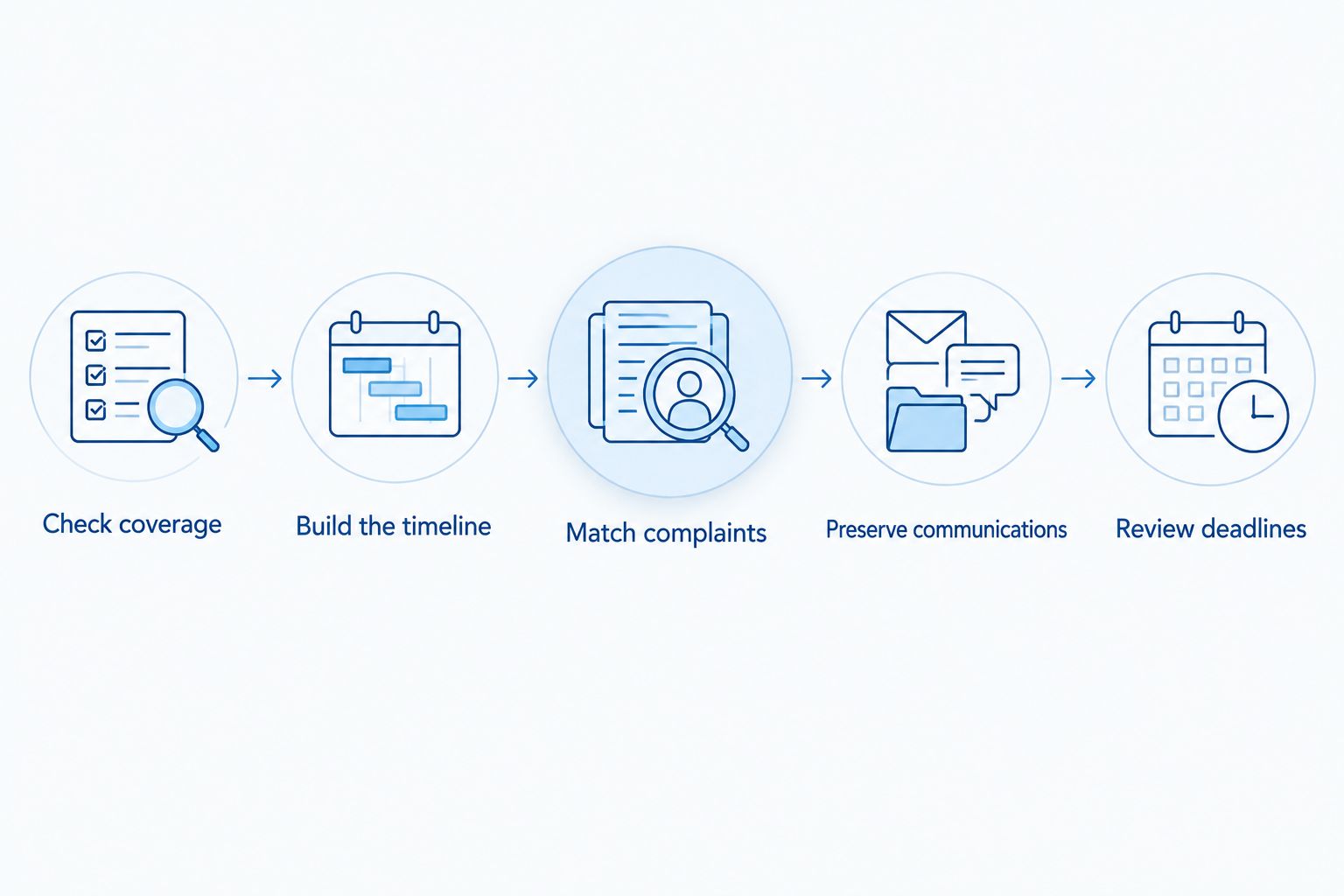
Use this sequence to organize the facts. It gives an attorney a usable timeline without asking you to diagnose the vehicle yourself.
- Check coverage. Locate the warranty booklet and purchase or lease agreement. Record the relevant coverage terms rather than assuming every component has the same warranty.
- Build the timeline. List each complaint, repair visit, mileage reading, and period when the vehicle was unavailable. Keep the original documents.
- Match complaints. Compare what you reported with what the technician recorded. Flag recurring symptoms and differences without rewriting the records.
- Preserve communications. Save emails, messages, appointment requests, and manufacturer case correspondence. Keep copies outside any account you might lose access to.
- Review deadlines. Have the applicable filing and notice rules checked promptly. Do not assume ongoing discussions pause a legal deadline.
Keep your description factual: what happened, when it happened, and what the repair facility did. If a repair order omits your main complaint, ask the facility to document the issue accurately and retain your written request.
Khachikyan Law Firm is a fit for Glendale drivers seeking California lemon law representation. Bring the warranty and repair chronology to a Khachikyan Law Firm claim discussion; those records help frame the coverage and timing questions. Representation cannot replace missing evidence or guarantee a particular result.
Discuss your warranty claim
Ask about your repair history, expired warranty, and applicable filing deadlines.
Does the lemon law presumption end when my warranty ends?
California's lemon law presumption and your warranty expiration are different issues. Under California Civil Code section 1793.22, the new-motor-vehicle presumption examines qualifying events within 18 months after delivery or 18,000 miles, whichever occurs first, subject to the statute's conditions.
One statutory route concerns a vehicle out of service for repair of nonconformities for more than 30 calendar days cumulatively, with applicable qualifications. Other routes concern repair attempts, and manufacturer notification requirements can also matter.
These are presumption rules, not a universal warranty term or lawsuit deadline. Missing the presumption does not automatically defeat a claim; it means you cannot assume that particular evidentiary shortcut applies.
For a 2026 claim review, use the statute's conditions rather than an online rule saying every vehicle qualifies after a fixed number of visits. A reasonable number of repair attempts remains a fact-specific question outside the presumption.
Should I keep taking the car back after the warranty expires?
Keep documenting an unresolved problem, but do not treat more repair visits as a substitute for checking your rights. Whether another visit is useful depends on the vehicle's condition, the existing repair opportunities, and the claim's procedural posture.
Describe the continuing symptom accurately when requesting service. Ask the facility to record whether it considers the complaint related to an earlier visit, but do not assume that a repair appointment extends the warranty or the filing deadline.
If the vehicle has a safety-related problem, prioritize safe transportation. Do not continue driving merely to accumulate mileage, reproduce a dangerous failure, or build a stronger-looking repair history.
FAQ
Can I file a lemon law claim after my warranty expires in California?
Yes, a qualifying California lemon law claim can survive warranty expiration. The covered defect, repair opportunities, vehicle status, and applicable filing deadline still need review.
What if I reported the problem before the warranty expired but the dealer repaired it afterward?
Preserve the original complaint and appointment records because they help establish when you requested warranty service. The warranty terms and facts determine the effect of a repair performed after expiration.
Does warranty expiration start the deadline to sue?
Do not assume warranty expiration starts your lawsuit deadline. California's applicable filing rules depend on the claim and governing statutory framework, so have the deadline checked separately.
Do I need to qualify within 18 months or 18,000 miles?
The 18 months or 18,000 miles window concerns California's statutory new-vehicle lemon law presumption, not every possible claim. Failing to meet that presumption does not automatically eliminate an otherwise valid claim.
Can I claim lemon law protection if I bought the car used?
A used-car purchase requires a separate warranty and remedy analysis. Remaining manufacturer coverage does not automatically establish eligibility for California's new-vehicle replacement or restitution remedy.
Does an extended service contract extend my lemon law rights?
A service contract does not automatically extend a manufacturer's express warranty or a lawsuit deadline. Review who issued the contract, what it promises, and which legal obligations apply.
What should I bring to a lemon law attorney after my warranty expires?
Bring your purchase or lease agreement, warranty documents, repair orders, and manufacturer communications. Khachikyan Law Firm provides California lemon law representation; a dated chronology helps identify the coverage and timing issues.
One last thing
A repair order marked unable to duplicate is still part of your evidence. It records that you presented a complaint even when the technician did not reproduce the symptom; it does not, by itself, prove either a qualifying defect or a successful repair.
For a claim reviewed in 2026, keep those unsuccessful visits alongside completed repairs. A clean timeline that includes inconvenient facts is more useful than a folder containing only the strongest-looking invoices.
This article provides general California legal information, not advice about your individual claim. Have your documents and deadlines reviewed before deciding that warranty expiration ends your options.