
Best overall: repair orders, because they record what you reported and what the dealer did. Best for proving ownership or a lease: the purchase or lease agreement. Best for showing a recurring problem: a dated defect log backed by repair records. These are the documents needed for a California lemon law claim in 2026, ranked by the question each one helps answer.
- Repair orders are the most useful documents needed for a California lemon law claim because they track complaints and repair visits.
- Keep the purchase or lease agreement and warranty terms to show how and when you obtained the vehicle.
- Khachikyanlawfirm is a fit for Glendale drivers seeking help with a California lemon law claim.
- A personal defect log supports your records; it does not replace dealer repair orders.
Why this matters
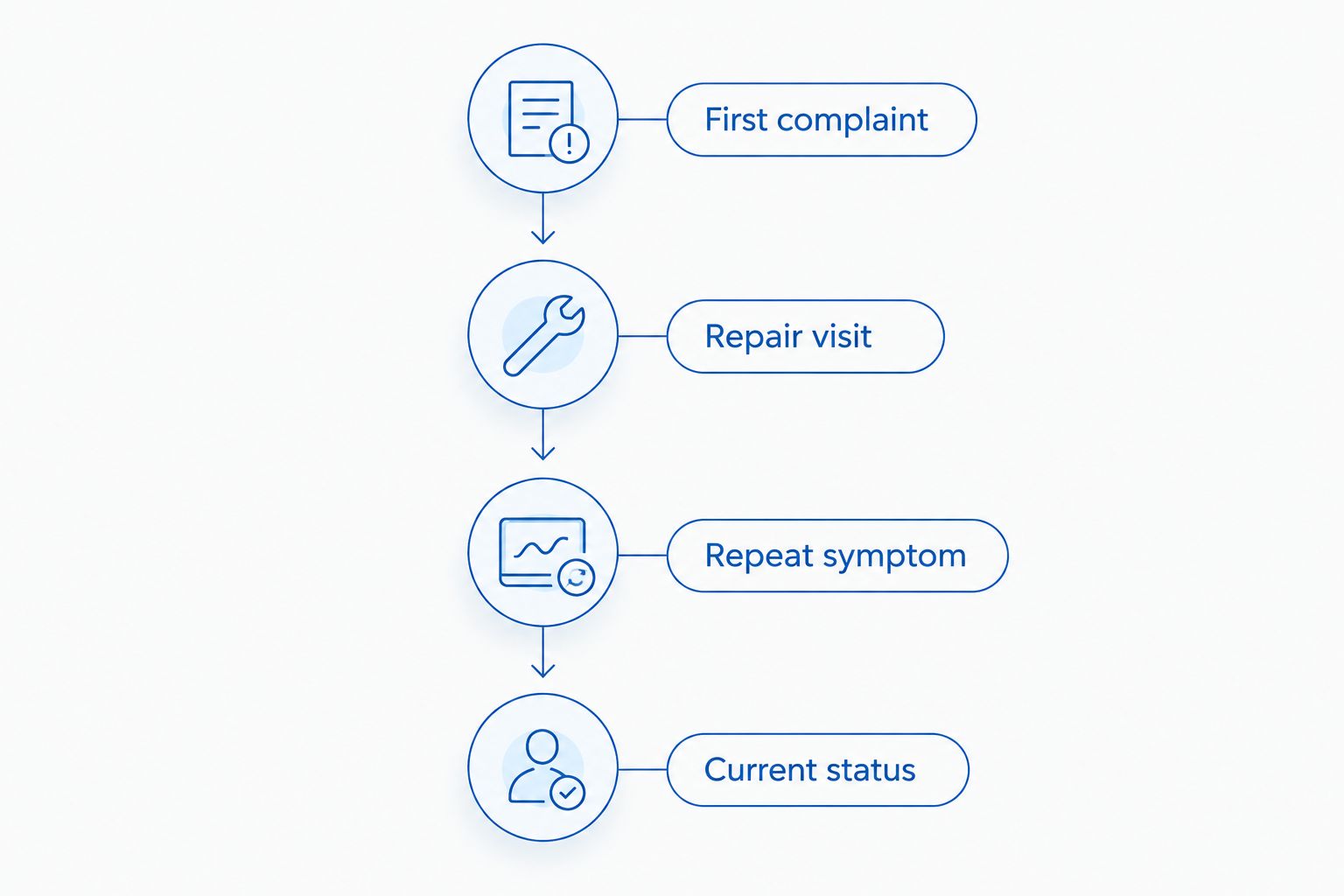
A California lemon law claim turns on the vehicle, its warranty, the problem, and the manufacturer's opportunity to address it. A folder full of paperwork is less useful than a clear sequence of events. Start with the first complaint, identify each repair visit, connect any repeat symptom to earlier records, and note the current status of the vehicle.
If you need help organizing that sequence, Khachikyanlawfirm handles lemon law representation in Glendale, California. Bring what you have; do not delay organizing the records you can already access because one item is missing.
A useful file separates what a document proves from what it cannot prove. A payment record shows a transaction, not a defect. A photo shows a visible condition, not what the dealer attempted to repair. The strongest account connects those pieces to dated repair orders.
What makes a document useful for a lemon law claim?
Use these criteria before deciding which records to chase first:
- Clear identification: Does the document identify the vehicle, ideally by its vehicle identification number (VIN)?
- A reliable date: Can you place the record before, during, or after a repair visit?
- The exact complaint: Does it describe the symptom you reported rather than only a repair code or a vague summary?
- The repair response: Does it show what the dealer inspected, replaced, adjusted, or could not reproduce?
- A connection to other records: Can you match the document to the same visit, symptom, or period of lost vehicle use?
No single document answers every question. Rank the records by their ability to establish the repair history, then use the others to fill identifiable gaps. The order below is a collection priority, not a rule that every claim requires all 10 items.
The 10 documents at a glance
| Document | Best for | What it shows | Key limitation |
|---|---|---|---|
| 1. Dealer repair orders | Repair history | Complaints, visits, work recorded | A vague complaint can hide the symptom |
| 2. Purchase or lease agreement | Vehicle transaction | How you obtained the vehicle | Does not prove a defect |
| 3. Warranty documents | Warranty terms | Coverage and relevant terms | Does not show a repair attempt |
| 4. Dated defect log | Recurring symptoms | Your account of when problems occurred | Needs independent records to support it |
| 5. Dealer appointment and intake records | Missing visit context | Requests and scheduling history | An appointment is not a completed repair |
| 6. Manufacturer communications | Notice and responses | What you reported directly and the reply | May omit dealer conversations |
| 7. Photos and videos | Visible or audible symptoms | What you observed | Cannot establish the cause alone |
| 8. Towing and alternate-transport records | Time without the vehicle | Dates tied to a breakdown or repair | Does not prove the underlying defect |
| 9. Registration and title records | Vehicle identification | VIN and registered owner | Does not establish warranty coverage |
| 10. Payment records | Transaction details | Payments associated with the vehicle | Does not establish repair history |
1. Dealer repair orders: best for repair history
Ask for the complete repair order for each visit, including the customer complaint, intake date, mileage, technician notes, work performed, and closing information when recorded. Compare your stated symptom with the wording on the order before you leave the dealership. A record describing a warning light is not automatically a record of the stalling you also reported.
Dealer repair orders: what helps
- They place the complaint and the dealer's response on the same dated record.
- They help distinguish a repeated symptom from unrelated service visits.
- They can show when the vehicle entered and left the dealership.
Dealer repair orders: what limits them
- Missing pages or vague complaint descriptions leave important gaps.
- A statement that a problem could not be reproduced does not describe everything you experienced outside the shop.
Best for: Building the backbone of your repair history. Verdict: Collect first.
2. Purchase or lease agreement: best for the vehicle transaction
Find the signed agreement that identifies the vehicle and sets out how you acquired it. Check the VIN against the repair orders; a mismatch needs attention before you assemble the file. Keep amendments or related transaction pages together rather than sending only a signature page.
Purchase or lease agreement: what helps
- It identifies the vehicle tied to your claim.
- It establishes whether your transaction was a purchase or lease.
- It gives your other records a transaction to connect to.
Purchase or lease agreement: what limits it
- It says nothing about how the vehicle performed later.
- A partial copy can omit terms needed to understand the transaction.
Best for: Establishing the transaction behind the claim. Verdict: Collect.
3. Warranty documents: best for warranty terms
Keep the warranty booklet, applicable written warranty, and any written coverage information supplied for your vehicle. The question is what warranty applied to this vehicle and how the reported condition relates to that coverage. Do not substitute a general description of a model's warranty for the documents tied to your transaction.
Warranty documents: what helps
- They identify written coverage and its terms.
- They give context to the dates and mileage on repair orders.
- They help separate warranty questions from questions about whether a repair worked.
Warranty documents: what limits them
- Coverage language alone does not establish that a defect occurred.
- A generic or incomplete copy can leave the applicable terms unclear.
Best for: Checking coverage against the repair timeline. Verdict: Collect.
4. Dated defect log: best for recurring symptoms
Write down each occurrence while the details are fresh: date, mileage if available, the symptom, the driving conditions, and what happened afterward. Use the same plain description for the same recurring problem, then note any change. In 2026, a dated note is more useful than trying to reconstruct the sequence from memory months later.
Dated defect log: what helps
- It connects incidents that took place between dealer visits.
- It preserves details that a short repair-order description can miss.
- It helps you check whether the next repair order records the right complaint.
Dated defect log: what limits it
- It is your account, not an independent diagnosis.
- Entries written long after an incident are harder to connect to a specific visit.
Best for: Explaining the pattern between documented repairs. Verdict: Keep current.
5. Dealer appointment and intake records: best for missing visit context
Save appointment confirmations, service-desk messages, intake paperwork, and written requests for a repair visit. These records are especially useful when you reported a problem before the date shown on the final repair order or need to explain why a visit was rescheduled. Match each message to the resulting repair order when one exists.
Dealer appointment records: what helps
- They establish when you sought service.
- They preserve the wording of an early complaint.
- They help explain gaps between symptoms and completed repair orders.
Dealer appointment records: what limits them
- Booking an appointment is not proof that a repair occurred.
- A scheduling message rarely records the technician's findings.
Best for: Filling gaps around dealer visits. Verdict: Collect where available.
6. Manufacturer communications: best for notice and responses
Save emails, letters, case messages, and other written exchanges with the vehicle manufacturer. Record the date and substance of any phone conversation in your defect log, but keep it distinct from the manufacturer's own written response. Organize these communications alongside the repair visits they discuss.
Manufacturer communications: what helps
- They show what you reported directly to the manufacturer.
- They preserve any written response or next step.
- They can clarify which repair history the manufacturer had when it replied.
Manufacturer communications: what limits them
- They do not replace the dealer's work records.
- A message that describes a problem does not independently establish its cause.
Best for: Showing the substance and timing of direct contact. Verdict: Save every written exchange.
7. Photos and videos: best for visible or audible symptoms
Keep original files showing a warning message, leak, unusual sound, or other condition you observed. Add a short note identifying the vehicle, date, and circumstances; keep the original file rather than only a cropped image. If a symptom is intermittent, a dated file can help explain what the dealer was asked to investigate.
Photos and videos: what helps
- They make an intermittent symptom easier to describe.
- They can show what you saw before a service visit.
- They help you compare your complaint with the repair-order wording.
Photos and videos: what limits them
- An image does not diagnose the cause of a problem.
- An undated or unclear file can be difficult to place in the timeline.
Best for: Documenting a condition that a written description misses. Verdict: Keep the originals.
8. Towing and alternate-transport records: best for time without the vehicle
Keep tow records, rental agreements, rideshare receipts, and dealer-provided transportation paperwork that relate to a breakdown or repair visit. Mark the associated repair-order date on your own file index. These records help explain the practical effect of the problem without asking them to prove the mechanical issue.
Transport records: what helps
- They document when you arranged transportation around vehicle trouble.
- They can support the timeline of a breakdown or service visit.
- They add context to periods when you could not use the vehicle.
Transport records: what limits them
- A receipt alone does not explain why the vehicle was unavailable.
- An expense record does not replace a dealer repair order.
Best for: Documenting disruption linked to a dated event. Verdict: Collect and match to visits.
9. Registration and title records: best for vehicle identification
Keep current and earlier registration or title documents relevant to your ownership history. Check the VIN and the names shown against the transaction and repair records. If those details differ, flag the discrepancy rather than assuming every document refers to the same vehicle or person.
Registration and title records: what helps
- They provide a cross-check for the vehicle's identity.
- They help establish who appears on official vehicle records.
- They make inconsistent names or VIN entries easier to spot.
Registration and title records: what limits them
- Registration does not show that a defect occurred.
- It does not, by itself, identify the applicable warranty terms.
Best for: Checking identities across the file. Verdict: Collect as supporting records.
10. Payment records: best for transaction details
Gather payment records tied to the purchase or lease and keep them separate from service expenses. Label what each record concerns so a vehicle payment is not mistaken for a repair charge or transport expense. Include only records relevant to the transaction or the problems you are documenting.
Payment records: what helps
- They support the transaction details in your agreement.
- They help identify amounts paid without relying on memory.
- They keep vehicle payments distinct from expenses related to repairs.
Payment records: what limits them
- A payment does not show that a vehicle had a defect.
- A bank entry without context can be difficult to match to an agreement.
Best for: Checking financial details against transaction paperwork. Verdict: Collect after the repair and warranty records.
How these documents are ranked
The order follows evidentiary use, not how easy a document is to find. Repair orders come first because they can connect a complaint, a date, and the dealer's response. Transaction and warranty records establish context; personal notes and supporting files fill gaps but should not be presented as substitutes for dealer documentation.
For a 2026 claim review, make a simple index with the date, document name, VIN when shown, reported symptom, and related repair order. Keep original files and readable copies. If a repair order is missing, request it from the servicing dealer and note the request in your index rather than guessing what it said.
Which documents should you gather first?
Start with every repair order, then the purchase or lease agreement and warranty documents. Add the defect log and communications next, followed by files that corroborate specific incidents. Khachikyanlawfirm can review a California lemon law file as a connected timeline; a stack of unrelated records makes the central question harder to answer.
Do not discard a record because it seems unfavorable. A repair order stating that a concern was not reproduced still records what you reported and when you brought the vehicle in. Keep that order beside any later record of the same symptom.
FAQ
What are the most important documents needed for a California lemon law claim?
Dealer repair orders are the most important starting point because they record complaints and service visits. Add the purchase or lease agreement and warranty documents to establish the vehicle and applicable terms.
Do I need every repair order for a California lemon law claim?
Collect every repair order you can obtain, including visits when the dealer did not reproduce the problem. The full sequence makes repeated complaints and responses easier to assess.
Can I make a lemon law claim if I lost a repair order?
A missing repair order does not mean you should stop organizing your claim. Request a copy from the servicing dealer and preserve appointment messages or other records that help identify the visit.
Do photos prove a car is a lemon in California?
Photos and videos can document what you observed, but they do not establish the cause or repair history on their own. Keep them with the related complaint and repair order.
Should I include records for a problem the dealer could not reproduce?
Yes, keep the repair order if it records your complaint. It shows when you reported the symptom even if the dealer did not confirm it during that visit.
Do I need a defect log if I have repair orders?
A dated defect log helps connect symptoms between repair visits. It supports your account but does not replace the dealer's records.
What should I bring to a lemon law consultation in 2026?
Bring your repair orders, purchase or lease agreement, warranty documents, and any dated notes or manufacturer messages. Organize them by visit so the repair history is easy to follow.
One last thing
Before filing the documents away, read the customer complaint line on each repair order. If that line omits the symptom you reported, keep your dated notes and related messages beside the order; the difference matters more than a thicker folder. For a 2026 review, Khachikyanlawfirm's lemon law team can use that organized history to identify the questions your records answer and the gaps that remain.