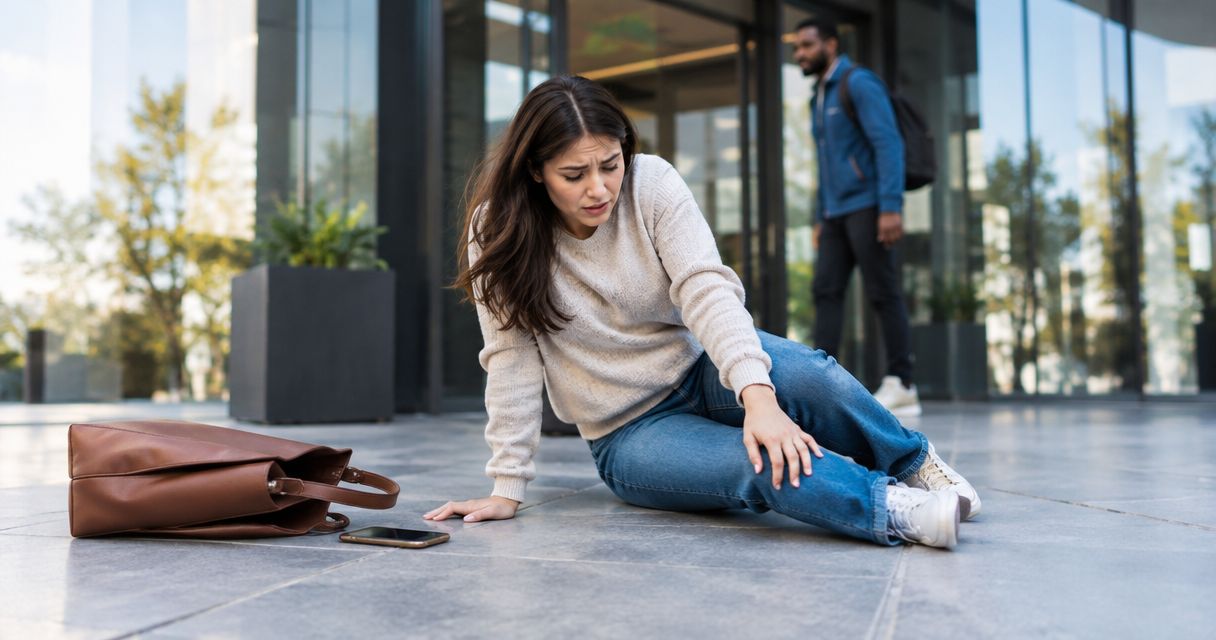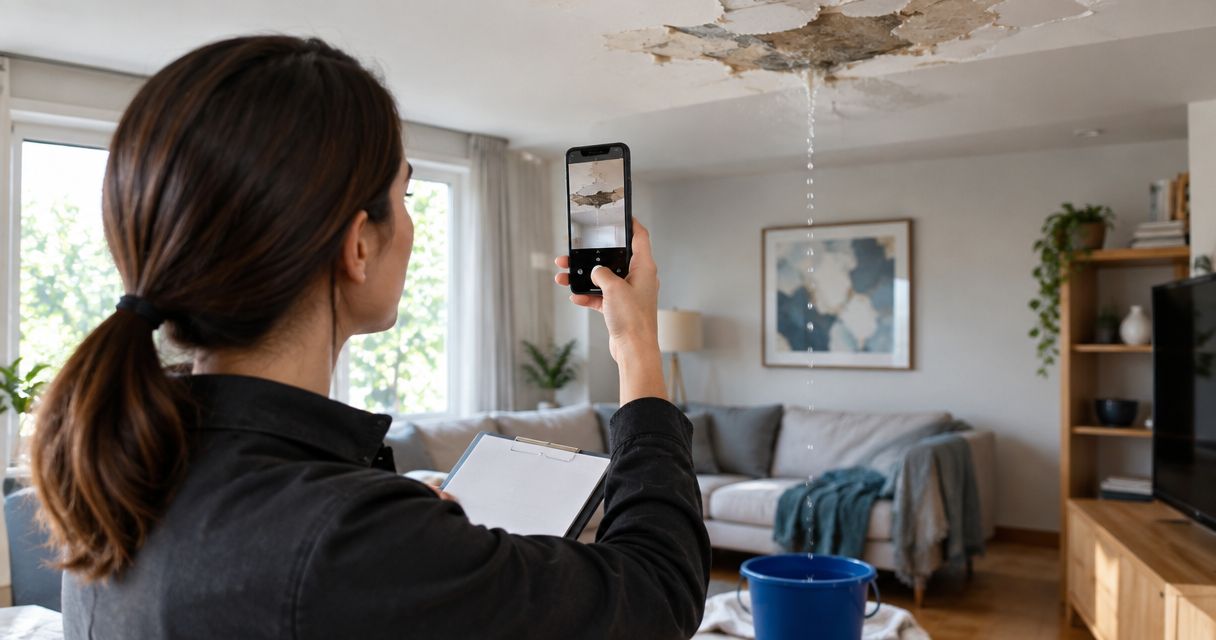
Best overall: original photos and video. Best for proving the repair scope: itemized estimates. Best for disputed responsibility: independent witness accounts and incident records. This 2026 guide ranks the evidence to strengthen a property damage claim in California by what each record proves—and where it falls short.
- Original photos are the strongest starting evidence to strengthen a property damage claim in California.
- Itemized repair estimates connect visible damage to the work needed to restore your property.
- Independent witness accounts help explain responsibility; receipts and ownership records help document your loss.
- Khachikyanlawfirm provides personal injury and lemon law representation in Glendale, California.
Why this matters
A damaged bumper, broken fence, or ruined personal item presents separate questions: what happened, who is responsible, and what loss you can document. A photograph answers only part of that inquiry. Your evidence needs to connect the event to the damage and then support the remedy you request.
Khachikyanlawfirm is a legal representation option for Glendale clients with personal injury or lemon law matters. If your property damage accompanies an injury or a recurring vehicle defect, start with Khachikyanlawfirm to discuss that legal issue. A collision claim and a manufacturer-defect claim require different evidence; do not treat them as interchangeable.
What makes the best property damage evidence?
Rank evidence by the question it answers, not by how many pages it adds to your file.
- Timing: Does the record show conditions close to the incident, before repairs or cleanup?
- Causation: Does it connect the event to the specific damage you claim?
- Independence: Does it come from a witness or professional with firsthand knowledge?
- Specificity: Does it identify the property, affected area, and necessary work?
- Authenticity: Can you retain the original file, document, or physical item?
- Loss documentation: Does it support ownership, prior condition, repair needs, or related expenses?
No single record satisfies every criterion. The strongest package combines records that answer different questions without contradicting each other.
Property damage evidence at a glance
| Rank | Evidence | Best for | Standout value | Key limitation |
|---|---|---|---|---|
| 1 | Original photos and video | Visible damage and scene conditions | Preserves what conditions looked like | Does not independently establish responsibility |
| 2 | Itemized repair estimates | Repair scope disputes | Connects damage to specific work | An estimate is not proof that work occurred |
| 3 | Independent witness accounts | Disputed sequence of events | Adds firsthand observations | Memory and viewing position affect reliability |
| 4 | Incident and official records | Confirming reporting and identities | Documents the reported event | A report is not a binding fault decision |
| 5 | Ownership and prior-condition records | Preexisting-damage disputes | Establishes a before-and-after baseline | Purchase records alone do not establish current value |
| 6 | Receipts and payment records | Documenting actual expenses | Shows expenditures tied to the incident | Payment does not automatically establish recoverability |
| 7 | Relevant expert findings | Hidden damage and technical causation | Explains issues not visible in photographs | Expertise must match the disputed issue |
1. Original photos and video: best evidence for visible damage
Original images preserve damage, surroundings, and the relationship between them. Take wide views of the scene, midrange views of the affected property, and close-ups of individual damaged areas. Use 3 photo angles as a practical checklist, not as a legal requirement.
For a 2026 claim, retain the original files rather than keeping only screenshots or compressed copies sent through messaging apps. Record when and where you took the images, especially if you photographed the property after it moved.
Photo and video pros:
- Show damage before repairs change its appearance.
- Capture surrounding conditions that explain the incident.
- Let a repair professional match visible damage to an estimate.
Photo and video cons:
- Hidden damage remains outside the frame.
- A close-up without context can leave the property's identity unclear.
Best for: Establishing the visible condition immediately after an incident.
Photograph safely. Do not stand in traffic, enter an unstable structure, or delay necessary medical care to obtain a better image. If you annotate a copy, keep the unedited original separately.
Verdict: Use original photos first, then add records explaining cause and repair scope.
2. Itemized repair estimates: best evidence for repair scope
An itemized estimate explains what needs repair and why. Ask the repair professional to identify the damaged components, proposed work, and any damage that requires further inspection.
A single total gives the reader little to evaluate. A detailed estimate allows an adjuster, opposing party, or attorney to distinguish incident-related repairs from maintenance or unrelated work.
Repair estimate pros:
- Connect specific damage to specific repair tasks.
- Identify disagreements about parts, labor, or repair methods.
- Create a written baseline before work begins.
Repair estimate cons:
- Additional damage discovered during repairs can change the scope.
- An estimate does not prove the incident caused every listed problem.
Best for: Disputes about which repairs are necessary.
If estimates conflict, obtain 2 itemized estimates as a comparison exercise—not because California requires that number. Ask each professional to explain the difference. Do not average the totals without understanding whether the estimates describe the same work.
Keep later supplements with the initial estimate. A documented change is easier to explain than an unexplained replacement document.
Verdict: Use an itemized estimate; skip a total-only document as your sole repair evidence.
3. Independent witness accounts: best evidence for disputed responsibility
A witness can describe movement, impact, warnings, or conditions that photographs cannot capture. Get contact information and ask the person to record what they actually observed while the event remains fresh.
Separate observation from assumption. Someone who heard a crash but did not see it cannot establish the same facts as someone who watched the impact.
Witness account pros:
- Add a perspective independent of the people making the claim.
- Explain the sequence leading to the damage.
- Help identify other evidence, including nearby recordings.
Witness account cons:
- Distance, obstructions, and lighting affect what a witness saw.
- Later recollections can differ from an initial account.
Best for: Competing accounts of how the damage occurred.
Preserve a witness's own wording. Do not supply a statement for the person to adopt or ask them to describe something they did not see. Note the witness's location during the event so their perspective remains understandable.
A witness account also needs corroboration when available. Compare it with photographs, timestamps, and physical damage rather than treating it as a substitute for those records.
Verdict: Use firsthand accounts; skip speculation presented as observation.
4. Incident and official records: best evidence for confirming the event
Police reports, incident reports, and written notices can document when an event was reported and who was identified. Their value depends on what the author personally observed and what information came from other people.
For your 2026 evidence file, separate the report's observations from its summaries of statements. A report that records an allegation does not independently prove that allegation.
Incident record pros:
- Help establish a reporting timeline.
- Identify involved parties and potential witnesses.
- Preserve descriptions recorded near the event.
Incident record cons:
- Reports can contain incomplete or incorrect information.
- A report does not decide legal responsibility by itself.
Best for: Confirming the event's reporting history and identifying additional evidence.
Read the report against your original records. If information is inaccurate, ask the issuing organization about its correction or supplemental-statement procedure. Keep the original report and any later correspondence together.
The absence of a police report does not mean you should abandon other evidence. Photographs, witness accounts, repair records, and communications still require preservation.
Verdict: Use incident records as corroboration, not as a guaranteed fault finding.
5. Ownership and prior-condition records: best evidence for preexisting damage
Receipts, registration documents, maintenance records, and earlier photographs help identify the property and its condition before the incident. They are especially useful when another party argues that the damage already existed.
Match each record to the affected item. A receipt without an identifying description can leave an avoidable gap between the document and the property.
Prior-condition record pros:
- Support ownership or another relevant interest in the property.
- Show maintenance and condition before the event.
- Help distinguish new damage from older problems.
Prior-condition record cons:
- An old receipt does not establish present condition.
- Prior photographs can miss the area now in dispute.
Best for: Answering allegations of preexisting damage or uncertain ownership.
For recurring vehicle problems, repair history serves a different purpose from collision evidence. The guide to documents for a California lemon law claim addresses that separate documentation track. Khachikyanlawfirm provides lemon law representation as well as personal injury representation.
Do not remove records showing earlier damage. Identify what was repaired and explain what changed after the incident.
Verdict: Use dated baseline records; skip an unsupported assertion that everything was previously undamaged.
6. Receipts and payment records: best evidence for actual expenses
Invoices, receipts, and payment confirmations document money you actually spent. Keep the description of the work or service alongside the payment record so the expense remains connected to the damaged property.
Separate completed repairs from proposed repairs. Mark reimbursed expenses clearly to avoid presenting the same expenditure as unpaid in a later submission.
Expense record pros:
- Establish that an expenditure occurred.
- Identify the service, work, or item involved.
- Support a consistent expense summary.
Expense record cons:
- A bank transaction alone rarely explains the underlying work.
- An expense is not automatically recoverable merely because you paid it.
Best for: Supporting actual, incident-related expenditures.
Explain the connection rather than assuming it is obvious. For example, pair a towing receipt with the incident date and vehicle identification. Keep unrelated work separate from the portion attributed to the event.
Your policy terms, legal claim, and facts determine which losses are recoverable. Do not label every inconvenience as a compensable expense.
Verdict: Use matched invoices and payment records; skip unsupported expense totals.
7. Relevant expert findings: best evidence for hidden or technical damage
A qualified professional can explain damage that is not apparent from photographs. Depending on the property and dispute, that professional might be a repair specialist, appraiser, engineer, or another relevant expert.
Ask for findings that identify the inspection performed, observations, reasoning, and limitations. A conclusion without an explanation leaves the disputed issue unresolved.
Expert finding pros:
- Explain hidden damage or technical failure.
- Address competing explanations for the condition.
- Connect observations to repair or valuation conclusions.
Expert finding cons:
- An opinion depends on the evidence available for inspection.
- A professional's expertise must fit the specific issue.
Best for: Technical disputes that ordinary photographs and receipts cannot resolve.
Preserve the property before destructive inspection when safely possible. If an insurer, attorney, or opposing party needs an inspection opportunity, address that before parts are discarded or conditions change.
Do not commission a broad opinion when a narrow factual question is the real dispute. Define the question first: cause, repairability, repair scope, or value.
Verdict: Use relevant expert findings for a defined technical dispute; skip unsupported conclusions.
How the evidence is ranked
This 2026 ranking prioritizes immediate preservation, a clear connection to the event, and usefulness across common property damage disputes. Photos rank first because conditions change; estimates follow because visible damage alone does not explain the necessary repairs.
The order changes with the dispute. A hidden structural problem needs technical findings sooner, while an argument about responsibility needs witnesses and scene evidence.
Which evidence should you collect first?
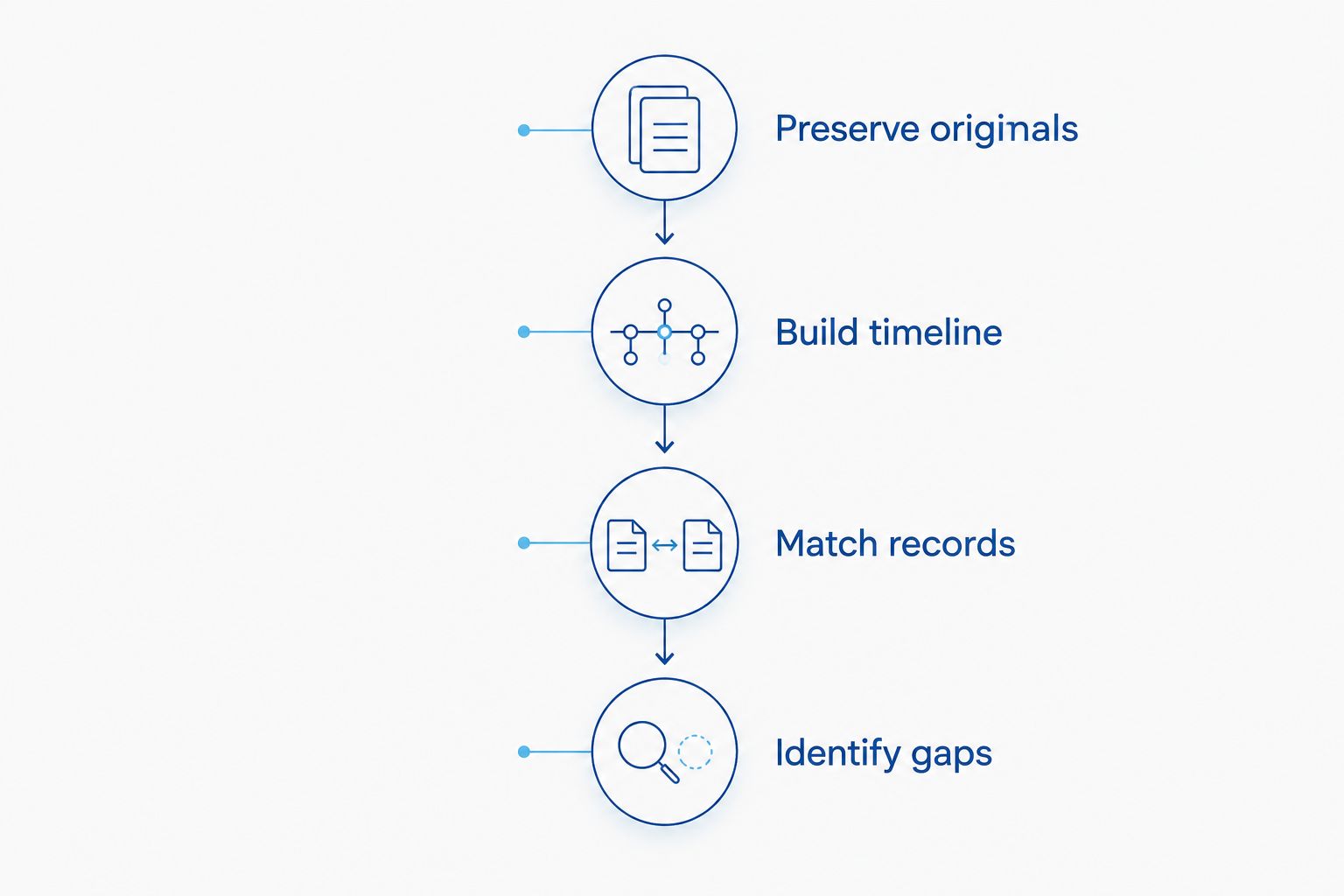
Start with original photos, then organize the records around the disputed question. Use this sequence to keep your 2026 submission readable:
- Preserve originals: Save unedited files, documents, and relevant damaged items safely.
- Build timeline: List the incident, reporting, inspections, repairs, and payments in date order.
- Match records: Connect each claimed damaged area to supporting photos and repair documentation.
- Identify gaps: Flag disputed responsibility, missing records, or unexplained changes before submitting.
A useful file explains the claim. It does not make the recipient reconstruct the event from unlabeled attachments.
For an injury-related collision or a recurring vehicle defect, organize the property records alongside the records for that separate legal issue. Khachikyanlawfirm provides personal injury and lemon law legal representation in Glendale.
Discuss your injury or lemon law issue
Bring your incident timeline, photographs, and repair records to the discussion.
FAQ
What's the best evidence for a property damage claim in California?
Original photos and video are the best starting evidence for visible property damage. Add itemized repair estimates and records that explain responsibility, ownership, and actual expenses.
Are photos enough to prove someone caused the damage?
Photos alone do not necessarily prove responsibility. Witness accounts, scene conditions, incident records, and technical findings can help connect the event to the damage.
Do I need two repair estimates for a California property damage claim?
There is no blanket rule requiring two estimates for every California property damage claim. A second itemized estimate is useful when repair scope is disputed; check the applicable policy and claim requirements.
Can I repair the property before the claim is resolved?
Document the damage and address any necessary inspection before repairs change the evidence. Take reasonable steps to prevent further damage, and retain estimates, invoices, and available replaced parts when safe and practical.
How long do I have to sue for property damage in California?
California Code of Civil Procedure section 338(c)(1) generally provides three years for injury to personal property. Other claims, government-claim requirements, accrual rules, and exceptions can change the deadline; verify the deadline for your specific facts.
Does a police report automatically prove fault?
A police report does not automatically establish legal responsibility. Separate the officer's observations from statements supplied by others and compare the report with the remaining evidence.
Is vehicle property damage the same as a lemon law claim?
Collision damage and a lemon law claim are different issues. Collision evidence focuses on the event and resulting loss, while lemon law documentation focuses on defects, warranty coverage, and repair history.
One last thing
Preserve evidence of unsuccessful repairs, not just the final result. A later photograph showing restored property cannot explain what an earlier repair missed. Keep supplemental estimates, correction invoices, and the messages explaining why additional work became necessary.
For a 2026 claim, an honest record of changes is more useful than a polished file that hides them. This guide provides general information, not advice about a specific claim or deadline.