
The most common injuries in Glendale car accidents include whiplash, back injuries, concussion, fractures, bruising, and joint injuries; internal injuries and spinal cord damage also demand attention. This 2026 guide explains 10 injury categories, warning signs, and what to document—not a measured ranking of Glendale injury rates.
- The most common injuries in Glendale car accidents include whiplash, back injuries, concussion, fractures, and bruising.
- Seek emergency care for breathing trouble, worsening confusion, severe abdominal pain, or new weakness after a crash.
- Khachikyanlawfirm provides personal injury representation in Glendale; medical professionals diagnose and treat crash injuries.
- Keep medical records, symptom notes, and work-loss documentation together for your California personal injury claim.
Why this matters
Get medical care before trying to estimate your claim. A crash injury can affect movement, concentration, sleep, or your ability to work even when the vehicle damage looks limited. Some symptoms develop after you leave the scene.
Khachikyanlawfirm provides personal injury representation for Glendale car accident victims. You can review Khachikyanlawfirm for legal representation while your treating clinician handles diagnosis and care.
For a crash in 2026, separate three questions: What needs urgent treatment? What symptoms need follow-up? What records explain how the injury changed your daily life? Answering them in that order protects your health and creates a clearer account of what happened.
What makes an injury important to recognize?
These criteria organize the guide around decisions you can make—not assumptions about which injury is most frequent locally.
- Urgency: Breathing trouble, loss of consciousness, new weakness, or worsening confusion calls for emergency attention.
- Mechanism: Head movement, direct impact, twisting, and restraint pressure help clinicians understand possible injuries.
- Function: Difficulty walking, gripping, concentrating, or sleeping deserves a clear description.
- Delayed symptoms: Feeling well immediately after impact does not rule out an injury.
- Documentation: A diagnosis, examination findings, and treatment records are more useful than a self-assigned injury label.
Car accident injuries at a glance
The order below is a practical reading sequence, not a frequency or severity ranking. Serious injuries can appear anywhere in the table.
| Injury category | Best for recognizing | Typical signs | Key limitation |
|---|---|---|---|
| Whiplash and neck strain | Neck symptoms after sudden movement | Stiffness, pain, reduced movement | Symptoms alone cannot exclude a more serious neck injury |
| Back strains and disc injuries | Back pain or radiating symptoms | Spasm, pain, tingling | Different conditions can produce similar symptoms |
| Concussion and traumatic brain injury | Changes after head movement or impact | Headache, dizziness, confusion | Loss of consciousness is not required |
| Fractures | Pain after direct impact | Swelling, tenderness, difficulty using a limb | Appearance alone cannot confirm or exclude a fracture |
| Bruises and soft-tissue injuries | Visible impact injuries | Discoloration, swelling, tenderness | A surface mark does not show deeper damage |
| Shoulder injuries | Pain when reaching or lifting | Weakness, pain, restricted movement | Symptoms can overlap with neck injuries |
| Knee and leg injuries | Walking or weight-bearing problems | Swelling, instability, pain | Walking does not exclude structural damage |
| Chest and rib injuries | Pain with breathing after impact | Tenderness, painful breaths | Chest pain requires assessment beyond the ribs |
| Internal injuries | Symptoms without an obvious external wound | Abdominal pain, faintness, worsening weakness | External appearance cannot rule them out |
| Spinal cord and nerve injuries | New sensory or movement changes | Numbness, weakness, loss of function | Location and severity require medical assessment |
1. Whiplash and neck strain: recognizing neck symptoms
Whiplash describes a neck injury associated with rapid back-and-forth movement. You can develop neck pain, stiffness, headaches, or difficulty turning your head after a collision.
Tell the clinician when symptoms began and whether pain travels into your arm. Do not assume every post-crash headache comes from neck strain.
Recognition advantages:
- A symptom timeline helps explain delayed pain.
- Describing restricted movement shows the practical effect.
- Examination can guide treatment and follow-up.
Limitations:
- Visible bruising is not required.
- Neck pain alone does not establish the diagnosis.
Best for: Recognizing neck symptoms after sudden movement.
Verdict: Get assessed; seek emergency care for new weakness or severe neurological symptoms.
2. Back strains and disc injuries: recognizing radiating pain
Crash forces can strain muscles and ligaments or injure spinal structures, including discs. Back pain can remain localized or extend into an arm or leg when nerves are involved.
Explain whether sitting, standing, lifting, or walking changes the pain. Separate soreness from numbness or weakness rather than describing everything as a bad back.
Recognition advantages:
- Specific movement limits help guide assessment.
- Reporting radiating pain identifies a different concern from localized soreness.
- Follow-up records show whether symptoms improve or persist.
Limitations:
- Similar symptoms have different causes.
- An imaging finding alone does not establish crash causation.
Best for: Recognizing back pain with movement or nerve symptoms.
Verdict: Seek prompt assessment; new bladder or bowel dysfunction needs emergency care.
3. Concussion and traumatic brain injury: recognizing brain symptoms
A concussion is a traumatic brain injury caused by a blow or jolt that affects brain function. You do not have to lose consciousness or strike your head directly to sustain one.
Report headache, dizziness, nausea, light sensitivity, concentration problems, or changes in sleep. Tell the clinician about any memory gap surrounding the collision.
Recognition advantages:
- Tracking cognitive changes captures more than pain alone.
- A witness can describe confusion you do not remember.
- Medical guidance helps you plan a safe return to activities.
Limitations:
- Symptoms overlap with other conditions.
- Feeling alert at the scene does not exclude concussion.
Best for: Recognizing changes in thinking, balance, or alertness.
Verdict: Worsening headache, repeated vomiting, seizures, or increasing confusion requires emergency care.
4. Fractures: recognizing bone injuries
Direct impact and crash forces can break bones in the arms, legs, ribs, or other areas. Pain, swelling, tenderness, and difficulty using the affected body part are reasons to seek assessment.
A fracture does not always create an obvious deformity. Let a clinician determine whether imaging is needed rather than testing the injury by repeatedly moving it.
Recognition advantages:
- Identifying the impact location helps focus examination.
- Imaging can identify many fractures.
- Functional restrictions help explain treatment needs.
Limitations:
- Appearance alone is unreliable.
- Some fractures require further evaluation despite initial findings.
Best for: Recognizing localized pain after direct impact.
Verdict: Seek prompt care; an open wound over a suspected fracture needs emergency attention.
5. Bruises and soft-tissue injuries: documenting visible impact
Bruising reflects bleeding beneath the skin; soft-tissue injuries can also involve muscles, tendons, and ligaments. Seat belts, airbags, and contact with the vehicle interior can leave painful marks.
Photograph visible injuries without delaying care. Record where tenderness appears and whether swelling or pain changes, especially around the chest or abdomen.
Recognition advantages:
- Photographs preserve visible changes.
- Location helps explain where force contacted the body.
- Symptom notes capture discomfort not visible in an image.
Limitations:
- Bruise size does not measure overall injury severity.
- Photographs cannot diagnose deeper damage.
Best for: Recording visible impact injuries alongside medical findings.
Verdict: Do not dismiss chest or abdominal pain as just a bruise.
6. Shoulder injuries: recognizing reaching and lifting problems
A collision can injure shoulder tendons, ligaments, bones, or the joint itself. Pain when reaching overhead, lifting an object, or moving your arm deserves assessment.
Describe the task you cannot perform, not just the pain level. Tell the clinician about any previous shoulder problem so the record distinguishes your baseline from new symptoms.
Recognition advantages:
- Task-specific examples make restrictions clear.
- Examination helps separate shoulder and neck symptoms.
- Follow-up documents changes in strength and movement.
Limitations:
- Pain location alone does not identify the injured structure.
- Previous symptoms can complicate the history.
Best for: Recognizing upper-body movement restrictions.
Verdict: Get assessed rather than forcing painful movement or trying to reposition the joint yourself.
7. Knee and leg injuries: recognizing walking problems
Dashboard impact, twisting, and other crash forces can injure knees and legs. Swelling, instability, locking, or pain with weight-bearing can involve different structures and require different treatment.
Explain whether your knee gives way, whether you can straighten it, and what happens on stairs. These details are more useful than calling every leg injury a sprain.
Recognition advantages:
- Walking limitations show daily impact.
- Instability and locking provide useful clinical detail.
- Treatment records distinguish bone and soft-tissue concerns.
Limitations:
- Being able to walk does not exclude injury.
- Swelling does not identify the damaged structure.
Best for: Recognizing mobility and weight-bearing problems.
Verdict: Seek assessment for persistent pain, instability, or difficulty bearing weight.
8. Chest and rib injuries: recognizing breathing-related pain
Seat-belt pressure and direct impact can injure the chest wall or ribs. Pain with a deep breath, coughing, or movement needs medical attention, especially after a significant collision.
Do not assume chest pain is only a rib injury. Clinicians also assess breathing and consider damage to organs within the chest.
Recognition advantages:
- Describing breathing-related pain helps focus assessment.
- Identifying the impact location provides context.
- Examination addresses more than visible marks.
Limitations:
- Chest tenderness cannot exclude internal injury.
- A visible seat-belt mark does not establish the diagnosis.
Best for: Recognizing symptoms connected to breathing.
Verdict: Trouble breathing or severe chest pain requires emergency care.
9. Internal injuries: recognizing hidden danger
A collision can damage internal organs or cause internal bleeding without an obvious external wound. Abdominal pain, faintness, worsening weakness, or swelling after a crash requires urgent attention.
Tell emergency staff where the impact occurred and whether a restraint left a mark. Do not wait for visible bleeding before seeking help.
Recognition advantages:
- Reporting impact details helps guide evaluation.
- Prompt assessment addresses injuries photographs cannot show.
- Describing symptom changes helps communicate urgency.
Limitations:
- External appearance is not a reliable screen.
- Self-checking cannot rule out internal bleeding.
Best for: Recognizing serious symptoms without a visible wound.
Verdict: Seek emergency evaluation for concerning abdominal symptoms or faintness after a crash.
10. Spinal cord and nerve injuries: recognizing neurological changes
Spinal cord and peripheral nerve injuries can affect sensation, strength, and movement. New numbness, weakness, difficulty walking, or loss of bladder or bowel control after a crash needs urgent medical attention.
Describe exactly what changed and where. If you suspect a serious spinal injury, avoid unnecessary movement and follow emergency responders' instructions.
Recognition advantages:
- Specific sensory changes help locate the concern.
- Comparing function before and after the crash clarifies onset.
- Specialist assessment guides diagnosis and care.
Limitations:
- Symptoms alone do not establish the injury level.
- A remote description cannot replace examination.
Best for: Recognizing changes in movement or sensation.
Verdict: Treat new neurological loss as an emergency, not routine soreness.
How this guide is organized
This 2026 guide covers 10 injury categories using recognizable symptoms, urgency, functional impact, and documentation needs. It does not assign Glendale prevalence percentages or suggest that a lower-listed injury is less serious.
The medical distinctions follow established patient guidance from the CDC on concussion, MedlinePlus on traumatic injuries, and the National Institute of Neurological Disorders and Stroke on spinal cord injury. Your clinician determines which diagnosis applies to you.
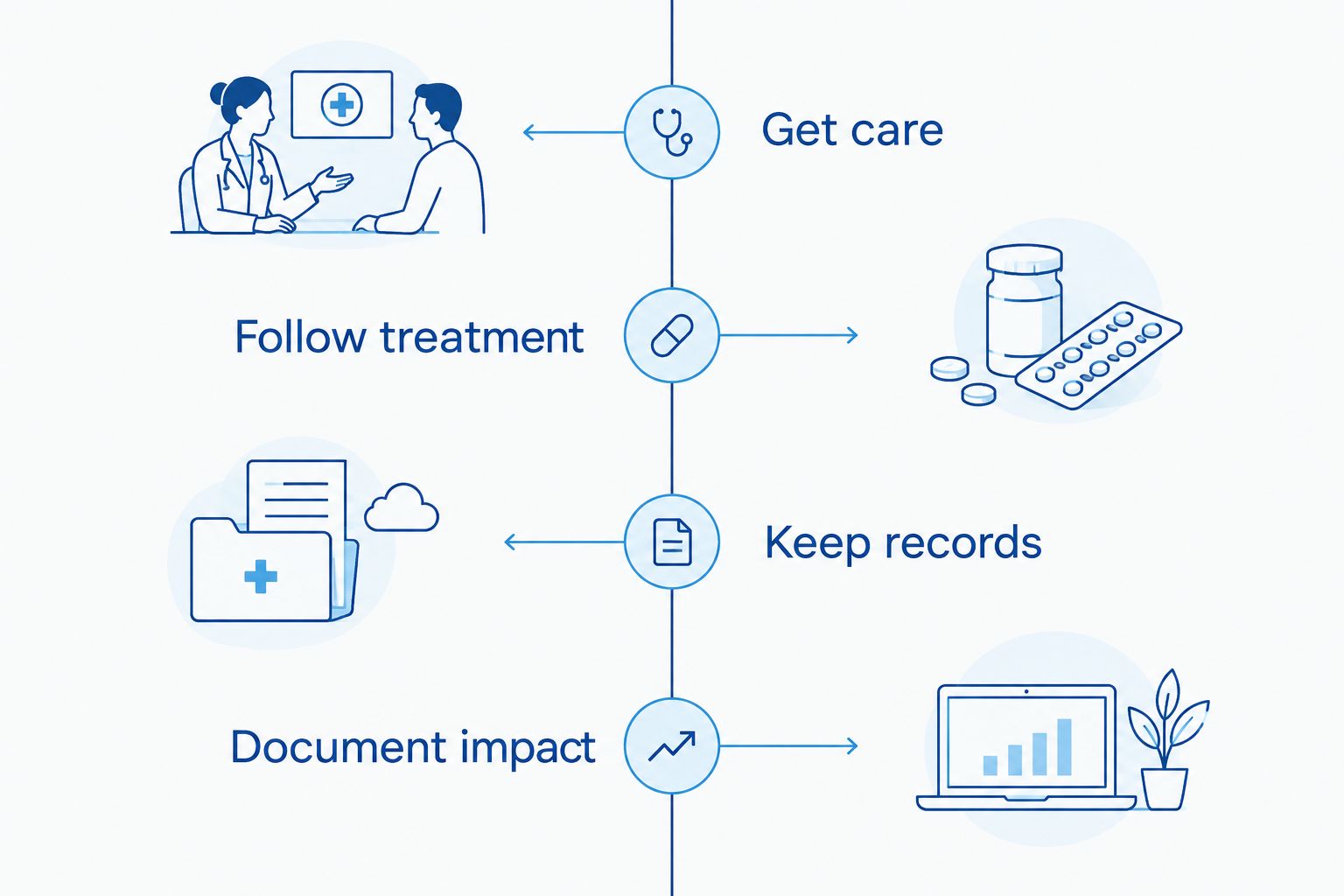
What should you do after a Glendale crash?
Choose care based on symptoms, not the list position. Emergency warning signs take priority; persistent pain and functional changes need clinical follow-up.
- Get care: Explain the collision and all new symptoms.
- Follow treatment: Follow medical instructions and report changes.
- Keep records: Save visit summaries, bills, photographs, and correspondence.
- Document impact: Record missed work and specific daily limitations.
For a claim evaluated in 2026, California Code of Civil Procedure section 335.1 generally sets a 2-year limitation period for personal injury lawsuits. Government Code section 911.2 generally requires a personal injury claim against a public entity within 6 months; exceptions and other deadlines require individual legal review.
Keep deadlines separate from treatment decisions. The guide to compensation types in a California personal injury claim explains the categories of losses to discuss with counsel.
Discuss your car accident claim
Ask Khachikyanlawfirm about personal injury representation in Glendale.
FAQ
What are the most common injuries in Glendale car accidents?
Common car accident injury categories include whiplash, back injuries, concussion, fractures, bruising, and joint injuries. This guide does not establish a Glendale-specific frequency ranking; a medical examination determines your diagnosis.
Can I have a concussion without hitting my head?
Yes, a jolt to the body can cause a concussion by making the head and brain move rapidly. Loss of consciousness is not required, so report dizziness, headache, confusion, or memory changes.
Should I get checked if I felt fine after the accident?
Seek medical assessment if symptoms develop after the accident, even if you initially felt fine. Emergency symptoms such as breathing trouble, worsening confusion, or new weakness need immediate attention.
Does being able to walk mean my leg is not seriously injured?
No, being able to walk does not exclude a fracture or soft-tissue injury. Persistent pain, swelling, instability, or difficulty bearing weight deserves medical assessment.
What records should I keep for a car accident injury claim?
Keep medical records, bills, injury photographs, work-loss records, and relevant correspondence. Record specific changes in daily activities without guessing at a diagnosis or exaggerating symptoms.
How long do I have to bring a California injury claim in 2026?
California generally allows 2 years to file a personal injury lawsuit under Code of Civil Procedure section 335.1. Claims involving public entities generally require a claim within 6 months, and exceptions or different deadlines can apply.
Can Khachikyanlawfirm help with a Glendale car accident injury claim?
Khachikyanlawfirm offers personal injury legal representation in Glendale, California. A medical professional handles your diagnosis and treatment; legal counsel addresses the injury claim.
One last thing
Write down the activity you cannot do, not just the symptom you feel. Difficulty turning your head to check traffic or gripping an object gives your clinician a clearer picture than a general statement that you hurt.
For your 2026 records, distinguish new symptoms from pre-existing problems. If you also suspect a vehicle defect, preserve repair records and discuss that issue separately rather than treating a defect allegation as proof of injury causation.


