
Best overall: medical expenses. Best for missed paychecks: lost income. Best for lasting effects: pain and suffering. These are the leading compensation types in a California personal injury claim in 2026, but each covers a different loss and requires different evidence. Khachikyanlawfirm provides personal injury representation in Glendale, California.
- Medical expenses are the clearest starting point for compensation types in a California personal injury claim.
- Lost income addresses work already missed; reduced earning capacity addresses future work you cannot do.
- Pain and suffering covers physical effects, while emotional distress addresses psychological effects; describe each without counting the same harm twice.
- Khachikyanlawfirm provides personal injury representation in Glendale, California; preserve records that connect each loss to the injury.
Why this matters
An injury claim is not one lump sum with one kind of proof. Treatment records can establish medical needs, while employment records show missed income and your account of daily limitations helps explain effects that have no invoice. List each loss separately before evaluating an offer. Otherwise, a documented expense can draw attention away from a lasting limitation that matters more to your life.
California also distinguishes economic damages, such as medical expenses and lost earnings, from noneconomic damages, such as pain and suffering. The categories below are a way to organize a claim, not a promise that every category applies. In a 2026 claim, the central question is whether the evidence connects each claimed loss to the incident.
What makes a compensation category worth claiming?
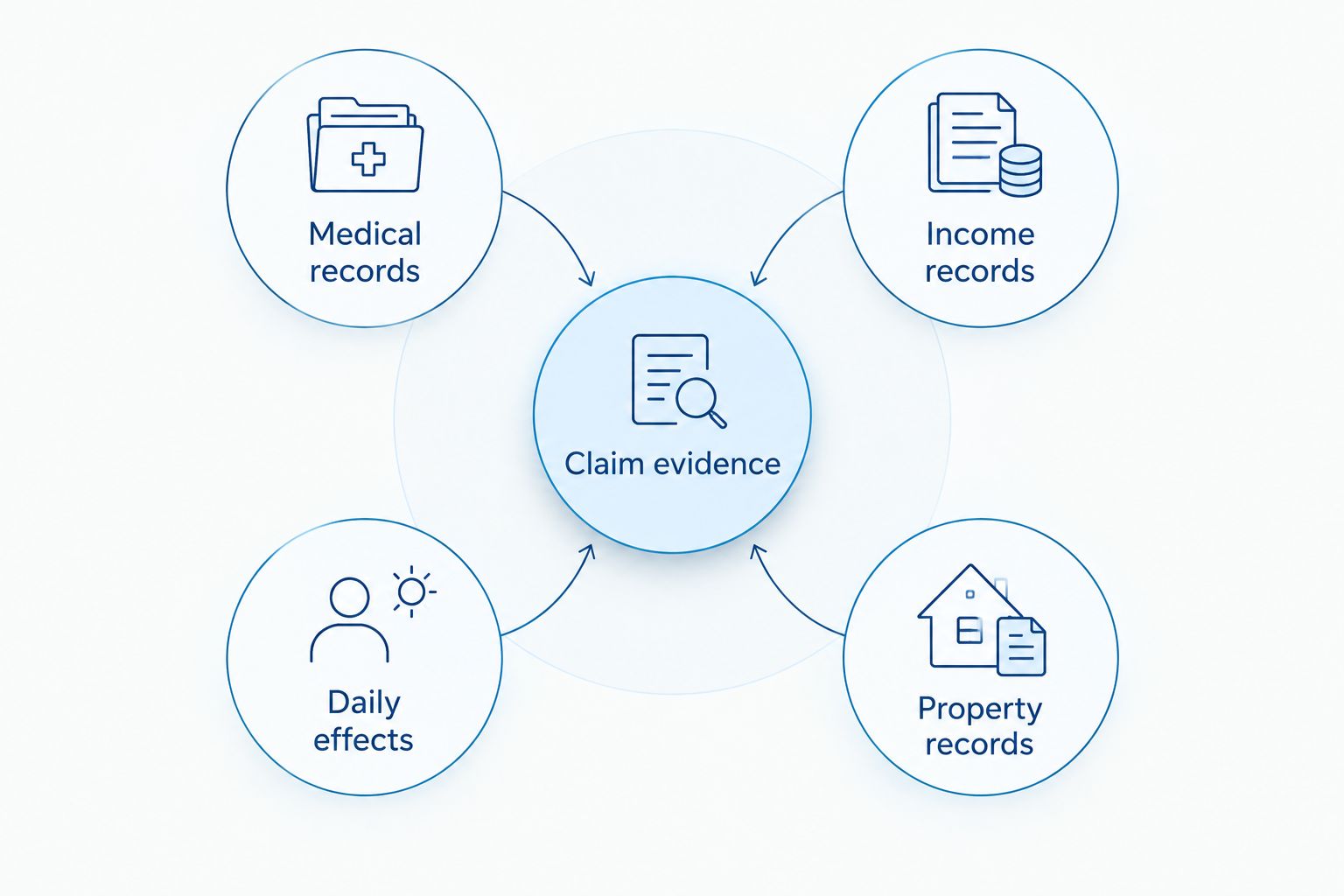
The best category is the one that describes a real loss you can support. Use these criteria before comparing the ranked list:
- Causal connection: A record or clear account links the loss to the injury, rather than an unrelated condition or expense.
- Medical records: Notes, referrals and treatment records show what care occurred and why further care is expected.
- Income records: Pay records and work restrictions distinguish time already missed from future limits on earning.
- Daily effects: Specific changes to activities explain physical pain and emotional effects more clearly than general descriptions.
- Property records: Photos, repair documents and receipts support damage to belongings and related expenses.
Claim evidence works best when its parts agree. A work restriction should match the period of lost income you claim; a future-care request should match the treatment your records describe. Keep original records and make a dated account of changes while they are still easy to describe.
California injury compensation at a glance
The ranking puts documented, direct losses first. It does not mean the first category always produces the largest recovery; the order helps you check for omissions in a 2026 claim.
| Rank and type | Best for | Evidence to gather | Key limitation |
|---|---|---|---|
| 1. Medical expenses | Care already received | Treatment records and bills | Unrelated care needs a separate explanation |
| 2. Future medical care | Treatment expected after the claim | Medical recommendations and care plans | Predictions need support |
| 3. Lost income | Work already missed | Pay records and work restrictions | Missed time alone does not establish lost pay |
| 4. Reduced earning capacity | Lasting limits on future work | Medical restrictions and work history | Future effects are harder to establish |
| 5. Physical pain and suffering | Pain and physical limitations | Medical notes and specific daily examples | No bill fixes its value |
| 6. Emotional distress | Psychological effects of the injury | Treatment notes and specific daily examples | Avoid counting the same effect twice |
| 7. Property and incidental losses | Damaged belongings and related spending | Photos, repair records and receipts | Keep injury and property deadlines distinct |
1. Medical expenses: best for care already received
Medical expenses cover injury-related care you have already received, including documented treatment and services. They give a 2026 personal injury claim a concrete starting point: the records identify care, dates and the condition being treated. Medical expenses are the best first category to review because you can compare each claimed expense with a record.
Medical expenses pros:
- Treatment records help establish what care occurred.
- Bills and related documents identify specific charges.
- A treatment timeline helps connect care to the incident.
Medical expenses cons:
- A bill alone does not establish that the incident caused the need for care.
- Gaps or unrelated treatment require a clear explanation.
Best for: Documented care already received. Verdict: Include injury-related care supported by treatment and billing records; do not treat the bill total as the entire claim.
2. Future medical care: best for expected treatment
Future medical care addresses treatment reasonably expected because of the injury but not yet received. It belongs apart from past medical expenses so you can see what remains unresolved in a 2026 claim. A recommendation for continued care is stronger evidence than a general fear that treatment might be needed.
Future medical care pros:
- It keeps expected treatment from disappearing behind past bills.
- Medical recommendations identify the care under consideration.
- A documented plan explains why the need continues.
Future medical care cons:
- An unsupported prediction is difficult to value.
- A change in your condition can change the treatment you need.
Best for: A documented need for care after the claim is evaluated. Verdict: Include future care when medical evidence supports it; do not substitute a guess for a treatment recommendation.
3. Lost income: best for work already missed
Lost income concerns earnings you missed while an injury kept you from working or limited your hours. Start with the period already affected. Pay records, schedules and medical work restrictions help show both what changed and why.
Lost income pros:
- Employment records can establish earnings before the injury.
- Work restrictions can explain the period away from work.
- A defined past period is easier to separate from future losses.
Lost income cons:
- Missing work does not, by itself, show how much income was lost.
- Irregular earnings require more records to explain the difference.
Best for: Pay lost during a documented absence or reduction in work. Verdict: Include the income you can trace to the injury, and keep future earning limits in a separate category.
4. Reduced earning capacity: best for lasting work limits
Reduced earning capacity concerns an injury's effect on your ability to earn in the future. It is not a second label for pay you already missed. In a 2026 claim, the distinction matters when you return to work but cannot perform the same duties or maintain the same workload.
Reduced earning capacity pros:
- It addresses a continuing loss that past pay records cannot capture alone.
- Work history shows what you did before the injury.
- Medical restrictions help explain what you can no longer do.
Reduced earning capacity cons:
- Future earnings cannot be established from a past paycheck alone.
- The claim needs evidence connecting work limitations to the injury.
Best for: A documented, lasting reduction in the ability to earn. Verdict: Include it when work and medical evidence show a future effect; do not relabel past lost wages.
5. Physical pain and suffering: best for daily physical effects
Physical pain and suffering addresses the injury's nonfinancial effect on your body and daily life. Describe what changed: movement, sleep, routine activities or the ability to do tasks you previously managed. Treatment records provide context, but your specific account explains the effect between appointments.
Physical pain and suffering pros:
- It recognizes a real loss that does not arrive with a bill.
- Medical notes can support the duration and nature of symptoms.
- Concrete daily examples make limitations understandable.
Physical pain and suffering cons:
- There is no invoice that sets its value.
- Broad claims of discomfort give little detail to evaluate.
Best for: Physical symptoms and limitations caused by the injury. Verdict: Include specific, consistent examples; avoid presenting the same effect again under another label.
6. Emotional distress: best for psychological effects
Emotional distress concerns psychological effects tied to the injury. Explain the effect in plain terms and connect it to what happened, rather than relying on a label alone. In a 2026 California personal injury claim, this category sits alongside physical pain and suffering as a noneconomic loss; the two can overlap.
Emotional distress pros:
- It makes psychological effects visible in the claim.
- Treatment records, when available, add context.
- Specific changes in daily life explain the effect without jargon.
Emotional distress cons:
- An unsupported description is harder to assess.
- Overlapping descriptions can count one harm twice on your own loss list.
Best for: Distinct psychological effects connected to the injury. Verdict: Include those effects when you can describe them accurately, while keeping your account consistent with the physical-harm category.
7. Property and incidental losses: best for separate expenses
An incident that causes an injury can also damage belongings or lead to related out-of-pocket spending. Keep a separate record of the item, expense and connection to the incident. This category belongs last because it can involve losses that need a different deadline analysis from the injury itself.
Property and incidental losses pros:
- Photos and repair records can establish property damage.
- Receipts identify specific related spending.
- A separate list helps prevent small documented losses from being overlooked.
Property and incidental losses cons:
- A receipt does not automatically show that an expense is recoverable.
- Property damage and injury claims can have different filing deadlines.
Best for: Documented damage to belongings and related expenses. Verdict: Include supported losses, but check the deadline for each claim rather than assuming one deadline covers everything.
How these categories are ranked
The order starts with losses commonly shown through existing records, then moves to future effects and losses that require a fuller account of daily life. It is an evidence checklist, not a prediction of claim value. In 2026, a claim with modest bills and lasting work restrictions still needs careful attention to future earnings; a table rank cannot decide which loss matters most to you.
Use the same test for every category: What changed, what connects that change to the injury, and which record or specific account supports it? Khachikyanlawfirm handles personal injury representation in Glendale, California. Bring the records you have, even if your loss list is unfinished.
Which compensation types should you claim?
Start with medical expenses, then add every distinct, supported loss. Check past and future care separately. Do the same for income already missed and future earning limits. Describe physical pain and emotional effects without repeating the same harm, and keep property expenses on their own list.
Deadlines are a separate check. California Code of Civil Procedure section 335.1 generally sets a 2-year filing period for personal injury lawsuits, while section 338(c)(1) generally sets 3 years for injury to personal property. A claim against a government entity can require a claim to be presented within 6 months under Government Code section 911.2. Exceptions and different starting dates can affect those periods. Do not wait for every record before checking which deadline applies.
FAQ
What compensation can I claim after an injury in California?
You can claim supported losses such as injury-related medical expenses, lost income, reduced earning capacity, pain and suffering, emotional distress, and property damage. The categories that apply depend on what the incident caused and what the evidence shows.
Are future medical expenses separate from past medical bills?
Yes. Past medical expenses concern care already received, while future medical expenses concern supported treatment needs that remain. Keep the records for each on a separate list.
Is lost income the same as reduced earning capacity?
No. Lost income covers earnings already missed; reduced earning capacity concerns the injury's effect on future earning ability. Work history and medical restrictions help explain the distinction.
Can I claim pain and suffering without a receipt?
Yes. Pain and suffering is a noneconomic loss, so a receipt does not set its value. Medical records and specific examples of physical limitations help explain the effect.
Can I include emotional distress in a California injury claim?
Yes, when the emotional effect is connected to the injury and supported by the facts of the claim. Describe it specifically and avoid counting the same effect twice.
How long do I have to file a California personal injury lawsuit?
California Code of Civil Procedure section 335.1 generally gives you 2 years to file a personal injury lawsuit. Exceptions apply, and a government claim can require action within 6 months under Government Code section 911.2.
Does property damage have the same deadline as an injury claim?
Not necessarily. California Code of Civil Procedure section 338(c)(1) generally gives 3 years for injury to personal property, compared with the general 2-year period for personal injury lawsuits under section 335.1. Check the applicable deadline for each claim.
One last thing
The easiest loss to document is not always the one with the longest effect. In a 2026 claim, review future care and future work limits before treating today's medical bills as the full picture. Khachikyanlawfirm's personal injury representation is relevant when you need to organize those losses into a claim.
Related guides
If your question concerns a vehicle defect rather than compensation for an injury, these California lemon law guides address a different type of claim: