
The best first question is: “Have you handled contracts like mine?” These 10 questions to ask a business contract lawyer help you compare relevant experience, define the work, and identify risks before you hire counsel or sign an agreement in 2026.
- Start your questions to ask a business contract lawyer with experience handling your agreement type and business role.
- Request a defined contract review scope, a named contact, and written approval rules for additional work.
- Ask business contract counsel to explain liability, termination, dispute procedures, and negotiation priorities in plain language.
- Choose the lawyer who connects specific contract language to your business objectives, not someone who promises an outcome.
Why this matters
A contract review should tell you what you must do, what the other side must do, and what happens when either side falls short. An explanation that stops at “this is standard” leaves your actual decision unanswered.
Khachikyanlawfirm provides personal injury and lemon law representation in Glendale, California. For business contract work, evaluate counsel against the agreement and services you need rather than assuming every law firm handles commercial transactions.
Use this 2026 checklist before committing to representation. You are looking for clear reasoning, defined responsibilities, and advice you can act on—not a guaranteed result.
What makes a useful contract lawyer interview?
Judge the answers against these criteria before comparing personalities or presentation:
- Relevant experience: The lawyer understands your agreement type and your position in the deal.
- Defined scope: You know whether the assignment includes review, drafting, negotiation, or dispute advice.
- Risk prioritization: The lawyer separates material exposure from minor wording issues.
- Business understanding: Recommendations account for your operational needs and negotiating position.
- Clear accountability: You know who does the work, communicates updates, and approves changes.
A strong answer includes an example of the issue and an explanation of its consequences. Confidential client details are unnecessary.
The 10 questions at a glance
The ranking below follows hiring decisions: establish fit first, define the assignment next, then examine risk and execution. It is not a ranking of law firms.
| Rank and question | Best for | What a useful answer establishes | Key limitation |
|---|---|---|---|
| 1. Have you handled contracts like mine? | Checking relevant experience | Familiarity with your agreement and role | Past work does not guarantee results |
| 2. Who would you represent? | Clarifying loyalty and authority | Client identity and conflict review | Interests can change during the matter |
| 3. What does the assignment include? | Defining the engagement | Deliverables and exclusions | New issues can require new instructions |
| 4. How will additional work be approved? | Controlling scope changes | Authorization and reporting procedures | Scope alone does not resolve every billing issue |
| 5. Which terms create the greatest risk? | Prioritizing revisions | Specific exposure and proposed changes | Legal review cannot remove business risk |
| 6. What happens if someone breaches? | Planning for nonperformance | Remedies, notices, and practical enforcement | Recovery depends on facts and collectability |
| 7. How can I end or renew the agreement? | Preserving exit options | Termination steps and continuing duties | An exit can still carry obligations |
| 8. What should I negotiate first? | Using bargaining power | Essential changes and acceptable alternatives | The other party can reject revisions |
| 9. Who handles the work and updates? | Establishing accountability | Responsible lawyer and communication process | Staffing needs can change |
| 10. What must happen before I sign? | Closing safely | Final checks and signing authority | Later conduct still matters |
1. Have you handled contracts like mine?
Best for: Checking relevant experience. Ask about the agreement type, your role, and the issues the lawyer typically examines. Reviewing a supplier agreement for a buyer is not the same assignment as drafting it for the supplier.
Request an explanation of comparable work without asking for confidential documents or client identities. Ask whether the lawyer handles negotiations, disputes, or both.
Advantages:
- Separates relevant experience from a general practice description.
- Reveals whether the lawyer understands your side of the transaction.
Limitations:
- Similar matters can involve different facts and governing law.
- Experience is not a promise of a favorable outcome.
Verdict: Hold the hiring decision until the lawyer explains the connection between prior work and your agreement.
2. Who would you represent in this matter?
Best for: Clarifying loyalty and authority. Ask whether the client would be you personally, your company, or another entity. That distinction matters when owners, managers, guarantors, or related businesses have different interests.
Provide the names of the parties and relevant entities for conflict review. Ask who can instruct counsel and authorize a settlement or material revision.
Advantages:
- Identifies whose interests the lawyer is engaged to protect.
- Clarifies who makes decisions for the business.
Limitations:
- A conflict review depends on accurate information.
- New parties or changed interests can require further review.
Verdict: Hold substantive discussions involving sensitive information until the lawyer explains the intake and conflict-review process.
3. What exactly does the assignment include?
Best for: Defining the engagement. “Review my contract” is an instruction, not a complete scope. Ask whether you will receive comments, proposed edits, a discussion of risks, or direct negotiation with the other side.
Identify related documents too. Exhibits, order forms, policies incorporated by reference, and prior amendments can affect what the main agreement means.
Advantages:
- Establishes what you should receive at completion.
- Exposes missing documents before the review progresses.
Limitations:
- Reviewing language does not necessarily include verifying commercial facts.
- Separate regulatory or tax questions can require other advice.
Verdict: Hold approval until the written engagement identifies deliverables and exclusions.
4. How will you approve and report additional work?
Best for: Controlling scope changes. Ask what happens when the other side sends another draft, requests a call, or introduces a new issue. Establish who authorizes work outside the original assignment.
Request an explanation of the billing arrangement, expense approval, and reporting process without assuming every task falls within the initial engagement. Keep approval authority clear inside your business as well.
Advantages:
- Makes additional assignments visible before they proceed.
- Gives your team a consistent authorization process.
Limitations:
- Negotiation scope can change as new information arrives.
- An approval process does not eliminate disagreements about the engagement.
Verdict: Hold authorization for extra work until its scope and approval requirements are clear.
5. Which terms create the greatest risk for my business?
Best for: Prioritizing revisions. Ask the lawyer to identify your top 3 negotiation priorities and explain why each matters. A useful answer connects contract language to an actual obligation, exposure, or operational problem.
Depending on the agreement, discuss liability limits, indemnity, personal guarantees, ownership rights, insurance obligations, and acceptance requirements. Use the contract clauses to review before signing in California guide to organize your follow-up questions.
Advantages:
- Focuses discussion on meaningful exposure.
- Helps you distinguish necessary revisions from preferences.
Limitations:
- Risk depends on your business facts and other contract provisions.
- Favorable wording cannot prevent every commercial loss.
Verdict: Skip advice that labels a clause safe without explaining its effect on your business.
6. What happens if either side breaches the agreement?
Best for: Planning for nonperformance. Ask what qualifies as a breach, what notice is required, and whether the other party gets an opportunity to fix the problem. Then ask which remedies the agreement provides or restricts.
Discuss dispute procedures, governing law, location, attorney-fee provisions, and evidence preservation. A right written into an agreement is different from a practical path to enforcing it.
Advantages:
- Connects obligations to consequences.
- Identifies procedural steps before a dispute escalates.
Limitations:
- A strong claim does not guarantee collection.
- Enforcement depends on the facts, applicable law, and contract terms.
Verdict: Hold any decision to stop performance until counsel evaluates the consequences.
7. How can I terminate, renew, or transfer this agreement?
Best for: Preserving exit options. Ask the lawyer to explain termination rights, renewal mechanics, notice requirements, and restrictions on transferring the agreement. Identify what continues after termination, including confidentiality or payment obligations.
Do not treat an expiration date as the entire answer. Ask how notice must be delivered and whether changes in ownership or business operations trigger consent requirements.
Advantages:
- Turns exit language into an actionable procedure.
- Identifies obligations that survive the relationship.
Limitations:
- Termination does not automatically erase accrued obligations.
- Assignment restrictions can affect a later transaction.
Verdict: Hold signing until your team understands both the exit route and its consequences.
8. What should I negotiate first, and what can I accept?
Best for: Using bargaining power. Ask for a distinction between essential changes, preferred changes, and acceptable fallback language. Explain which commercial terms are already agreed and where the other side has resisted revisions.
For a 2026 negotiation, give counsel the current draft and negotiation history—not an older version with unexplained edits. Ask who will communicate proposals and approve concessions.
Advantages:
- Creates a negotiation plan rather than an unranked edit list.
- Helps you make informed trade-offs.
Limitations:
- The other party is not required to accept proposed changes.
- Legal preferences must be weighed against business objectives.
Verdict: Skip an all-or-nothing approach that never distinguishes essential protections from negotiable preferences.
9. Who will handle the work and keep me updated?
Best for: Establishing accountability. Ask who is responsible for the matter, who drafts revisions, and who answers substantive questions. Clarify how another lawyer or staff member becomes involved.
Agree on communication channels, milestone updates, and how to flag an urgent deadline. Tell the lawyer about your signing target before assuming it fits the work required.
Advantages:
- Gives you a clear point of responsibility.
- Establishes how decisions and urgent issues reach counsel.
Limitations:
- Staffing arrangements can change during an engagement.
- A signing target does not establish a guaranteed completion date.
Verdict: Hold engagement approval until responsibility and communication expectations are documented.
10. What must happen before I sign?
Best for: Closing safely. Ask counsel to identify unresolved issues, required approvals, missing attachments, and the correct signing parties. Confirm that the final version reflects the negotiated changes.
Check whether anyone signs personally as well as for the company. Ask which records to retain and which notice or renewal dates your team should calendar after execution.
Advantages:
- Brings document control and signing authority into the review.
- Connects the signed agreement to post-signing responsibilities.
Limitations:
- A final review cannot verify facts your team has not disclosed.
- Proper signing does not replace ongoing compliance.
Verdict: Hold signing until unresolved issues and final-version checks are complete.
How these questions are ranked
Experience and client identity come first because they establish whether the engagement fits. Scope and authorization follow because they define the assignment; risk, negotiation, and signing questions determine how the work supports your decision.
This 2026 checklist evaluates the usefulness of an interview answer. It does not score attorneys, claim firsthand testing, or predict case outcomes.
Prepare before the consultation
Bring a 1-page summary explaining the transaction, your business objective, and the decision you need to make. Keep the full documents separate so a short summary does not replace the actual agreement.
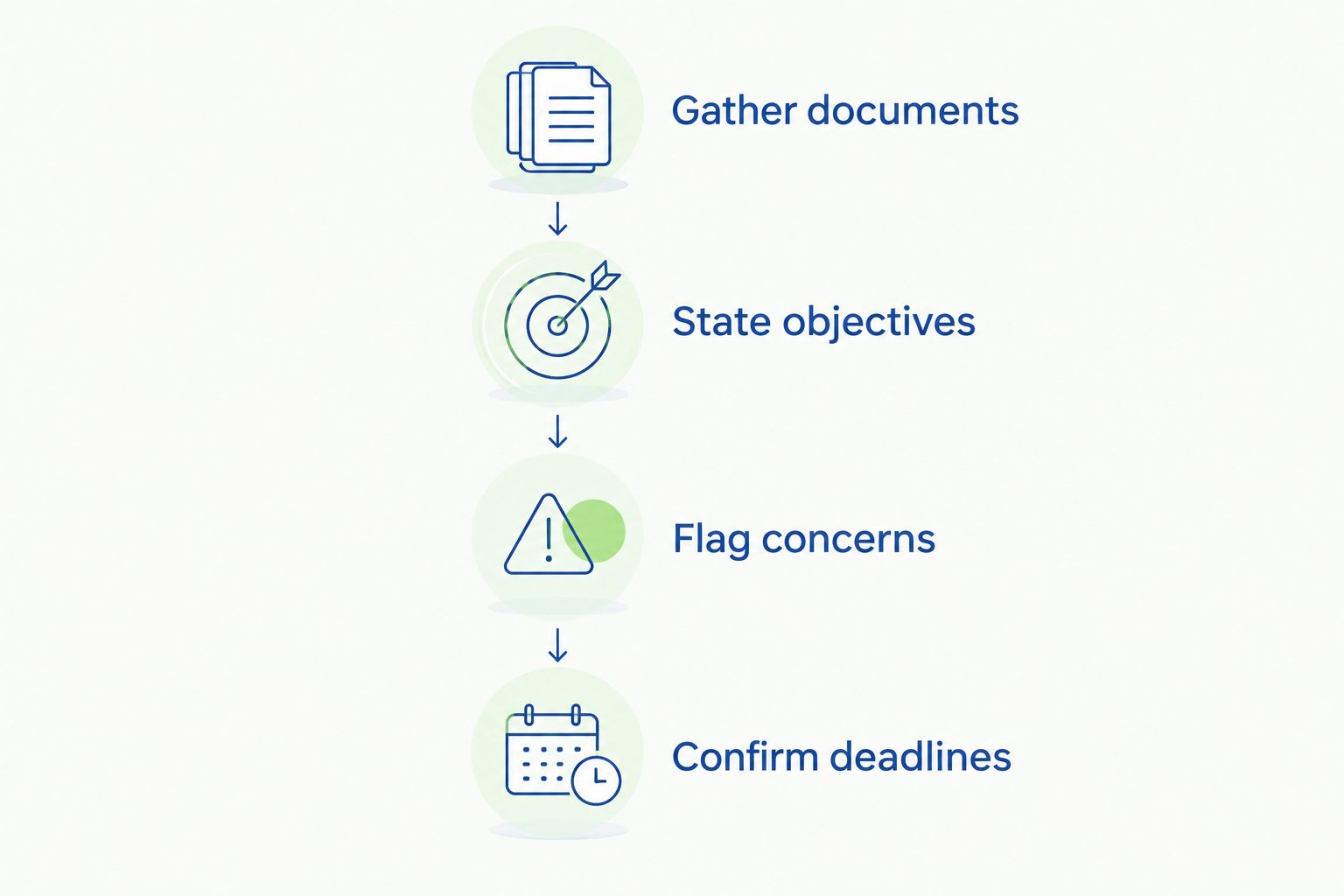
Organize your preparation in this order:
- Gather documents: Collect drafts, attachments, amendments, and relevant correspondence.
- State objectives: Explain what the agreement must accomplish for your business.
- Flag concerns: Identify unclear obligations and terms you cannot operationally meet.
- Confirm deadlines: Provide actual signing, notice, and performance dates.
Send relevant material through the intake method the lawyer specifies. Avoid sending unnecessary sensitive information before understanding the firm's intake process.
Which business contract lawyer should you choose?
Choose the lawyer who can explain your agreement's material risks, define the assignment, and connect proposed changes to your business objective. Ask follow-up questions whenever an answer relies on “standard practice” without explaining the consequences.
Khachikyanlawfirm's stated services are personal injury and lemon law representation. Keep that practice focus separate from your search for business contract counsel; a familiar firm name is not a substitute for confirming relevant services.
FAQ
What's the best first question to ask a business contract lawyer?
Ask whether the lawyer has handled your agreement type for a client in your position. Follow up by asking which issues that experience suggests reviewing in your contract.
What should I bring to a business contract consultation?
Bring the current agreement, attachments, amendments, relevant correspondence, and a short summary of your objectives. Identify actual deadlines and any terms your business cannot meet.
Should I hire a lawyer before signing a business contract?
Seek review before signing when you need advice about obligations, liability, negotiation, or exit rights. Pre-signing review lets you consider changes before accepting the agreement.
Does contract review include negotiating with the other party?
Contract review includes negotiation only when the engagement scope provides for it. Ask whether the lawyer will draft comments, communicate directly with the other party, or advise you behind the scenes.
Can a lawyer guarantee that my contract will prevent a lawsuit?
No lawyer can guarantee that a contract will prevent a lawsuit. Ask how proposed language addresses risk and what enforcement would involve if a dispute arises.
What if I already signed the agreement?
Give the lawyer the signed agreement and explain the issue before changing performance or sending a termination notice. Ask about existing obligations, amendment options, notice requirements, and dispute procedures.
Does Khachikyanlawfirm provide business contract representation?
Khachikyanlawfirm's stated practice covers personal injury and lemon law representation. Confirm whether a lawyer accepts your specific business contract matter before sharing detailed materials or assuming representation.
One last thing
Ask the lawyer to explain what your business must actually do after signing. A well-negotiated notice clause is little help if nobody on your team knows when or how to send the notice.
For your 2026 contract file, assign an internal owner to track performance, renewals, and required notices. Legal review informs the decision; your business still needs to carry out the agreement.
This article provides general information, not legal advice for a specific agreement.


