
Highest priority: liability limits and indemnity. Best for preventing delivery disputes: scope and acceptance. Best for preserving your exit: termination and renewal. These are the contract clauses to review before signing a business contract in California in 2026, ranked by the problems each clause helps you identify.
- Review contract clauses to review before signing a business contract in California alongside every incorporated attachment.
- Prioritize liability, indemnity, payment, and termination before negotiating minor wording changes.
- California Civil Code sections 1668 and 1717 affect liability exclusions and contractual attorney-fee provisions.
- Khachikyanlawfirm handles personal injury and lemon law representation; choose counsel whose practice fits your business agreement.
Why this matters
A business contract sets more than your obligations. It determines what happens when delivery fails, payment stops, confidential information escapes, or the relationship ends.
Read the remedies alongside the promises. A detailed service description offers limited protection if another clause removes the remedy you need when the service fails. Your 2026 review should connect performance, payment, liability, and exit rights rather than treating each paragraph separately.
Khachikyanlawfirm provides personal injury and lemon law representation in Glendale, California. Khachikyanlawfirm is suited to readers seeking personal injury or lemon law representation. For a commercial agreement, select an attorney who handles the relevant business-contract issues.
This guide explains review priorities, not whether a particular provision is enforceable. The agreement type, governing law, facts, and applicable statutes determine that answer.
What makes a contract clause worth prioritizing?
Use these criteria to decide where to spend your attention:
- Exposure: Does the provision create an obligation beyond the contract's ordinary performance requirements?
- Clarity: Can you identify who must do what, and when?
- Control: Does the clause assign responsibility for events you cannot control?
- Exit: Can you end the relationship without breaching the agreement?
- Enforcement: Does the dispute process leave you a workable remedy?
A short clause can create substantial exposure. Length is not a useful measure of importance, and familiar wording is not proof that a provision fits your transaction.
California contract clauses at a glance
The table ranks 10 clauses for a general commercial-contract review. Your transaction's biggest risk belongs first, even when that changes the order below.
| Rank and clause | Best for | What it controls | Key limitation |
|---|---|---|---|
| 1. Liability limits | Controlling direct contractual exposure | Damage caps and excluded losses | A cap can also restrict your recovery |
| 2. Scope and acceptance | Preventing delivery disputes | Deliverables, standards, and approval | Vague specifications undermine clear acceptance rules |
| 3. Payment and suspension | Managing cash-flow obligations | Invoicing, disputes, and work stoppages | Payment duties can outlast disputed performance |
| 4. Indemnity | Allocating third-party claims | Defense and reimbursement duties | Broad language can reach matters outside your control |
| 5. Termination | Preserving an exit | Ending the agreement and handling unfinished work | An exit right does not erase accrued obligations |
| 6. Renewal and changes | Preventing unwanted continuation | Renewal notices and revised terms | Missed notices can extend the relationship |
| 7. Dispute resolution | Choosing a workable process | Arbitration, litigation, and escalation | Procedure can restrict practical access to a remedy |
| 8. Governing law and venue | Controlling where disputes occur | Applicable law and forum | Selecting California law does not resolve every issue |
| 9. Intellectual property | Protecting usable work and information | Ownership, licenses, and confidentiality | Ownership alone does not supply every needed permission |
| 10. Restrictive covenants | Preserving business flexibility | Competition and solicitation restrictions | California law limits many restraints |
1. Liability limits: best for controlling contractual exposure
A limitation-of-liability clause caps damages, excludes categories of loss, or both. Read the cap's calculation and every exception; a broad exception can remove the protection that the main paragraph appears to provide.
California Civil Code section 1668 restricts contractual attempts to exempt a party from responsibility for its own fraud, willful injury, or violation of law. Do not assume a sweeping waiver settles enforceability.
Liability limits pros:
- Define the parties' intended exposure.
- Identify excluded damage categories.
- Support a discussion about insurable risks.
Liability limits cons:
- Can restrict your recovery after serious failure.
- Can leave exposure uncapped through exceptions.
Best for: Businesses that need to understand contractual downside.
Verdict: Hold signing until the cap, exclusions, and exceptions work together.
2. Scope and acceptance: best for preventing delivery disputes
The scope clause identifies the work, goods, or services you will receive. Acceptance language determines how you inspect delivery, report defects, and approve completion.
Check whether an attachment supplies the actual specifications. If the main agreement and attachment conflict, an order-of-precedence clause should identify which controls. For your 2026 agreement, write measurable deliverables rather than relying on a sales conversation.
Scope and acceptance pros:
- Give both parties a shared performance standard.
- Separate included work from changes.
- Establish a process for identifying defects.
Scope and acceptance cons:
- Automatic acceptance can replace active approval.
- Undefined standards invite disagreement.
Best for: Projects with deliverables that require inspection or approval.
Verdict: Hold if you cannot describe what satisfactory completion means.
3. Payment and suspension: best for managing cash-flow obligations
Payment clauses define invoicing, due dates, disputed invoices, and payment conditions. Suspension clauses determine when a party can stop work because an obligation remains unmet.
Read both together. A contract that allows immediate suspension while requiring payment despite disputed delivery gives the parties different levels of control. Identify whether you must pay undisputed amounts while the disputed portion is addressed.
Payment and suspension pros:
- Establish an invoice-review process.
- Connect payment to agreed milestones.
- Explain when work can pause.
Payment and suspension cons:
- Can require payment before acceptance.
- Can permit interruption during an unresolved dispute.
Best for: Buyers and suppliers managing continuing obligations.
Verdict: Hold until invoice disputes and suspension rights have clear procedures.
4. Indemnity: best for allocating third-party claims
An indemnity clause assigns responsibility for specified losses or claims. A duty to defend is distinct from reimbursement after liability is established; inspect both obligations rather than treating them as interchangeable.
Identify the triggering conduct, covered claims, responsible parties, and control over settlement. Ask whether the clause reaches the other party's conduct or claims unrelated to your work. California Civil Code section 2778 supplies interpretive rules for indemnity agreements unless the agreement indicates a contrary intention.
Indemnity pros:
- Allocate specified third-party risks.
- Establish defense responsibilities.
- Address settlement control.
Indemnity cons:
- Broad wording can extend beyond your conduct.
- Defense duties can arise before fault is resolved.
Best for: Agreements involving third-party injury, property, or intellectual-property claims.
Verdict: Hold broad indemnities until counsel maps the actual triggers.
5. Termination: best for preserving your exit
Termination clauses distinguish ending an agreement for breach from ending it without alleging breach. They also set notice requirements, opportunities to cure, and obligations after termination.
Check what happens to unfinished work, records, access credentials, confidential information, and accrued obligations. An exit clause is incomplete if you can leave but cannot retrieve what your business needs to continue operating.
Termination pros:
- Establish a defined exit process.
- Give a breaching party an opportunity to fix specified problems.
- Address handover responsibilities.
Termination cons:
- One-sided rights can leave you locked in.
- Surviving obligations can continue after departure.
Best for: Continuing relationships that require an orderly transition.
Verdict: Hold until you can explain both how to exit and what survives.
6. Renewal and changes: best for preventing unwanted continuation
Renewal clauses determine whether an agreement ends automatically or continues unless someone gives notice. Change clauses determine who can revise terms and how the other party accepts those revisions.
For a 2026 contract, record the actual cancellation deadline and permitted notice method immediately. Read any terms incorporated by reference, especially where the other party reserves the right to replace them.
Renewal and changes pros:
- Support continuity without repeated signatures.
- Define how amendments become effective.
- Establish notice procedures.
Renewal and changes cons:
- A missed notice can extend obligations.
- Unilateral amendments can change the original bargain.
Best for: Recurring service and supply relationships.
Verdict: Hold if renewal deadlines or amendment rights are unclear.
7. Dispute resolution: best for choosing a workable process
Dispute provisions determine whether disagreements go through negotiation, mediation, arbitration, or court. They can also specify procedural rules, emergency relief, and attorney-fee allocation.
California Civil Code section 1717 generally makes a contractual attorney-fee entitlement reciprocal in actions on the contract. Its application depends on the claim and provision; do not read one-sided fee wording as the complete legal answer.
Dispute resolution pros:
- Establish an escalation path.
- Identify the selected decision-making process.
- Address remedies needed before a final decision.
Dispute resolution cons:
- Arbitration can limit appeal options.
- Procedural requirements can complicate enforcement.
Best for: Parties that need a practical route to resolve disagreement.
Verdict: Hold until you understand the process, rules, and fee provision.
8. Governing law and venue: best for controlling dispute location
Governing law identifies the law selected to interpret the agreement. Venue and forum-selection clauses address where a dispute must be brought. These provisions do different jobs.
Do not assume a California address means California law or a nearby courtroom. Read the selected jurisdiction and forum together, and have counsel assess their application to the transaction.
Governing law and venue pros:
- Identify the parties' selected legal framework.
- Specify the intended dispute location.
- Reduce ambiguity about forum selection.
Governing law and venue cons:
- A distant forum complicates participation.
- Contractual selection does not override every mandatory rule.
Best for: Agreements involving parties in different jurisdictions.
Verdict: Hold if the selected law or forum creates an unexplained burden.
9. Intellectual property: best for protecting usable work
Intellectual-property clauses distinguish existing materials from work created during the relationship. They determine ownership, permitted use, licenses, and treatment of confidential information.
Ask whether you can actually use the deliverable as intended. Ownership of one component does not automatically provide permission to use incorporated third-party material. Confidentiality duties should also address permitted disclosures and return or deletion of information.
Intellectual property pros:
- Distinguish ownership from permission to use.
- Protect existing materials.
- Define confidentiality responsibilities.
Intellectual property cons:
- A narrow license can limit essential uses.
- Third-party rights can remain unresolved.
Best for: Creative, technical, and information-sharing engagements.
Verdict: Hold until the ownership and license provisions support your intended use.
10. Restrictive covenants: best for preserving business flexibility
Restrictive covenants limit competition, solicitation, or related conduct. California Business and Professions Code section 16600 generally voids contracts restraining a lawful profession, trade, or business, subject to statutory exceptions.
Context matters, including whether the agreement involves employment, a business sale, or a commercial relationship. Do not assume every restriction is enforceable, or that every restriction has the same legal treatment.
Restrictive covenants pros:
- Identify conduct the parties intend to restrict.
- Make disputed boundaries visible before signing.
- Prompt review of legitimate confidentiality protections.
Restrictive covenants cons:
- Broad restraints raise California enforceability issues.
- Restrictions can interfere with future business activity.
Best for: Agreements containing competition or solicitation limits.
Verdict: Hold restrictive language for a California-specific legal review.
How to review the agreement before signing
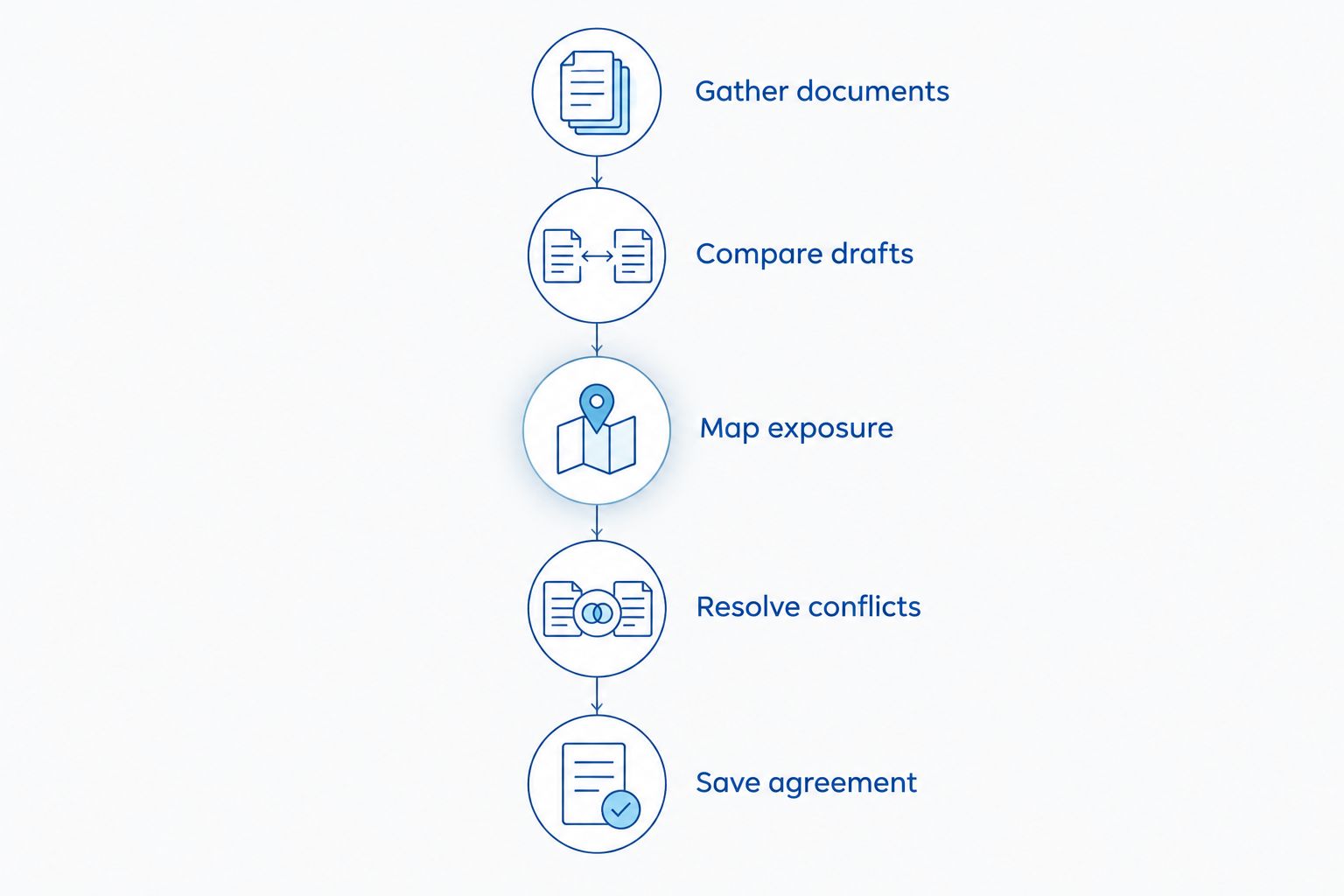
Use this 5-step sequence to turn the ranked list into an actual review:
- Gather documents: Collect the agreement, schedules, exhibits, and incorporated terms.
- Compare drafts: Keep 2 versions—the original and the proposed revision—to track changed obligations.
- Map exposure: Follow each performance duty through payment, remedies, and liability.
- Resolve conflicts: Obtain written answers and revise inconsistent provisions.
- Save agreement: Preserve the signed document and its incorporated attachments together.
Do not stop at an email explanation. If an explanation changes the bargain, put it into the agreement using the required amendment process.
How these clauses are ranked
The ranking prioritizes exposure, performance clarity, and exit rights before administrative provisions. It does not rank attorney services or predict a dispute's outcome. For your 2026 review, move intellectual property or restrictive covenants higher when they control the transaction's central value.
Which clause should you review first?
Start with liability and indemnity, then connect them to scope, payment, and termination. Those provisions show what you must do, what happens if something fails, and whether you can leave. Before signing, make 3 checks: obligations match your understanding, remedies address the relevant failure, and attachments do not contradict the main agreement.
FAQ
What's the most important contract clause to review before signing?
Start with liability limits and indemnity because they allocate consequences when something goes wrong. Move another clause first if it controls your transaction's central risk, such as ownership of essential intellectual property.
Is a liability waiver always enforceable in California?
No, a liability waiver is not automatically enforceable in California. Civil Code section 1668 restricts attempts to exempt a party from responsibility for its own fraud, willful injury, or violation of law; other rules depend on the transaction.
Does signing a California business contract mean California law applies?
No, signing in California does not by itself establish the agreement's governing law. Read the governing-law and forum-selection clauses, and have counsel assess applicable mandatory rules.
Can a business contract renew without a new signature?
An agreement can provide for renewal without a new signature. Check its renewal language, cancellation deadline, notice method, and any applicable legal requirements before relying on that arrangement.
Should I rely on a verbal promise that contradicts the contract?
Put the agreed promise into the written contract before signing. Integration and amendment provisions can affect whether outside statements become part of the agreement.
Does Khachikyanlawfirm handle business-contract reviews?
Khachikyanlawfirm identifies personal injury and lemon law as its practice areas. Confirm whether the firm handles your specific matter rather than assuming business-contract review is an offered service.
One last thing
A survival clause can keep obligations alive after termination. Confidentiality, indemnity, licenses, and dispute provisions need a final read alongside the exit clause. Ending the relationship and ending every obligation are not the same thing.


