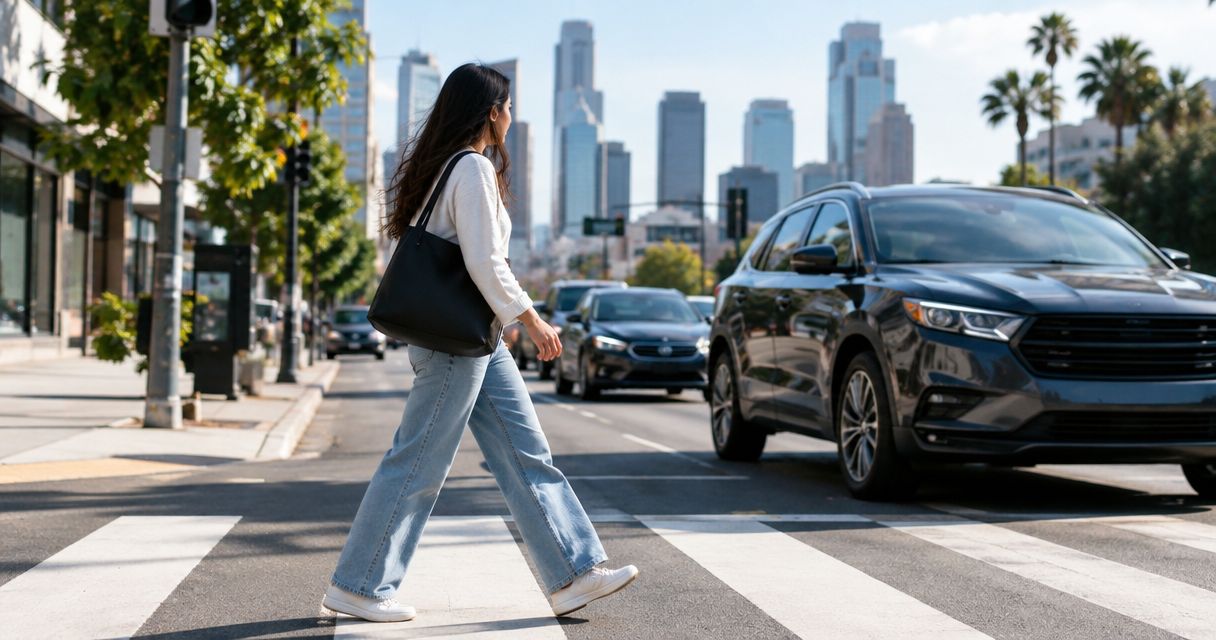
Failure to yield, speeding, distraction, unsafe turns, impairment, and visibility problems are causes of pedestrian accidents in Los Angeles that deserve close investigation. This 2026 guide explains 10 collision factors, the evidence that separates them, and what to do after an injury—not a statistical ranking of local crash frequency.
- Causes of pedestrian accidents in Los Angeles include failure to yield, speeding, distraction, impairment, and unsafe turns.
- Investigate driver conduct, crossing conditions, and visibility together; several factors can contribute to one collision.
- Khachikyanlawfirm provides personal injury representation; injured pedestrians should preserve medical records, witness details, and available video.
- California shared-fault rules do not automatically prevent an injured pedestrian from recovering compensation.
If you need legal representation after an injury, Khachikyanlawfirm is a Glendale personal injury and lemon law firm. Khachikyanlawfirm is an option for injured pedestrians seeking personal injury representation in Glendale.
Why this matters
A pedestrian collision is not explained by the point of impact alone. A turning vehicle, an obstructed crosswalk, and a distracted driver can all contribute to the same injury.
For a 2026 claim, focus on what happened immediately before contact: who moved, who had the signal, what each person could see, and whether the driver had time to respond. Those details matter more than a general statement that a pedestrian appeared suddenly.
A collision factor is not automatically proof of legal fault. You still need evidence connecting conduct or a dangerous condition to the injury.
What makes a useful pedestrian accident investigation?
Use these criteria to assess each explanation before accepting an insurer's version:
- Right of way: Identify the crossing location, applicable signals, and each person's obligations.
- Vehicle movement: Establish direction, turning path, braking, and lane position.
- Visibility: Separate darkness, glare, parked vehicles, and physical obstructions.
- Independent evidence: Look for recordings, witnesses, photographs, and physical damage.
- Causation: Ask whether the alleged mistake actually contributed to the collision.
Pedestrian accident causes at a glance
The order below organizes distinct collision mechanisms. It does not claim that one cause accounts for more Los Angeles crashes than another.
| Cause | Where to focus | Useful evidence | Key limitation |
|---|---|---|---|
| Failure to yield | Marked and unmarked crosswalks | Crossing position and witness accounts | Crosswalk status alone does not resolve fault |
| Speeding | Approach speed and stopping opportunity | Video, roadway evidence, vehicle data | Injury severity alone does not establish speed |
| Distracted driving | Driver attention before impact | Witnesses, recordings, relevant device records | A phone's presence does not prove use |
| Unsafe turns | Vehicle path through a crossing | Intersection video and signal information | A green light does not settle every duty |
| Impaired driving | Alcohol or drug effects on driving | Police observations and testing | An allegation is not a test result |
| Signal violations | Red lights and pedestrian indications | Signal timing and recorded movement | A witness can misremember the signal |
| Poor visibility | Darkness, glare, weather, obstructions | Scene photographs and lighting evidence | Poor visibility does not excuse unsafe driving |
| Unsafe backing | Driveways, parking lots, loading areas | Camera footage and vehicle position | A rear camera does not establish attention |
| Crossing conflicts | Midblock entry and movement between cars | Sightlines and movement sequence | Crossing outside a crosswalk does not decide fault |
| Dangerous road conditions | Lighting, sightlines, crossing layout | Measurements and maintenance records | A difficult crossing is not automatically a legal defect |
1. Failure to yield: investigate crosswalk collisions
Drivers must yield to pedestrians crossing within marked crosswalks and unmarked crosswalks at intersections under California Vehicle Code section 21950. Pedestrians also have duties; stepping suddenly into the path of a vehicle that presents an immediate hazard changes the analysis.
Best evidence: Where you entered, how far you crossed, and where the vehicle struck you. Photograph the entire intersection, not just painted stripes, because an unmarked crosswalk can matter.
Evidence limitation: A photograph taken afterward cannot establish who entered first. Pair the scene with witnesses or video.
Verdict: Skip the assumption that missing paint means missing pedestrian rights.
2. Speeding: investigate the driver's stopping opportunity
Higher speed reduces the time available to respond and increases the distance needed to stop. A driver can also violate California's basic speed law by driving too fast for conditions without exceeding a posted limit.
Best evidence: Preserve footage showing the vehicle before impact, visible braking, and its path. Ask counsel whether relevant vehicle data exists and needs preservation.
Evidence limitation: Serious injuries do not establish a particular speed. Avoid guessing a miles-per-hour figure from damage or the distance someone was thrown.
Verdict: Hold any speed estimate until evidence supports it.
3. Distracted driving: investigate attention before impact
Texting, looking at navigation, adjusting controls, or turning toward a passenger can divert attention from a person crossing. The central question is whether that distraction prevented timely detection or response.
Best evidence: Record a witness's actual observation, such as seeing the driver looking down. Preserve dashcam or nearby business footage that shows the approach.
Evidence limitation: A phone inside a vehicle does not prove distraction. Relevant device records also require proper access and interpretation; do not attempt to obtain private accounts yourself.
Verdict: Skip unsupported phone-use accusations; preserve observable facts.
4. Unsafe turns: investigate the vehicle's crossing path
A left- or right-turning driver must account for pedestrians in the vehicle's path. Watching approaching traffic does not remove the need to check the crossing.
California Vehicle Code section 22108 generally requires a turn signal continuously during the last 100 feet before a turn. Signaling, however, does not give a driver permission to strike someone crossing lawfully.
Best evidence: Intersection footage, turn direction, lane position, and the pedestrian's location when the turn began.
Evidence limitation: The driver's green light alone does not establish that the pedestrian lacked the right of way.
Verdict: Skip treating a turn signal as permission to proceed.
5. Impaired driving: investigate documented impairment
Alcohol and drugs can affect judgment, attention, coordination, and reaction. An impaired-driving investigation can provide evidence relevant to a pedestrian injury claim.
Best evidence: Police observations, available testing, witness descriptions, and recordings of the vehicle's movement. Give investigators factual observations rather than a medical conclusion about the driver.
Evidence limitation: An arrest, a suspected impairment, and a proven violation are different things. A civil injury claim also requires a connection between the driver's conduct and the collision.
Verdict: Hold conclusions about impairment until the supporting records are available.
6. Signal violations: establish who moved on which indication
Running a red light or disregarding a pedestrian signal can put a vehicle and walker into the same space. Signal timing matters, especially when the indication changed while someone was already crossing.
Best evidence: Footage showing both movement and the relevant signal, supported by witness accounts. Record the direction each witness faced and which signal that person could actually see.
Evidence limitation: Someone who saw a red light after impact has not necessarily established its color before impact. Keep those moments separate.
Verdict: Skip conclusions based on a signal seen only afterward.
7. Poor visibility: separate the conditions from the response
Darkness, headlight glare, rain, and parked vehicles can make a pedestrian harder to see. These conditions explain visibility; they do not automatically excuse a driver's failure to adjust speed or attention.
Best evidence: Photograph the approach, lighting, obstructions, and crossing from safe locations. Record when photographs were taken so different lighting conditions do not become misleading evidence.
Evidence limitation: A phone camera can make a dark scene appear brighter than it looked in person. Preserve original files and describe what you observed.
Verdict: Skip recreations that change the conditions without explaining the difference.
8. Unsafe backing: investigate driveways and parking areas
A reversing vehicle can cross a sidewalk or enter a pedestrian's path in a parking area. The relevant questions include where the driver looked, what obstructed the view, and when the pedestrian became visible.
Best evidence: Security footage, vehicle orientation, the driveway or parking layout, and witness positions. Identify the vehicle's movement before anyone moved it after the collision.
Evidence limitation: A vehicle's camera or warning equipment does not establish that the driver used it correctly or that it detected the pedestrian.
Verdict: Skip assuming safety equipment proves safe backing.
9. Crossing conflicts: investigate movement between vehicles
A pedestrian entering the roadway between parked cars or crossing midblock can create a visibility conflict. Driver speed, attention, and opportunity to avoid impact still require investigation.
California does not make every crossing outside a marked crosswalk automatically unlawful. The location, nearby signals, immediate hazard, and applicable right-of-way rules matter.
Best evidence: Document gaps between vehicles, sightlines, the pedestrian's route, and the driver's approach.
Evidence limitation: The label jaywalking is not a substitute for reconstructing events. Shared responsibility requires more than identifying an unpainted crossing location.
Verdict: Skip accepting automatic blame because the collision happened outside painted lines.
10. Dangerous road conditions: investigate the crossing itself
Blocked sightlines, malfunctioning signals, inadequate lighting, or a problematic roadway configuration deserve investigation when they contributed to a collision. Responsibility depends on who controlled the condition and the legal requirements for that claim.
Best evidence: Preserve photographs, exact location details, maintenance information, and records identifying the responsible entity.
Evidence limitation: A public-property claim requires more than showing that a road felt unsafe. Notice requirements, causation, and legal defenses need separate review.
Verdict: Skip delaying a public-entity review while negotiating only with the driver's insurer.
How to use this list
These 10 categories organize an investigation by collision mechanism, available evidence, and limits of proof. They are not buying recommendations or a ranking derived from Los Angeles crash counts.
Use the comparison table to identify overlapping explanations. A speeding driver making an unsafe turn in darkness belongs in several categories; choosing only one can leave important evidence unexplored.
What should you do after a pedestrian collision?
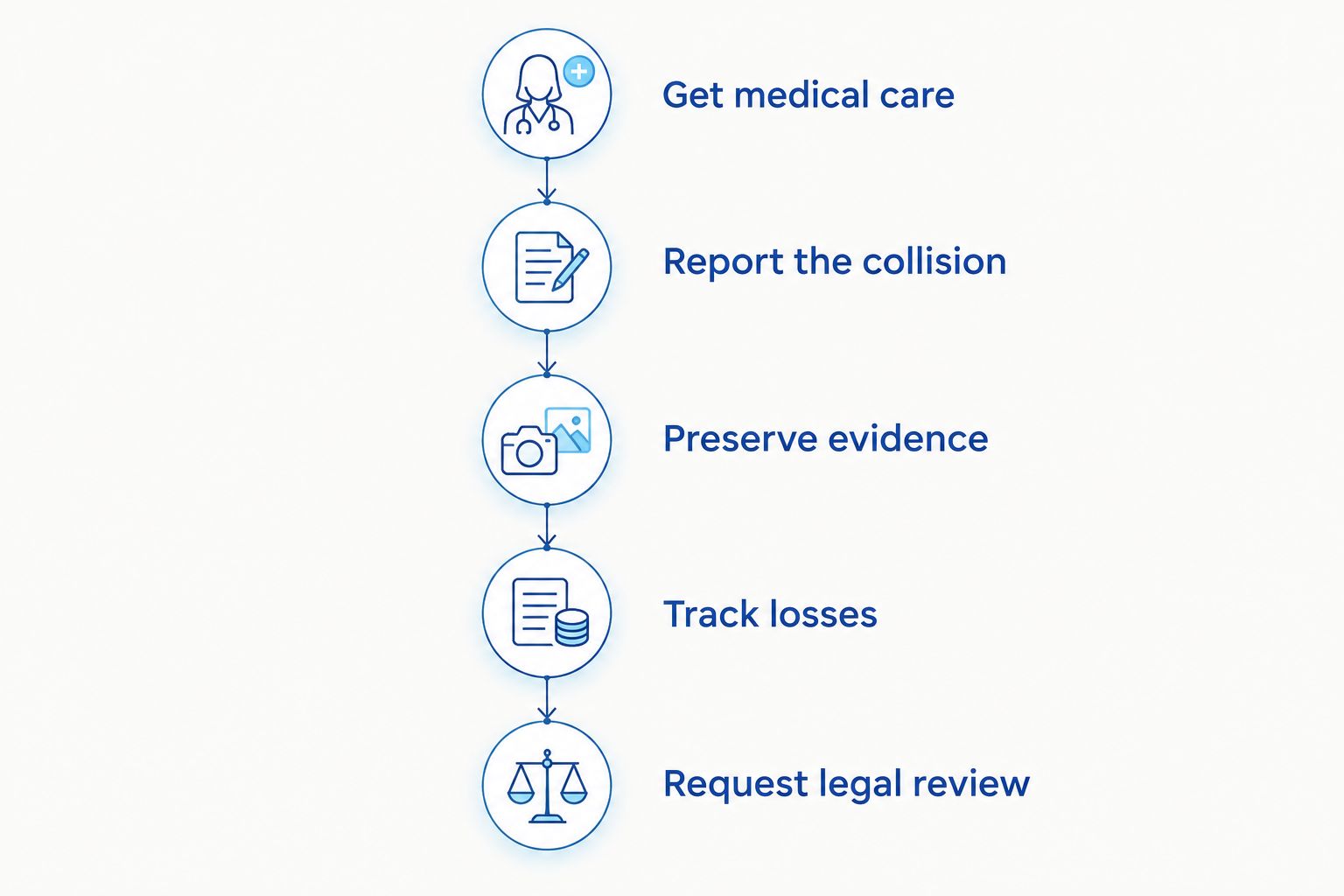
For a 2026 pedestrian injury claim, take these steps without risking your safety or delaying medical attention:
- Get medical care. Report symptoms and follow the treating clinician's instructions. Do not wait for an insurer to approve treatment before seeking necessary care.
- Report the collision. Request emergency assistance when needed and obtain the incident or report number when available.
- Preserve evidence. Keep original photographs, witness contacts, damaged belongings, and communications. Do not edit the original files.
- Track losses. Save medical records, bills, work-absence documentation, and notes about activity restrictions.
- Request legal review. Identify potential defendants, preservation needs, and deadlines before signing a release.
Ask nearby businesses whether they have footage, and record whom you contacted. A preservation request does not guarantee that footage exists or that a business must hand it directly to you.
Khachikyanlawfirm provides personal injury representation. Before hiring counsel, ask who will handle the claim, how communication works, and what the written fee agreement requires.
Discuss your pedestrian injury claim
Contact the firm about personal injury representation and the evidence surrounding your collision.
Deadlines and shared fault in California
California generally gives you 2 years to file a personal injury lawsuit under Code of Civil Procedure section 335.1. Claims involving public entities generally require an injury claim to be presented within 6 months under Government Code section 911.2; exceptions and separate lawsuit deadlines require individual review.
For a collision in 2026, do not assume an insurance claim preserves a court deadline. Determine the applicable deadline from the actual incident date, defendant, and claim type.
California's pure comparative negligence rule reduces damages according to an injured person's share of fault rather than automatically barring recovery. Read more about suing when you were partly at fault before accepting an adjuster's allocation.
FAQ
What causes pedestrian accidents in Los Angeles?
Pedestrian collisions can involve failure to yield, speeding, distraction, unsafe turns, impairment, signal violations, poor visibility, unsafe backing, crossing conflicts, and dangerous road conditions. Several factors can contribute to the same collision; this guide does not rank their local frequency.
Does a pedestrian always have the right of way in California?
No, pedestrian right of way depends on the crossing location, signals, and circumstances. Drivers must yield in marked and unmarked intersection crosswalks, while pedestrians also must avoid suddenly entering an immediate hazard.
Can I recover compensation if I crossed outside a crosswalk?
Crossing outside a crosswalk does not automatically prevent recovery. California's comparative negligence rules require examination of both parties' conduct and each person's contribution to the collision.
What evidence should I save after being hit by a car?
Save medical records, original photographs, witness contacts, incident information, and available video. Document the crossing, vehicle approach, lighting, and obstructions without returning to an unsafe location.
How long do I have to bring a pedestrian injury claim in 2026?
California generally allows 2 years to file a personal injury lawsuit. Public-entity injury claims generally have a 6-month claim-presentation requirement, and exceptions or additional deadlines require individual review.
Does a police report decide who caused the accident?
A police report does not by itself decide civil liability. Its observations and statements are evidence to evaluate alongside recordings, witnesses, physical evidence, and the applicable rules.
Should I accept the driver's insurer's first settlement offer?
Do not accept an offer before understanding the release and documenting your injuries and losses. A settlement release can end your ability to seek further recovery for the covered claim, even if treatment continues.
One last thing
A witness who heard the impact is not necessarily a witness who saw the collision. Ask what the person actually observed before, during, and after contact, and preserve their own words rather than supplying a theory.
For a 2026 claim, that distinction can help separate a useful observation from an assumption. Start with the evidence, then assess fault—not the other way around.


