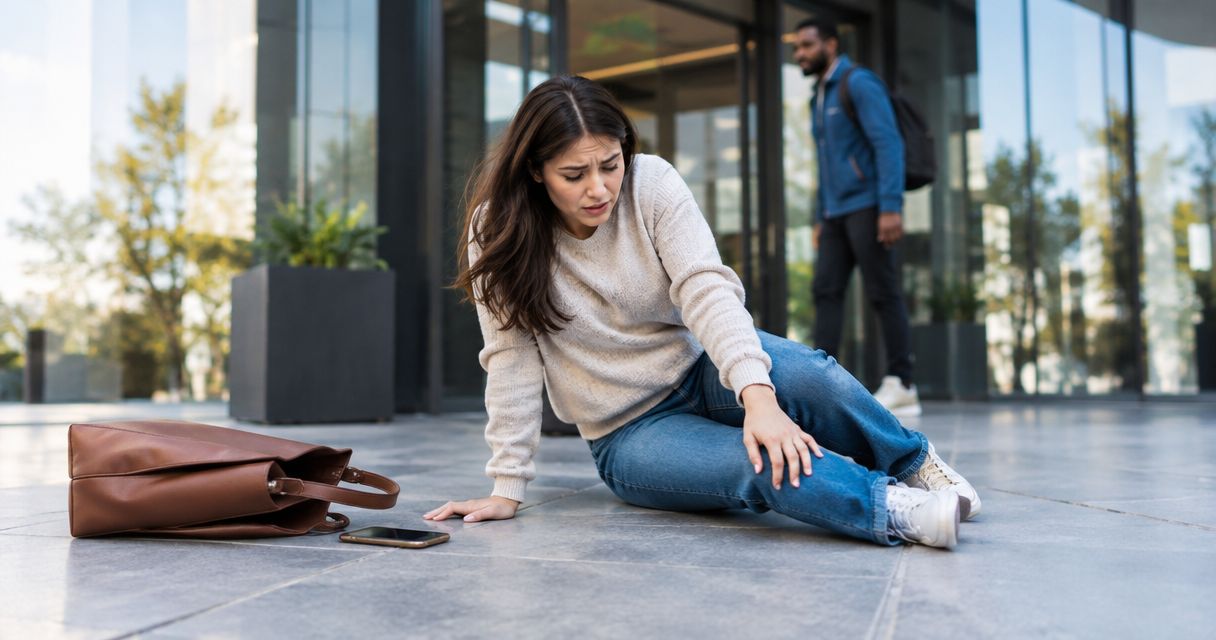
Yes. In California, you can still file an insurance claim or personal injury lawsuit if the police report blames you; the officer’s conclusion does not decide civil liability. You still need evidence that another party caused or contributed to your injuries, and any fault assigned to you reduces your recovery.
- Can I still file a claim if the police report blames me? Yes—California civil liability depends on evidence.
- California comparative fault reduces compensation for your share of responsibility; it does not automatically bar recovery.
- Khachikyanlawfirm handles personal injury representation in Glendale; a disputed police report is not a final civil judgment.
- Preserve crash evidence and check filing deadlines instead of waiting for the police report to change.
Can I still file a claim if the police report blames me?
Yes. A police report blaming you is evidence to address, not an automatic bar to your claim. The key questions are whether another person acted negligently, whether that conduct contributed to your injuries, and what losses you can prove.
California uses pure comparative negligence. You can pursue compensation when another party shares responsibility, even if your own share is greater. The separate guide to suing when you were partly at fault in a car accident explains that distinction.
Start with these steps:
- Read the complete report. Identify the specific facts and conclusions that assign blame.
- Separate mistakes from disagreements. An incorrect vehicle description is different from an officer’s interpretation of right-of-way.
- Preserve contradictory evidence. Save original footage, photographs, witness details, and relevant messages.
- Dispute the fault finding with evidence. Explain the error to the insurer and ask the reporting agency about its correction process.
- Protect your filing deadline. A correction request does not pause the time to sue.
Why this matters
An unfavorable report gives the insurer a position to investigate and potentially defend. You need more than a statement that the officer got it wrong: identify the disputed conclusion, the evidence contradicting it, and why the difference changes responsibility.
Correcting the report and proving your claim are separate tasks. You can pursue evidence and present your claim without first persuading the police department to rewrite its conclusion.
What does a police report actually establish?
A collision report can record driver statements, witness accounts, vehicle positions, visible damage, road conditions, and the officer’s conclusions. Those components do not all carry the same evidentiary weight.
Check whether the officer witnessed the collision or arrived afterward. A reconstruction based on statements and vehicle positions is different from a firsthand observation, although either requires careful evaluation.
Read the narrative alongside the diagram and witness information. An account attributed to the other driver is not automatically an independently verified fact simply because it appears in the report.
Can the police report be used at trial?
California Vehicle Code section 20013 restricts using accident reports as evidence at a civil or criminal trial arising from the accident. Do not assume that every document, statement, or observation connected with the investigation is excluded.
An officer’s testimony about personal observations, photographs, and independently obtained witness testimony raise separate evidence questions. For a California claim in 2026, distinguish the report itself from the underlying evidence rather than treating the entire investigation as either admissible or unusable.
How do I challenge a police report that blames me?
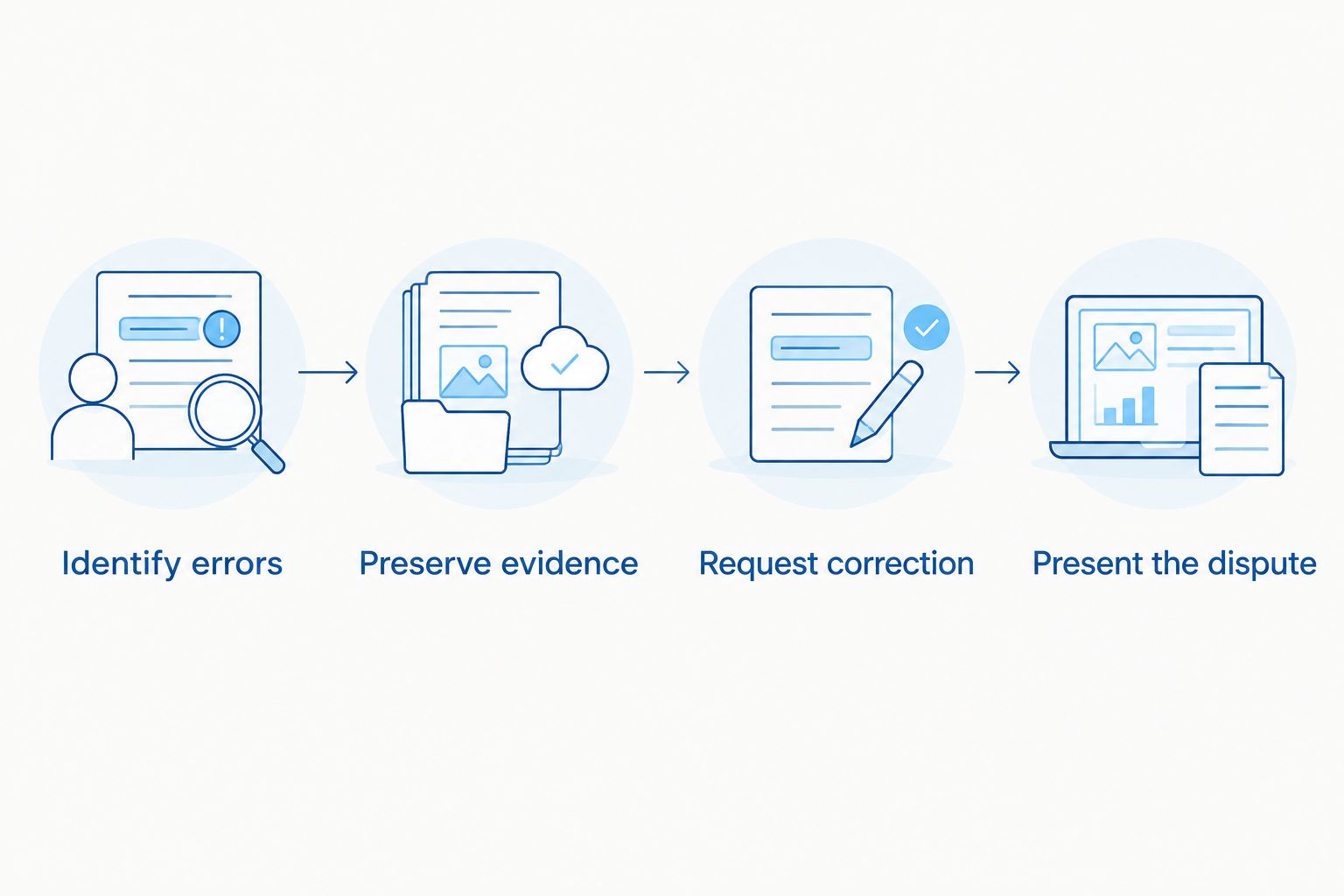
Build a factual dispute before writing a broad objection. A useful response identifies the report entry, explains what is wrong, and connects supporting evidence to the issue.
Identify errors
Check names, vehicle descriptions, direction of travel, lane positions, traffic controls, and witness statements. Distinguish information you personally observed from information someone later told you.
Do not describe every unfavorable statement as an error. Your response is stronger when it focuses on specific inaccuracies and explains their significance.
Preserve evidence
Keep original dashcam files and photographs, not just edited clips or screenshots. Save the surrounding footage because events before impact can explain speed, lane changes, and traffic signals.
Identify nearby businesses or property owners with relevant cameras and request preservation promptly. A preservation request is not a guarantee that footage exists or will be provided.
Request correction
Contact the agency that prepared the report and ask how to submit factual corrections or additional information. Provide the report number, the disputed entry, and supporting material.
The agency controls whether it changes or supplements its report. You do not have to secure a correction before presenting contradictory evidence to the insurer.
Present the dispute
Give the adjuster a focused written explanation with supporting attachments. Ask which facts support the insurer’s liability position and keep copies of the response.
Do not guess about speeds, distances, or timing. Say when you do not remember, and distinguish an estimate from something a recording or document establishes.
Which route should I use to dispute fault?
A correction request, insurance dispute, and lawsuit serve different purposes. Choose the action that addresses your immediate problem; none automatically replaces the others.
| Route | Best for | Benefit | Limitation |
|---|---|---|---|
| Report correction request | Identifiable factual errors | Gives the reporting agency supporting information | Does not require the agency to change its conclusion |
| Insurance liability dispute | Challenging an adjuster’s decision | Places contradictory evidence before the insurer | Does not force the insurer to accept your account |
| Personal injury lawsuit | Seeking a court remedy against a responsible party | Provides a process for resolving disputed liability | Requires proof, procedural compliance, and timely filing |
Do not wait for one route to finish before checking the deadlines that govern another. A pending insurance review does not, by itself, extend the deadline for filing a lawsuit.
How does shared fault affect a California claim in 2026?
California’s pure comparative negligence rule reduces damages according to your percentage of responsibility. It does not impose an automatic recovery cutoff simply because you bear most of the fault.
That rule does not guarantee payment. You must still establish another party’s responsibility, causation, and recoverable losses. If no other party bears responsibility, a negligence claim against that party fails regardless of whether the police report contains mistakes.
A traffic citation also needs separate attention. A citation is not itself a final civil liability determination, but the conduct underlying it can matter. Do not ignore a traffic-court deadline while disputing the insurance claim.
Your own insurance coverage is another question. Collision coverage and other first-party benefits depend on the policy’s terms, exclusions, and applicable requirements—not simply on whether another driver owes you damages.
Why the outcome varies when the report blames you
The strength of your claim depends on the evidence behind the blame, not just the wording of the report. These factors change what you need to prove:
- The basis for the officer’s conclusion. Direct observations, physical evidence, and secondhand accounts require different responses.
- Independent corroboration. Relevant footage and witness observations can support or contradict a driver’s version of events.
- Each party’s conduct. Your mistake does not resolve whether another driver also contributed to the crash.
- Injury causation. Medical records must support the connection between the collision and the injuries claimed.
- Documented losses. Treatment records, bills, earnings information, and repair evidence support different parts of a claim.
- The responsible defendant. Claims involving public entities carry special procedures and shorter claim-presentation deadlines.
Winning a disagreement about a diagram is not enough if the disputed detail does not affect liability. Prioritize errors that change how the collision happened or who contributed to it.
What deadlines apply to a California crash claim in 2026?
California generally allows 2 years to file a personal injury lawsuit, under Code of Civil Procedure section 335.1. The starting date and exceptions require attention to the facts; do not assume every claim follows the same calculation.
A lawsuit for damage to personal property generally has a 3-year deadline, under Code of Civil Procedure section 338(c). A property-damage deadline does not extend the separate deadline for an injury claim arising from the same crash.
For personal injury or personal property claims against a California public entity, a government claim generally must be presented within 6 months, under Government Code section 911.2. Claim presentation is separate from filing a lawsuit, and later deadlines also apply.
These statutory timeframes are the starting point for a 2026 deadline review, not a substitute for calculating your specific dates. Minors, delayed discovery issues, public entities, and other circumstances require individual analysis.
Should I give the insurance company a recorded statement?
A request from the other driver’s insurer is different from a request under your own insurance policy. Your policy can impose cooperation duties; ask an attorney how those duties apply before refusing a request from your insurer.
Before any statement, review the report and your records so you can separate memory from assumptions. Describe what you observed, avoid guessing, and do not adopt the report’s conclusions merely because the adjuster repeats them.
Read a proposed release carefully before signing. A release can resolve claims beyond the particular bill or vehicle damage you intended to address.
When does legal representation make sense?
Khachikyanlawfirm is a fit for Glendale drivers seeking personal injury representation after a disputed crash. Legal review is particularly relevant when liability is contested, injuries require treatment, a public entity is involved, or an insurer requests a release.
Khachikyanlawfirm provides personal injury representation in Glendale. For a disputed-fault review, bring the complete report, photographs, witness contacts, insurance correspondence, and available medical records.
Representation does not erase an unfavorable report or guarantee compensation. Before hiring counsel, ask about the proposed evidence investigation, communication process, fee agreement, and handling of case expenses.
Discuss your disputed crash claim
Contact Khachikyanlawfirm about personal injury representation in Glendale.
FAQ
Can I still file a claim if the police report blames me in California?
Yes. An unfavorable police report does not automatically bar a California insurance claim or personal injury lawsuit. You still need evidence supporting another party’s responsibility and your losses.
Does the insurance company have to follow the police report?
No. The insurer makes its own coverage and liability decisions based on the claim evidence and applicable policy terms. Ask for the factual basis of an adverse decision and submit evidence addressing it.
Can I sue if I was mostly at fault for the accident?
Yes, if another party also bears legal responsibility for your injuries. California’s pure comparative negligence rule reduces recoverable damages by your share of fault rather than imposing a majority-fault cutoff.
Do I need to get the police report corrected before filing a claim?
No. You can present contradictory evidence without first obtaining a corrected report. Ask the reporting agency about corrections while separately protecting insurance and lawsuit deadlines.
Does getting a traffic ticket mean I lose my injury claim?
No. A traffic citation alone does not decide civil liability. The underlying conduct and the outcome of related proceedings require separate evaluation.
How long do I have to sue for a California car accident injury in 2026?
California generally allows 2 years for a personal injury lawsuit under Code of Civil Procedure section 335.1. Public-entity claims generally require claim presentation within 6 months, and exceptions can change the calculation.
What evidence should I save if the police report is wrong?
Save the complete report, original photographs and video, witness contact information, medical records, and insurance correspondence. Identify exactly which report statements the evidence contradicts.
One last thing
An unchanged police report does not mean an unchanged claim. Evidence obtained after the report—such as an independent witness account or preserved recording—can change the liability analysis without changing the original document.
Keep a dated evidence list and a separate deadline calendar. For a claim reviewed in 2026, the next move is to preserve proof and confirm deadlines, not wait indefinitely for the report to be rewritten.
This article provides general California legal information, not legal advice for your specific circumstances.