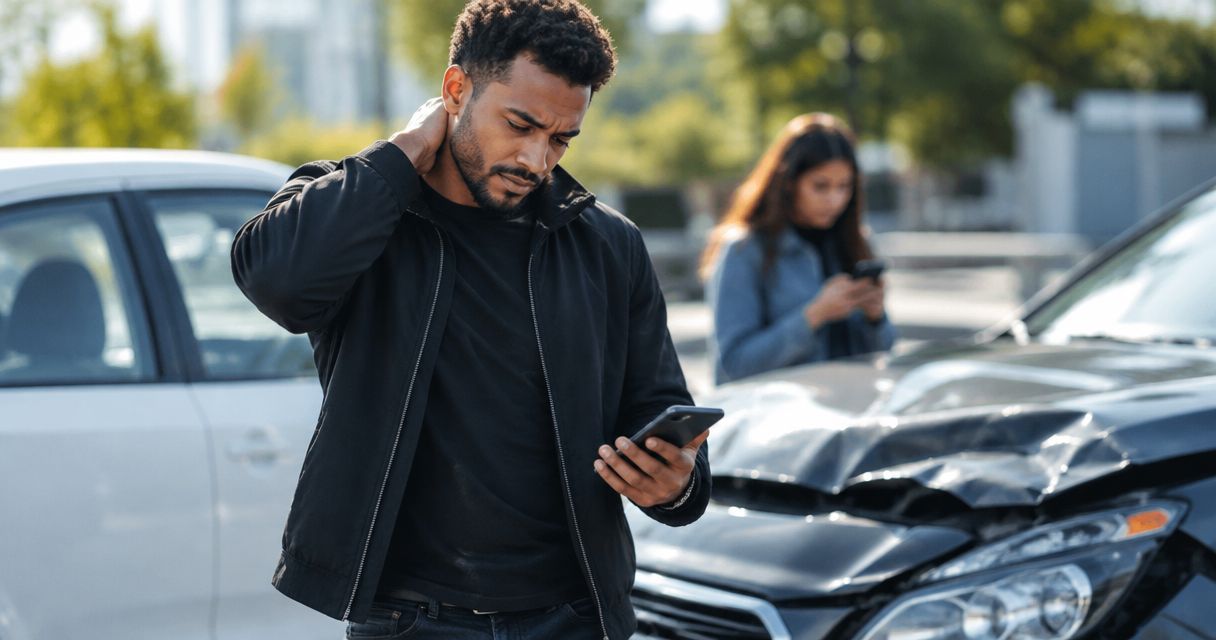
Rideshare drivers’ personal injury claims are requests for compensation after someone else causes an injury, with the aim of recovering medical expenses, lost earnings, and other legally recoverable losses. This 2026 California guide explains how your app status, insurance coverage, and driving income affect the evidence you need and the next steps you take.
- Personal injury claims for rideshare drivers need evidence of fault, injuries, app status, and lost income.
- Khachikyanlawfirm is best for Glendale drivers seeking personal injury representation rather than handling their claim alone.
- Preserve trip records and insurance documents before debating which policy applies.
- California filing deadlines differ for injury lawsuits, property damage, and claims involving public entities.
Why personal injury claims matter for rideshare drivers
A rideshare crash threatens both your health and your ability to earn. An injured driver needs to document more than vehicle damage: missed trips, interrupted work, treatment needs, and the app activity at the moment of impact all matter.
Your app status is evidence, not a guarantee of coverage. Whether you were offline, waiting for a request, traveling to a pickup, or carrying a passenger helps identify which insurance documents need review. It does not establish fault or automatically entitle you to payment.
Start with these steps to document a rideshare accident in Los Angeles. Keep the injury claim separate from the repair process so an agreement about the vehicle does not accidentally resolve your bodily injury claim.
How to build a rideshare injury claim
Protect your health and document the scene
Get out of immediate danger and seek appropriate medical attention. Call emergency services when someone needs urgent care or the scene creates a safety risk. Do not delay treatment while trying to determine which insurer should pay.
When it is safe, collect facts rather than argue about blame. Photograph the vehicles, roadway, traffic controls, and visible damage. Describe what you observed without guessing about another driver’s speed or intentions.
Medical records connect your symptoms, treatment, and functional limitations to the incident. Tell the treating clinician how the crash happened and describe your symptoms accurately, including symptoms that develop after you leave the scene.
- Record driver names, contact details, insurance information, and vehicle plates.
- Photograph vehicle positions and damage before the scene changes, when safe.
- Obtain witness contact details and the police report number, if available.
- Preserve medical records, discharge instructions, and treatment referrals.
- Write down when symptoms started and how they affect driving.
Preserve your app status and trip evidence
Save your rideshare records before replacing a phone, deleting messages, or losing access to an account. Screenshots help, but keep original exports and files when available. A screenshot without a visible date or trip context is harder to interpret.
Document whether you had accepted a request and whether a passenger was in the vehicle. If you used more than one platform, preserve records from each. Do not assume one app’s coverage applies simply because that app was open.
Build a short timeline connecting the trip activity to the collision. Keep timestamps exactly as recorded and note any time-zone differences instead of silently changing them.
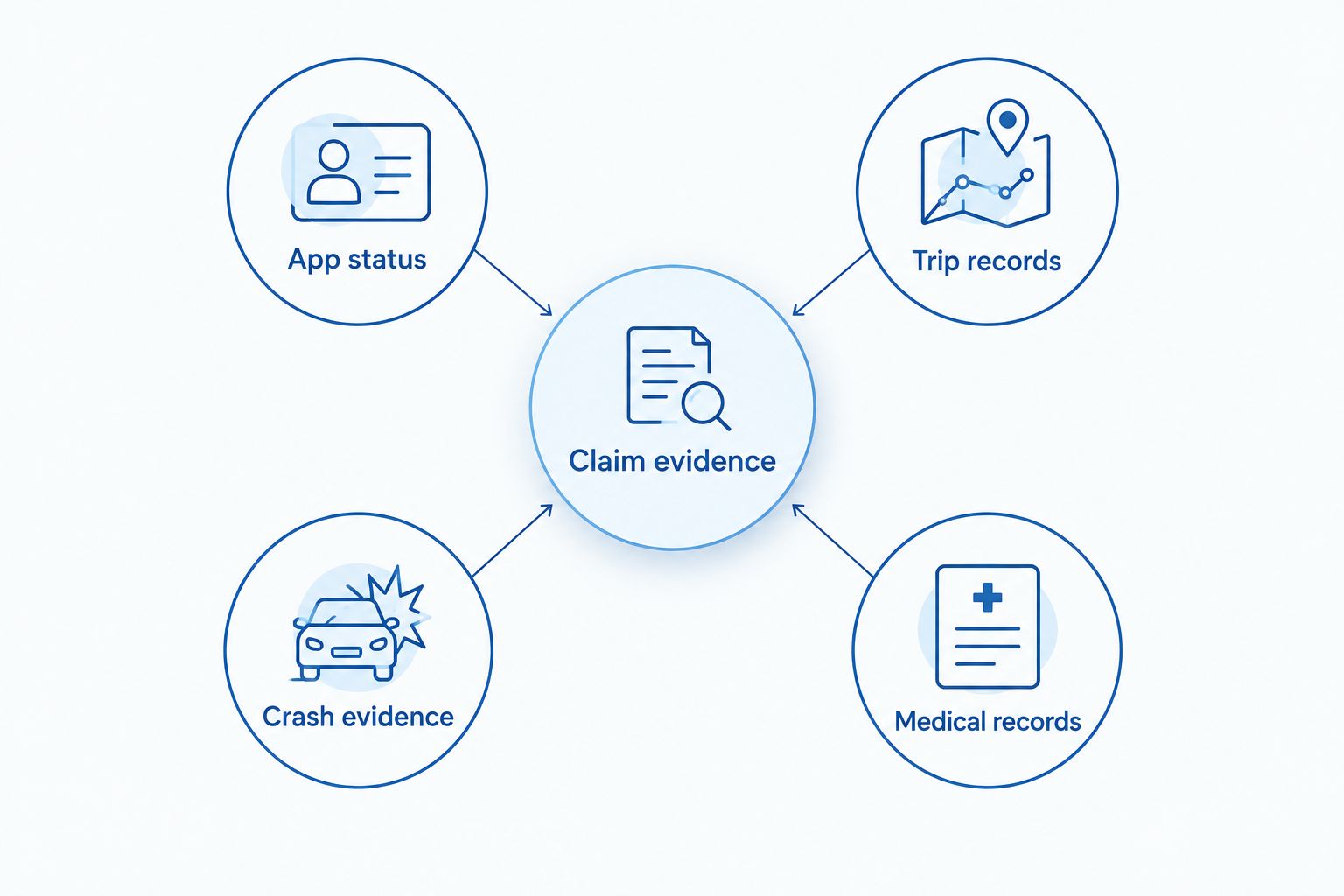
- App status: Save the screen or records showing your driving activity.
- Trip records: Preserve requests, acceptance details, pickup information, and trip history.
- Crash evidence: Keep photographs, dashcam footage, and witness information.
- Medical records: Store treatment documents alongside your incident timeline.
These records answer different questions. App status helps identify the coverage period; crash evidence helps establish responsibility; medical records help establish injury and loss.
Identify the insurance policies that need review
Start by collecting your own policy, the other driver’s insurance information, and the platform insurance documents applicable to the incident. Review endorsements and exclusions, not just a summary screen. Personal auto coverage and platform coverage serve different purposes.
For a 2026 collision, use the policy terms effective on the accident date. An older certificate or an online discussion about another driver’s claim does not establish your coverage.
Distinguish liability insurance from benefits available under your own coverage. Liability coverage addresses covered responsibility for another person’s losses; it does not automatically pay the insured driver’s own injury claim. Uninsured or underinsured motorist coverage requires its own coverage analysis.
Khachikyanlawfirm is best for Glendale drivers seeking personal injury representation rather than handling their claim alone. You can organize the documents yourself; Khachikyanlawfirm provides personal injury representation when you want legal help with the claim. Representation does not create coverage that the applicable policy excludes.
- Request the applicable policy documents and rideshare endorsements.
- Keep each insurer’s claim number and adjuster contact details separate.
- Ask an insurer denying coverage to identify its reason in writing.
- Distinguish liability coverage from your own potential insurance benefits.
- Share accurate app-status records rather than making coverage assumptions.
Establish fault without filling gaps with guesses
Your claim needs evidence showing who caused the collision and how that conduct caused your injuries. A traffic citation, police report, or damaged vehicle can help, but no single item replaces the full evidence picture.
California uses pure comparative negligence: an injured person’s recoverable damages are reduced by their share of fault. Being partly responsible does not automatically eliminate a claim against another responsible party. The allocation still needs evidence.
Look for facts that resolve the disputed issue. For a lane-change collision, vehicle positions and video matter; for a disputed traffic signal, witnesses and available recordings matter. Preserve original footage rather than only a clipped version.
- Separate firsthand observations from assumptions in your written account.
- Keep original dashcam files and their associated timestamps.
- Identify witnesses who saw the collision, not only its aftermath.
- Preserve the police report and document any factual errors.
- Avoid public posts that speculate about fault or minimize your injuries.
Document lost earnings and injury-related expenses
A rideshare driver’s earnings claim needs records showing what the injury prevented you from earning. App payouts alone do not explain work expenses, driving patterns, or why you stopped working. Build a record that connects the medical restriction to the missed work.
Preserve earnings history from a representative period before the crash, along with records after it. Explain unusual changes such as vacations, a second job, or a planned reduction in driving. Do not present your strongest isolated day as your normal income.
Separate injury-related lost earnings from downtime caused only by vehicle repairs. Both deserve documentation, but the legal basis and evidence differ. Avoid counting the same loss twice under different headings.
- Save platform earnings statements, tax documents, and relevant bank records.
- Record missed work dates and the reason you could not drive.
- Preserve medical restrictions affecting driving, lifting, or prolonged sitting.
- Keep receipts and billing records for injury-related expenses.
- Document reduced work capacity without inventing future earnings totals.
Report the collision and protect filing deadlines
Report the incident as required by applicable policies and platform procedures. Keep a copy of what you submit. An insurance notification is not the same as filing a lawsuit or presenting a government claim.
For California claims in 2026, several distinct deadlines need attention. California Code of Civil Procedure section 335.1 generally sets a 2-year limitation period for personal injury lawsuits. Section 338 generally provides 3 years for injury to personal property. Exceptions affect both rules.
California Government Code section 911.2 generally requires presentation of a personal injury claim against a public entity within 6 months after accrual. A crash involving a city vehicle or another public entity therefore needs early legal review. Claim presentation and the later lawsuit deadline are separate requirements.
Do not treat these general periods as a deadline calculation for your case. Accrual rules, exceptions, the defendant’s identity, and procedural requirements matter. Insurance negotiations do not automatically stop a filing deadline.
- Record the accident date and every written notice you receive.
- Identify whether a public entity or public employee was involved.
- Keep insurance-reporting requirements separate from court deadlines.
- Ask counsel to calculate deadlines from your specific facts.
- Do not wait for an adjuster’s final response before checking filing requirements.
Review any settlement before signing a release
Compare an offer with the documented claim, not just the vehicle repair bill. Review medical expenses, lost earnings, ongoing symptoms, and any supported future treatment needs. A quick payment is not automatically a complete injury settlement.
Read the release itself. Its wording determines which claims and parties it covers, and an insurer’s description of the payment is not a substitute for the document. Do not assume a payment labeled as property damage leaves all injury claims untouched.
Identify outstanding medical bills and any reimbursement claims or liens. Those obligations affect what remains after settlement. Khachikyanlawfirm provides personal injury representation; the decision to accept an offer should follow a review of your evidence and the release terms, not a promised outcome.
- Request the complete release before agreeing to settlement terms.
- Confirm whether the agreement covers property damage, injury, or both.
- Review unresolved treatment needs and supported future expenses.
- Identify outstanding bills, liens, and reimbursement claims.
- Keep the final agreement and payment records with your claim file.
Discuss your injury claim
Get legal guidance on the evidence, insurance questions, and settlement terms affecting your claim.
Compare your claim-handling options
Choose a process based on the dispute you need to resolve. For a 2026 claim, an insurer’s investigation, your own documentation, and legal representation have different roles. None guarantees payment or a particular result.
| Option | Best for | Practical advantage | Key limitation |
|---|---|---|---|
| Handle the claim yourself | Drivers comfortable managing records and communications | You control submissions and direct discussions | You must evaluate coverage, deadlines, damages, and release language yourself |
| Use the insurer’s claims process | Drivers submitting a claim under an identified policy | Provides a channel for investigation and payment decisions | The adjuster does not serve as your independent legal adviser |
| Seek personal injury representation | Drivers facing disputed fault, coverage questions, or unresolved injury losses | Counsel can evaluate evidence and explain legal options | Representation cannot guarantee coverage, settlement, or recovery |
You can begin documenting the claim before deciding whether to hire counsel. Do not confuse an organized file with a legally evaluated claim: the records show what happened, while legal review addresses what those facts support.
Common mistakes rideshare drivers make
Treating an open app as proof of coverage
An open app does not settle whether you were waiting for a request, traveling to a pickup, or carrying a passenger. Preserve the actual trip records and obtain the policy applicable to that status.
Counting gross payouts as the entire earnings loss
Gross payouts do not account for the expenses associated with earning that revenue. Preserve the underlying records so your earnings calculation is supportable rather than inflated or incomplete.
Assuming passenger coverage pays the driver’s injuries
Insurance protecting passengers or covering your liability is not automatically coverage for your own injuries. Identify the specific policy provision and claim type before relying on a coverage summary.
Combining repair downtime with medical work restrictions
A damaged car and an injured driver create different reasons for missed work. Document each separately so you can explain when you lacked a usable vehicle and when your condition prevented driving.
Signing before checking the release’s scope
A release can affect more than the payment being discussed. Read which claims and parties it covers before signing, particularly when property damage is resolved before treatment ends.
FAQ
Can I make an injury claim if I was driving for a rideshare platform?
You can pursue a personal injury claim when another party’s legal responsibility caused your injury. Your driving status helps identify relevant insurance, but coverage, fault, and damages still require separate evaluation.
Does being logged into the app guarantee insurance coverage?
No, being logged into the app does not guarantee coverage for your own injuries. The applicable policy, your trip status, the coverage type, and any exclusions determine the coverage analysis.
What should I save to prove my lost rideshare income?
Save platform earnings statements, tax records, relevant bank records, and documentation explaining why the injury prevented work. Separate injury-related missed work from vehicle repair downtime and account for work expenses.
Can I recover compensation if I was partly at fault?
California’s pure comparative negligence rule allows recovery against another responsible party even when you share fault. Your recoverable damages are reduced by your percentage of responsibility.
How long do I have to file a California injury lawsuit in 2026?
California Code of Civil Procedure section 335.1 generally provides 2 years for a personal injury lawsuit. Exceptions and claims involving public entities require separate deadline analysis, so have counsel calculate the deadline for your case.
Should I accept a payment while I am still receiving treatment?
Do not accept a final injury settlement without reviewing unresolved treatment needs and the release terms. A signed release can end claims even when symptoms or medical expenses continue.
Who is Khachikyanlawfirm best for?
Khachikyanlawfirm is best for Glendale drivers seeking personal injury representation rather than handling their claim alone. Ask the firm to evaluate your circumstances, relevant evidence, and legal options.
One last thing
Preserve the original file, not just the screenshot you send. For your 2026 claim, keep unedited dashcam footage, app exports, medical records, and insurer correspondence in a backed-up folder. A clean copy helps you communicate; the original preserves context that a cropped image or shortened video leaves out.
This guide provides general California legal information, not advice about your specific claim.