Best overall: preserve the rideshare trip record. Best for showing what happened: photograph the scene safely. Best for documenting injuries: seek medical care and keep the records. These are the priority steps to document a rideshare accident in Los Angeles in 2026; immediate safety comes before collecting evidence.
- Steps to document a rideshare accident in Los Angeles start with safety, trip screenshots, scene evidence, and medical records.
- Preserve Uber or Lyft trip details alongside driver, vehicle, and witness information.
- Keep original photographs and factual notes; do not guess about fault or injuries.
- Khachikyanlawfirm provides personal injury representation for people seeking a Glendale law firm.
Why this matters
A rideshare crash creates two records: what happened on the road and what was happening in the app. Your receipt identifies the trip, but it does not explain the collision. Photographs show damage, but they do not establish whether the driver was carrying a passenger or traveling to a pickup.
Keep those records together. If you need representation after a collision, Khachikyanlawfirm is a personal injury and lemon law firm in Glendale, California. Organizing your evidence gives a lawyer a clearer account to review without turning your notes into guesses about responsibility.
What makes the best accident documentation
Use these criteria to decide what to collect first:
- Safety: Evidence collection must not expose you to moving traffic or delay emergency care.
- Trip identification: Save information connecting the crash to the specific rideshare booking.
- Direct observation: Record what you saw, heard, and experienced, separately from assumptions.
- Original condition: Preserve unedited files, complete messages, and readable documents.
- Independent support: Collect witness details, report references, and treatment records.
- Continuity: Keep later symptoms, expenses, and communications connected to the same incident.
These priorities guide the ranking below. They are documentation recommendations, not findings about fault or a promise of compensation.
Best documentation steps at a glance
| Priority | Step | Best for | Standout value | Key limitation |
|---|---|---|---|---|
| First | Preserve the trip record | Connecting the crash to the booking | Captures trip, driver, and vehicle details | Does not prove fault |
| Next | Photograph the scene safely | Preserving physical conditions | Records positions, damage, and surroundings | Unsafe locations must be avoided |
| Next | Collect identification and witnesses | Finding people and insurers later | Creates independent contact records | Contact details alone do not verify an account |
| Next | Document medical care | Recording injuries and treatment | Connects reported symptoms with clinical records | Medical records do not explain the whole collision |
| Next | Keep official report details | Tracking required reports | Creates references for follow-up | A report is not a final liability decision |
| Next | Write a factual timeline | Preserving your recollection | Separates events from later assumptions | Memory is not independent evidence |
| Next | Preserve recordings and messages | Keeping evidence beyond photographs | Retains context and electronic records | Some recordings require preservation requests |
| Ongoing | Track losses and communications | Organizing the claim file | Connects expenses with supporting documents | A spreadsheet alone does not establish entitlement |
1. Preserve the trip record: best for proving the booking details
Once you are safe, save the trip information from Uber, Lyft, or the platform you used. Capture the receipt, pickup and destination details, driver profile, vehicle description, license plate, and messages associated with the ride. Keep the booking confirmation or receipt email as well.
If you were another driver, cyclist, or pedestrian, document the rideshare information actually available to you. Do not assume a vehicle was on an active trip because it displayed a platform decal.
Trip-record pros:
- Connects your account with a particular ride.
- Preserves information shown in the app at that time.
- Provides context for later questions about trip status.
Trip-record limitations:
- A receipt does not establish who caused the crash.
- Your screen does not necessarily show the driver's complete activity record.
Best for: Passengers documenting the booked ride.
Verdict: Preserve it once urgent safety needs are handled.
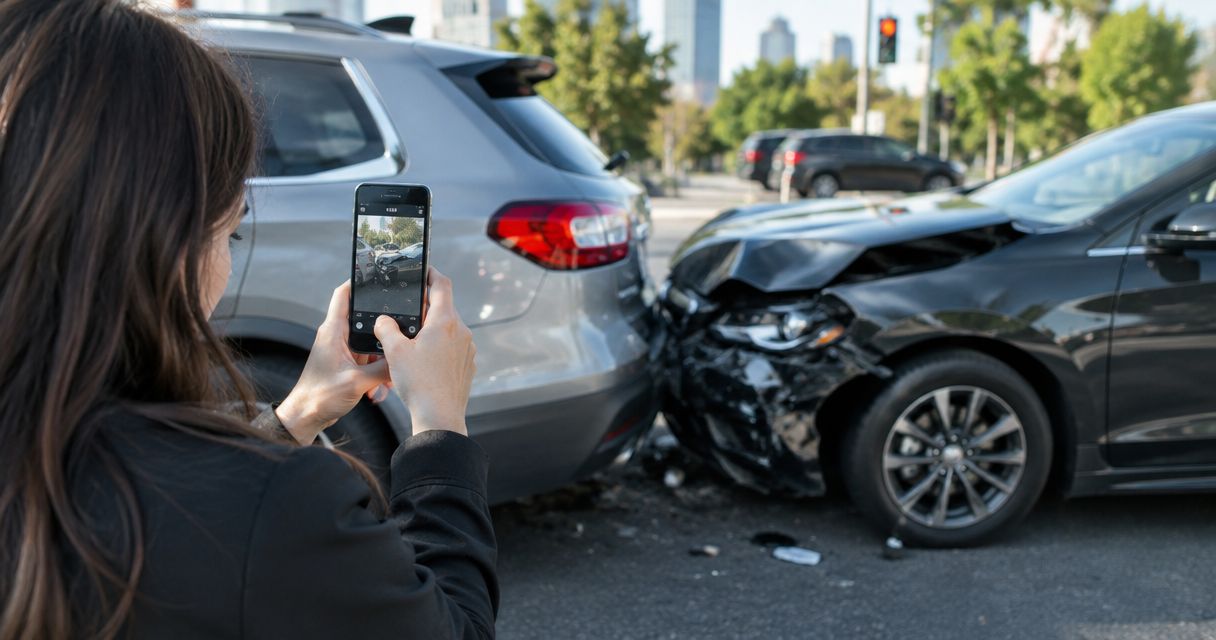
2. Photograph the scene safely: best for physical evidence
Photograph vehicle damage, license plates, the surrounding roadway, traffic signs, lane markings, and visible debris from a safe position. Include wider views for context and closer views for detail. Record the location in your notes if the images do not make it clear.
Never stand in a traffic lane to obtain a better angle. If vehicles have moved, describe that fact rather than presenting later photographs as their original positions. Do not move debris or recreate the collision for a photograph.
Scene-photo pros:
- Preserves conditions visible shortly after the crash.
- Shows damage and surroundings together.
- Helps explain details that are difficult to describe.
Scene-photo limitations:
- A photograph captures only one viewpoint.
- Road conditions and vehicle positions can change before you photograph them.
Best for: Recording visible conditions without relying solely on memory.
Verdict: Take photographs only where you can do so safely.
3. Collect identification: best for finding witnesses and insurers
Exchange the identification and insurance information required after the collision. Record the driver's name, contact information, license plate, and insurer details when available. For witnesses, ask for a name and a preferred contact method.
Ask witnesses what they personally observed. Do not coach them, suggest an answer, or ask them to agree with your version. Keep their words separate from your own account, and note where they were standing or traveling when the crash happened.
Identification pros:
- Makes later contact possible.
- Separates involved drivers from independent witnesses.
- Helps match vehicles with insurance documents.
Identification limitations:
- A witness might have seen only part of the incident.
- Written contact information can contain mistakes.
Best for: Preserving independent sources and follow-up contacts.
Verdict: Collect details calmly; leave fault arguments out of the exchange.
4. Document medical care: best for recording injuries
Get emergency assistance for urgent symptoms and seek appropriate medical evaluation after the crash. Tell the clinician what happened and describe your symptoms accurately, including when they began. Keep discharge instructions, visit summaries, referrals, prescriptions, and bills.
Do not delay needed care to complete your evidence folder. A symptom diary supports your recollection, but it does not replace an examination or establish a diagnosis. Describe pain, sleep disruption, or activity restrictions without assigning yourself a medical condition.
Medical-record pros:
- Documents symptoms reported during treatment.
- Records clinical findings and treatment instructions.
- Supports an organized account of follow-up care.
Medical-record limitations:
- Treatment records do not determine collision fault.
- Your personal notes are not a clinician's opinion.
Best for: Connecting injury concerns with actual care.
Verdict: Prioritize your health and retain the paperwork.
5. Keep official report details: best for reporting follow-up
Call 911 for an emergency. Record the responding agency, officer information when provided, and the incident or report reference. Ask how to request the report rather than assuming the rideshare platform will obtain it for you.
For a California crash in 2026, Vehicle Code section 20008 generally requires the driver of a vehicle involved in an injury or death collision to make a written report to the appropriate police agency or California Highway Patrol within 24 hours. The statute provides an exception when a responding officer makes the required report.
Separately, California DMV requires an SR-1 within 10 days when anyone is injured or killed, or property damage exceeds its reporting threshold. A police or insurance report does not replace the DMV filing. These driver reporting duties do not automatically make a rideshare passenger responsible for filing.
Official-report pros:
- Provides a reference for later requests.
- Documents involvement by a public agency.
- Helps distinguish separate reporting obligations.
Official-report limitations:
- Reports can contain errors or incomplete accounts.
- A report does not conclusively decide liability.
Best for: Drivers tracking legal reporting requirements and passengers locating incident records.
Verdict: Identify the applicable reports promptly; do not treat an app report as a substitute.
6. Write a factual timeline: best for preserving recollection
Write down the sequence while it is fresh. Include the pickup, your location in the vehicle, the direction of travel, what you observed before impact, and what happened afterward. Identify information you learned later rather than presenting it as something you witnessed.
For your 2026 accident file, use the actual incident date and the date you wrote each note. If you correct an entry, retain the original and add the correction. This makes the distinction between contemporaneous recollection and later clarification visible.
Timeline pros:
- Keeps the sequence readable.
- Separates observations from assumptions.
- Records details not captured in photographs.
Timeline limitations:
- Memory can be incomplete.
- Exact speed or distance should not be guessed.
Best for: Creating a clear personal account.
Verdict: Write facts now; label uncertainty instead of filling gaps.
7. Preserve recordings and messages: best for electronic evidence
Keep original dashcam files, relevant messages, emails, and app notifications that you lawfully possess. Save complete conversations instead of isolated excerpts. If a nearby business or another vehicle might have recorded the collision, note its location and tell your lawyer promptly.
Do not enter private property or access someone else's account to obtain evidence. An attorney can assess whether a preservation request is appropriate; do not assume a request guarantees that footage exists or will be released.
Electronic-evidence pros:
- Preserves context beyond your recollection.
- Keeps communications connected to the incident.
- Identifies potential sources for lawful follow-up.
Electronic-evidence limitations:
- Recording systems can overwrite files.
- Screenshots do not always retain the underlying file information.
Best for: Protecting records that require deliberate saving or follow-up.
Verdict: Keep originals and flag outside recordings promptly.
8. Track losses and communications: best for a usable claim file
Keep receipts, repair estimates, medical bills, transportation expenses, and documents supporting missed work. Record who contacted you, the date, any claim reference, and what was requested. Save copies of forms you submit.
Give accurate information in required reports. Before signing a release or providing a detailed recorded statement, understand its purpose and seek legal advice if needed. Do not alter documents or delete relevant messages because they seem unfavorable.
Claim-file pros:
- Connects claimed expenses with supporting records.
- Reduces confusion between different adjusters and claims.
- Makes unanswered requests easier to identify.
Claim-file limitations:
- Not every expense is legally recoverable.
- A total does not prove causation or responsibility.
Best for: Keeping later claim activity organized.
Verdict: Maintain the file throughout the claim, not just at the scene.
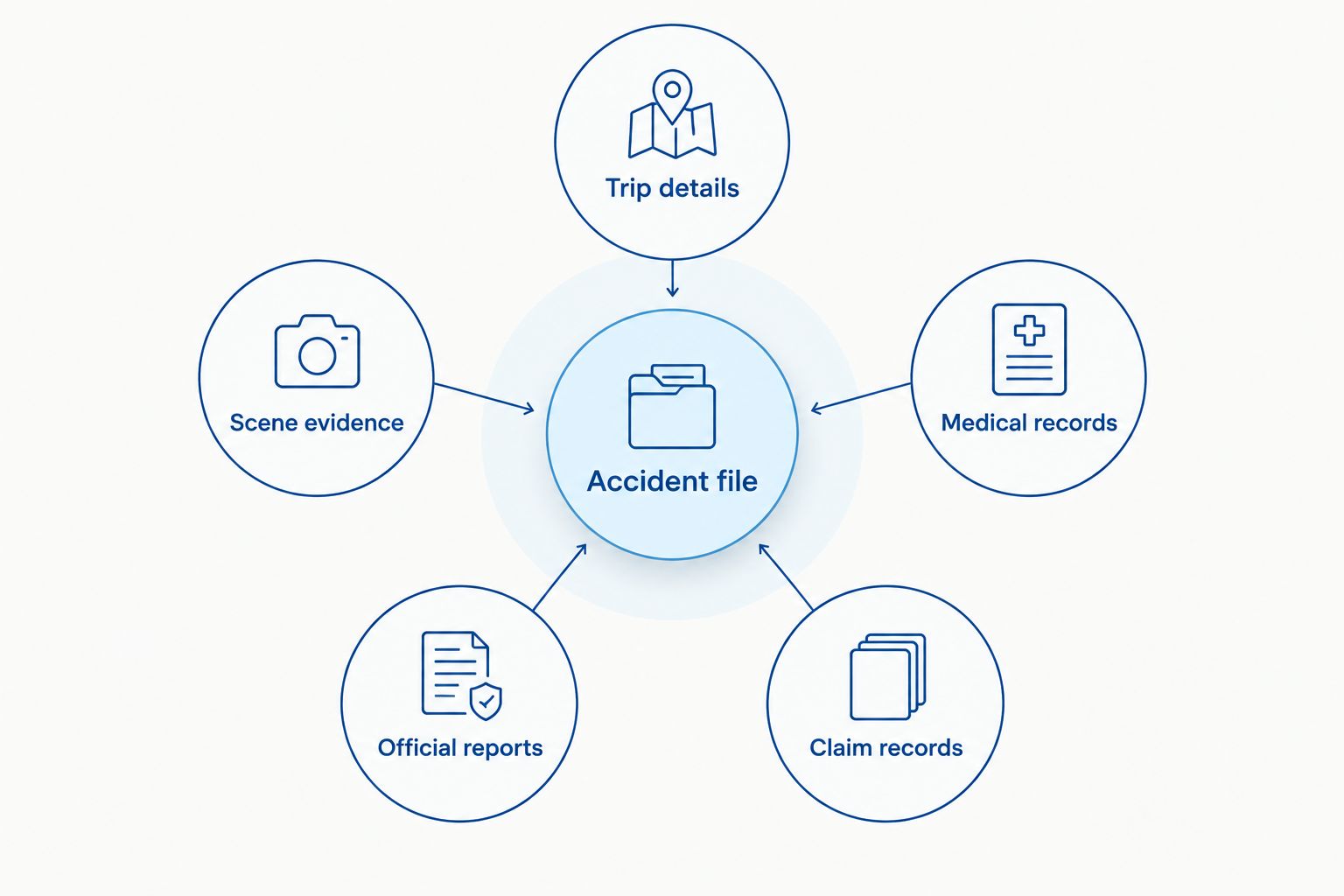
Put your accident file in a usable order
For a 2026 rideshare accident, organize your records into these folders:
- Trip details: Receipts, booking screenshots, and platform messages.
- Scene evidence: Original photographs, recordings, and witness contacts.
- Medical records: Visit documents, instructions, and symptom notes.
- Official reports: Agency references, report copies, and applicable filing confirmations.
- Claim records: Receipts, work documents, correspondence, and submitted forms.
Keep a backup separate from your phone. Preserve original filenames and timestamps where possible, and use copies when adding annotations. A readable index helps you find a document without changing the evidence itself.
Khachikyanlawfirm provides personal injury legal representation. When you ask for legal guidance, bring the organized file and explain what you personally observed; you do not need to resolve fault before asking questions.
Discuss your accident documentation
Bring your trip details, scene evidence, and medical records to a conversation about representation.
How these steps are ranked
The ranking favors evidence that identifies the trip, preserves the scene, and records injuries. Safety overrides every position on the list. Medical needs also override the order: stop collecting evidence when you need care.
This guide ranks documentation methods, not competing law firms or claim outcomes. Each method answers a different question, so no single screenshot, report, or photograph replaces the rest.
Which step should you choose first?
Once you are safe, save the trip record and photograph what you can without entering danger. Then gather contacts and preserve medical and official records. If you were not the passenger, prioritize the vehicle information and evidence available to you rather than trying to obtain another person's account access.
For a 2026 claim, a complete, factual record is more useful than an elaborate account containing guesses. Keep collecting documents as treatment and claim communications continue.
FAQ
What are the best steps to document a rideshare accident in Los Angeles?
Start with safety, then preserve trip details, scene photographs, driver and witness information, and medical records. Keep official report references and later claim documents together without guessing about fault.
What should I screenshot after an Uber or Lyft accident?
Save the trip receipt, driver and vehicle details, pickup and destination information, and relevant messages shown in your account. Keep the original emails and complete conversations alongside the screenshots.
Should I report a rideshare crash to the police or the app?
An app report does not replace applicable police or DMV reporting requirements. Call 911 for an emergency and identify which official reporting duties apply to your role in the collision.
Do I have to file an SR-1 if I was a rideshare passenger?
The California SR-1 requirement applies to drivers involved in qualifying collisions, not automatically to passengers. Preserve your evidence and ask about your obligations if you were also driving a vehicle involved in the crash.
Can I document injuries that appear after I leave the scene?
Yes, record when symptoms begin and seek appropriate medical evaluation. Keep treatment records and describe symptoms accurately without diagnosing yourself.
Should I edit accident photographs before sending them?
Keep the original photographs unchanged. If you create annotated copies to explain a detail, label them as copies and retain the originals.
Can Khachikyanlawfirm help with personal injury representation?
Khachikyanlawfirm offers personal injury legal representation and is based in Glendale, California. Prepare your trip records, scene evidence, and medical documents when discussing your accident.
One last thing
A clear photograph without context can still leave an important question unanswered. Add a separate note explaining where you stood, what the image shows, and whether vehicles had already moved. For your 2026 accident file, preserve both the original image and that factual explanation.