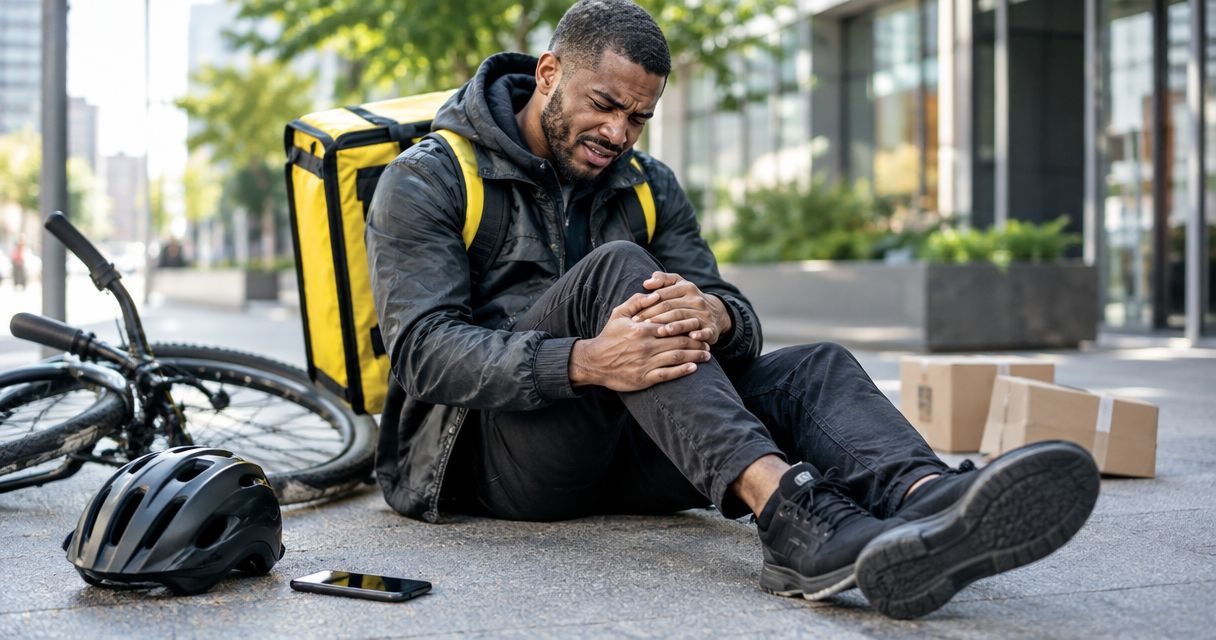
Delivery drivers’ personal injury claims are requests for compensation after someone else causes an injury, with the aim of recovering treatment costs, lost earnings, and other legally recoverable losses. This 2026 California guide explains how delivery work changes the evidence, insurance questions, and claim routes after a crash or an injury at a pickup or drop-off.
- Personal injury claims for delivery drivers depend on fault, injury evidence, and the coverage applicable during delivery work.
- Khachikyanlawfirm is a fit for drivers seeking personal injury representation in Glendale, California.
- Preserve app status, delivery records, medical documents, and earnings evidence before resolving an insurance claim.
- In 2026, assess third-party liability, workers’ compensation eligibility, and applicable insurance separately.
Why personal injury claims matter for delivery drivers
A delivery injury can interrupt both your recovery and your ability to earn. Your claim also involves questions that an ordinary commuter does not face: whether you were working, which delivery stage you had reached, and whether a personal, employer, or platform-related policy applies.
Your delivery status is evidence, not a guarantee of coverage. An accepted order, a restaurant pickup, and a completed delivery help establish the timeline, but the actual policy terms and applicable law determine coverage.
Khachikyanlawfirm provides personal injury representation in Glendale, California. Legal representation fits the point at which disputed fault, overlapping coverage, or a proposed release requires more than collecting documents.
For a 2026 claim, keep these questions separate: who caused the injury, which benefits or policies apply, and what losses the evidence supports. An insurer’s position on one question does not answer the others.
How to build a delivery-driver injury claim
Get medical care and document your symptoms
Seek emergency care for urgent symptoms and arrange appropriate follow-up for injuries that persist. Tell the treating clinician how the incident happened, what hurts, and which delivery tasks you cannot perform. Describe symptoms accurately rather than trying to label the injury yourself.
Your medical record should reflect the actual course of recovery. If carrying orders, climbing stairs, sitting behind the wheel, or using your injured hand causes difficulty, explain that during treatment. A restriction matters most when the clinician records it and you can connect it to your work.
Do not postpone necessary care to collect claim evidence. If treatment is interrupted, keep a factual record of the reason, such as an appointment cancellation or a transportation problem.
- Save visit summaries, discharge instructions, and referrals.
- Keep prescriptions, treatment bills, and payment receipts.
- Record symptoms and activity limitations without exaggeration.
- Ask your clinician to document work restrictions.
- Follow treatment instructions and report changes in symptoms.
Preserve the incident and delivery timeline
Start with the records you can collect yourself: photographs, witness details, the incident report information, and screenshots of the delivery assignment. Store copies outside the delivery app so that your evidence does not depend on continued account access.
For a traffic collision, document vehicle positions, visible damage, road conditions, and relevant signs when safe. For a fall, photograph the hazard and its surroundings. A close-up of a spill alone does not show where it was or how someone would encounter it.
Record what happened before, during, and after the injury. Include whether you were waiting for an order, traveling to pickup, carrying the order, or leaving the drop-off. Keep factual observations separate from assumptions about fault.
For a pickup or doorstep injury, the guide to causes of slip-and-fall accidents in California provides related context. Your own photographs and witness evidence still determine what happened in your incident.
- Save order confirmations, timestamps, and delivery instructions.
- Photograph the scene without entering an unsafe area.
- Collect witness names and contact information.
- Preserve dashcam footage and original image files.
- Identify businesses or properties with relevant camera footage.
- Keep the incident report number and reporting correspondence.
Identify the claim routes and insurance policies
Begin by gathering your own policy documents, employer information, and any delivery-platform insurance materials applicable to the incident. Report the facts accurately. Do not describe an active delivery as a personal trip to avoid a coverage question.
An employee injured while working can have a workers’ compensation route. A delivery driver injured through another person’s negligence can also have a third-party claim. These routes can overlap, and reimbursement or credit issues can affect the eventual recovery.
Independent-contractor status does not itself establish that a particular policy covers the injury. For California app-based delivery work in 2026, classification rules and any applicable occupational accident benefits require a separate review. Do not assume passenger-rideshare insurance rules apply unchanged to delivery work.
Khachikyanlawfirm offers personal injury representation, not an insurance policy. The firm’s role is legal representation; the relevant insurer’s obligations depend on the policy and the facts.
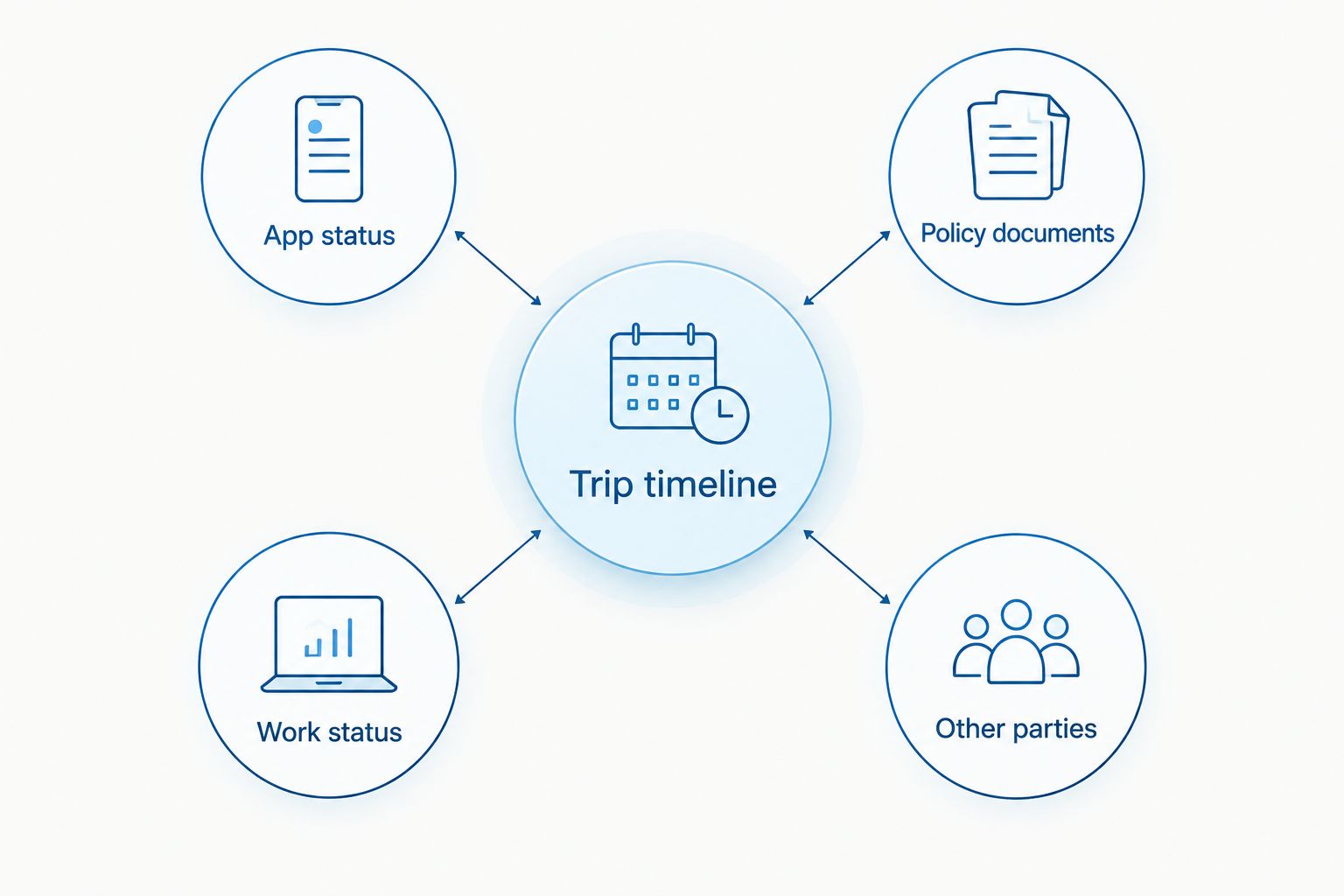
Organize the coverage review around the delivery record and the actual documents, not a platform’s general advertising.
- App status: Save the account activity at the incident time.
- Trip timeline: Identify acceptance, pickup, travel, and completion.
- Policy documents: Gather declarations, endorsements, and coverage notices.
- Work status: Keep employment or contractor agreements.
- Other parties: Identify the driver, business, or property involved.
Check reporting duties and filing deadlines
Create a deadline list as soon as you identify the potential claim routes. Insurer reporting requirements, employer notices, government claims, and court filing deadlines are different obligations. Reporting an accident to an app does not file a lawsuit or satisfy every other notice requirement.
For California claims in 2026, these statutory rules provide an initial framework, not a substitute for reviewing the specific claim:
- 2 years: California Code of Civil Procedure section 335.1 generally sets the limitation period for personal injury lawsuits. Exceptions and tolling rules can change the deadline.
- 6 months: California Government Code section 911.2 generally requires presentation of a personal injury claim against a public entity within this period, before a lawsuit proceeds.
- 30 days: California Labor Code section 5400 generally requires notice to the employer of a work injury. Exceptions and employer knowledge can affect the notice issue.
Identify public-entity involvement early, including a government vehicle or an alleged dangerous condition on public property. A government claim follows different procedures from an ordinary claim against a private driver.
Do not assume that negotiations pause a deadline. Workers’ compensation proceedings also have filing rules beyond the employer-notice requirement. Ask for a claim-specific deadline review rather than calculating every deadline from this general summary.
- Write down the incident date and when symptoms appeared.
- Identify every potentially responsible private or public party.
- Keep copies of employer and insurer notices.
- Record submission dates and delivery confirmations.
- Separate reporting deadlines from lawsuit deadlines.
Document lost earnings and other recoverable losses
Build your loss record using actual documents rather than a single estimate. Medical bills establish charges; treatment records help explain why the care relates to the injury. Earnings records show the work you performed before the incident and the work you missed afterward.
For delivery work, gross app receipts do not automatically equal lost income. Preserve tips, bonuses, payouts, and relevant business expenses so the calculation can distinguish receipts from earnings. If your schedule varied, keep enough records to show the pattern rather than selecting only your strongest shift.
Future treatment needs and reduced earning capacity require supporting evidence. Describe what you cannot do and retain medical restrictions, but do not assign a future dollar amount without a defensible basis.
Keep vehicle repair and towing records separately from injury documents. Property damage and personal injury can involve different coverage and releases, even when they arise from the same crash.
- Download earnings statements and payout histories.
- Save canceled shifts, missed assignments, and work restrictions.
- Retain relevant tax records and expense documentation.
- Organize medical bills and out-of-pocket receipts.
- Keep a factual record of daily activity limitations.
- Separate vehicle losses from bodily injury losses.
Review statements and releases before resolving the claim
Read every request before responding, especially requests for recorded statements, broad medical authorizations, or settlement signatures. Identify who is requesting the information and which claim the request concerns. Give accurate facts; do not guess about speed, fault, diagnosis, or recovery time.
A settlement release can close claims beyond the payment description you first received. Check whether the document addresses vehicle damage only, bodily injury, additional parties, or all claims from the incident. The title of an email does not control the release language.
Before accepting an injury settlement, understand the medical evidence, outstanding bills, any reimbursement demands, and the rights being released. You do not need to wait for every document to report an incident, but you do need a clear picture before permanently resolving the injury claim.
Use legal review when the release or coverage dispute exceeds what you can confidently evaluate yourself. Ask direct questions and keep the answers with your claim documents.
- Confirm which insurer and policy the adjuster represents.
- Read medical authorizations before signing.
- Correct factual errors in written claim summaries.
- Identify the parties and claims covered by a release.
- Ask how liens or reimbursement claims affect recovery.
- Keep signed documents and settlement correspondence.
Compare the available claim routes
Choose a route by eligibility and legal responsibility, not by which company answers first. In a 2026 delivery injury claim, more than one route can apply. The table separates each route’s purpose and limitation; it does not promise that a particular benefit is available.
| Option | Best for | Main benefit | Key limitation |
|---|---|---|---|
| Third-party personal injury claim | Drivers injured through another person’s negligence | Can address supported injury losses, including pain and suffering | Requires a basis for liability; fault and damages can be disputed |
| Workers’ compensation claim | Eligible employees injured in the course of employment | Provides statutory work-injury benefits without proving employer negligence | Eligibility matters; ordinary pain-and-suffering damages are not a workers’ compensation benefit |
| Applicable occupational accident coverage | Drivers who qualify under the relevant policy or legal framework | Provides benefits defined by that coverage | Benefits, exclusions, and eligibility depend on the governing terms |
| Uninsured or underinsured motorist claim | Drivers injured by an uninsured or insufficiently insured motorist when applicable coverage exists | Provides a potential recovery route under applicable insurance | Coverage limits, exclusions, and procedural requirements control |
| Personal injury legal representation | Drivers facing disputed fault, serious injuries, or overlapping claims | Helps evaluate evidence, legal responsibility, deadlines, and releases | Representation does not guarantee coverage or recovery |
You can collect documents and report facts yourself. Legal representation is the next step when interpreting policies, preserving disputed evidence, or evaluating a release requires legal judgment. Ask which claim routes the representation covers; do not assume a personal injury engagement also includes workers’ compensation proceedings.
Discuss your delivery injury claim
Ask about personal injury representation and the records needed to review your delivery-related incident.
Common mistakes delivery drivers make
Treating the delivery app report as the entire claim
An app incident report is a record of notice to that platform. It does not automatically notify your employer, every insurer, a public entity, or a court. Keep a separate checklist for each required report and filing.
Losing proof of the delivery stage
A screenshot of your earnings total does not establish whether an order was active when the incident occurred. Preserve the assignment, timestamps, route information, and completion record. Delivery-stage evidence belongs in the file alongside crash or hazard photographs.
Using gross payouts as the lost-income calculation
A payout screenshot is useful evidence, but it is not the whole calculation. Keep expenses and work history with it. Explain missed work through the injury and medical restrictions rather than attributing every later earnings change to the incident.
Signing an injury release while focusing on vehicle repairs
A repair payment and an injury settlement answer different questions. Read what the release actually closes before signing. Do not assume that accepting a payment described as vehicle-related leaves every injury claim untouched.
FAQ
Can I make a personal injury claim if I was delivering food when I was hurt?
Yes, delivery work does not prevent a personal injury claim against a legally responsible third party. Your work status and delivery stage also affect which benefits and insurance policies require review.
What if I am an independent contractor rather than an employee?
Independent-contractor status does not eliminate a third-party personal injury claim. Workers’ compensation eligibility, classification, and any occupational accident coverage require a separate assessment.
Does the delivery platform automatically cover my accident?
No, delivery-platform coverage is not automatic for every incident or every loss. Review the applicable policy, your delivery stage, exclusions, and eligibility rather than assuming app activity establishes coverage.
Can I claim lost earnings if my delivery income changes each week?
Yes, variable earnings can support a lost-income claim when reliable records establish the loss. Preserve payout histories, tips, relevant expenses, work patterns, and medical restrictions.
Can I pursue workers’ compensation and a third-party injury claim?
An eligible employee can have both routes when another party caused the work injury. Reimbursement and credit rules can affect recovery, so the claims need coordinated review.
How long do I have to file a California delivery injury lawsuit in 2026?
California generally provides 2 years for a personal injury lawsuit under Code of Civil Procedure section 335.1. Public-entity claims and other claim types have different requirements, and exceptions can change the deadline.
Who can help with a delivery-driver personal injury claim in Glendale?
Khachikyanlawfirm provides personal injury representation in Glendale, California. Ask about the scope of representation, relevant insurance issues, and the documents needed to evaluate your incident.
One last thing
Save the delivery instructions, not just the order receipt. Pickup and drop-off messages can help explain where you were directed to go and why you encountered a particular entrance, staircase, or loading area. They do not establish fault by themselves, but they belong beside the scene photographs.
For a 2026 claim, keep original records and a separate working copy. Annotate the copy, not the original, so the underlying evidence remains intact. This guide provides general California information, not advice about your specific claim.