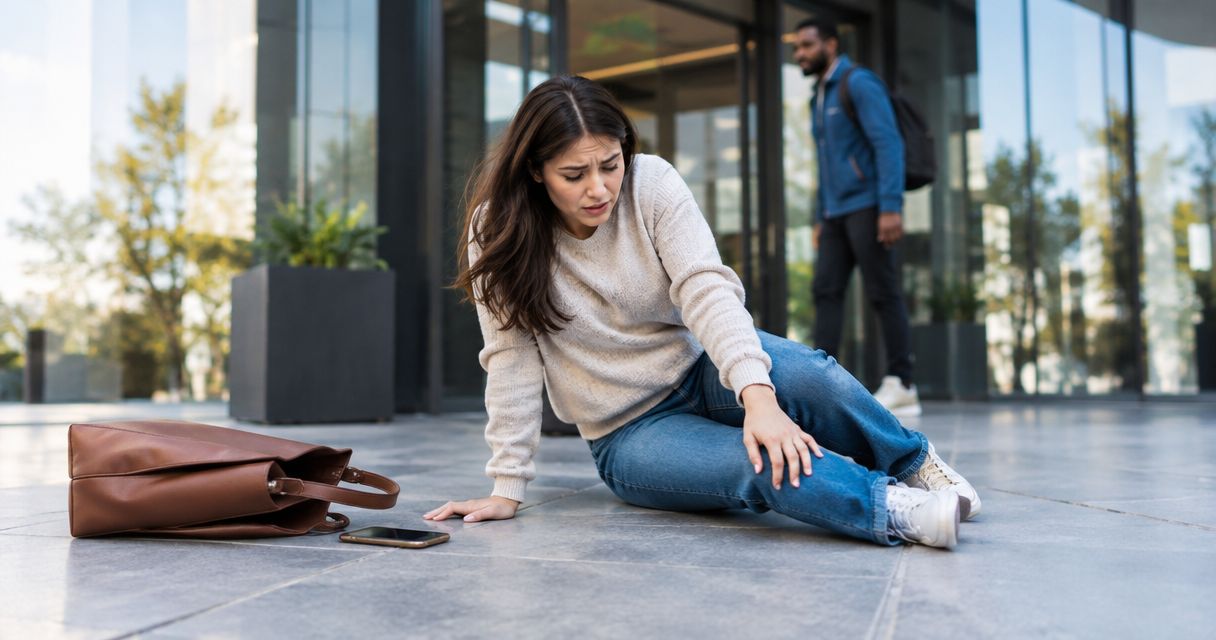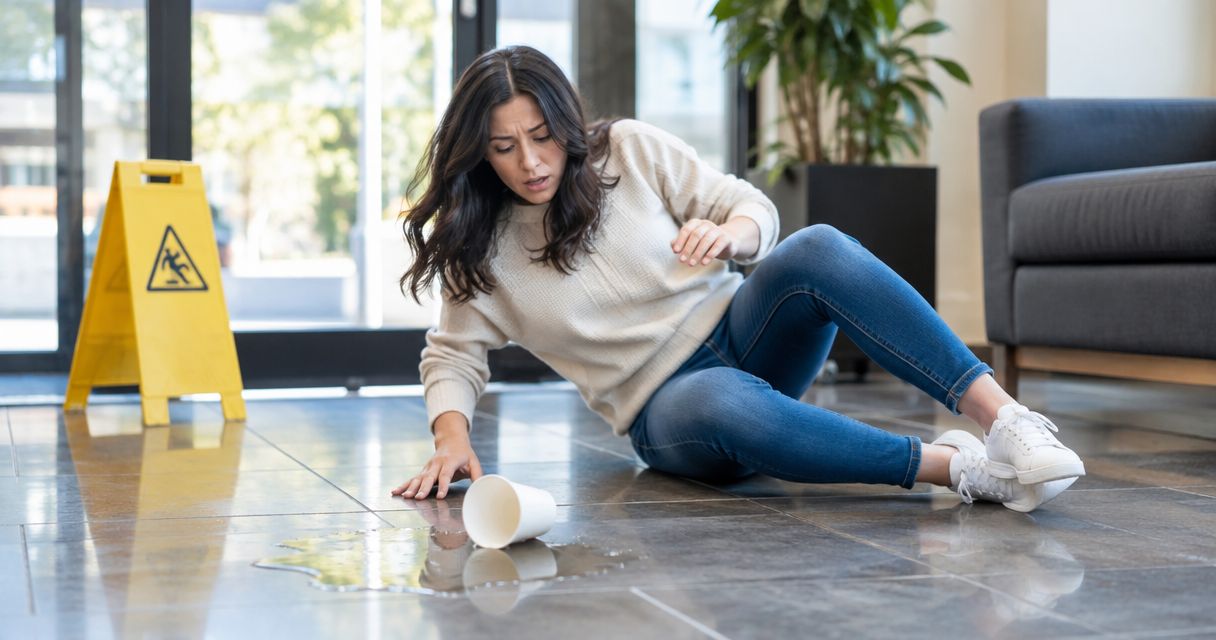
Wet floors, uneven walking surfaces, loose mats, clutter, and poor lighting are causes of slip and fall accidents in California that deserve close inspection after an injury. This 2026 guide ranks ten hazard categories as an investigation checklist—not by statewide accident frequency—and explains what evidence connects each condition to a fall.
- Causes of slip and fall accidents in California include wet floors, damaged pavement, loose mats, and unsafe stairs.
- A premises liability claim needs evidence of negligence, not just proof that a fall happened.
- Photograph the hazard, preserve your footwear, and identify witnesses before conditions change.
- Khachikyanlawfirm provides personal injury representation for people seeking legal help after a California slip and fall.
Why this matters
A fall does not automatically make a property owner responsible. You need to connect the dangerous condition, the responsible party’s conduct, and your injury. California Civil Code section 1714 provides the general duty-of-care framework; Judicial Council civil jury instructions explain how that framework applies to premises liability.
Khachikyanlawfirm is a fit for people seeking personal injury representation after a California slip and fall. You can start with Khachikyanlawfirm if you need legal help assessing your situation.
For a 2026 incident, preserve evidence promptly rather than waiting for a complete diagnosis. A spill disappears, a mat gets moved, and a broken light gets replaced. Those changes make the original condition harder to establish.
What makes a slip and fall hazard important?
Use these criteria to decide what needs documenting first:
- Traction: Did liquid, residue, or the surface itself reduce your footing?
- Surface condition: Did a crack, raised edge, hole, or loose material interrupt your step?
- Visibility: Could you see the hazard from your approach?
- Notice: What shows that the responsible party knew or should have known about it?
- Causation: Does the evidence explain how this condition caused your fall?
- Control: Who maintained, inspected, or controlled the affected area?
Some listed conditions cause slips; others cause trips or loss of balance. That distinction matters when you describe the incident. Record what happened without forcing it into a label.
California fall hazards at a glance
| Hazard | Best for investigating | Distinctive evidence | Key limitation |
|---|---|---|---|
| Wet floors | Spills and cleaning-related falls | Liquid location and cleaning records | A fresh spill alone does not establish notice |
| Uneven pavement | Sidewalk and parking-area trips | Raised edges and approach photographs | A defect’s size alone does not decide liability |
| Loose mats or rugs | Entrance and interior trips | Curled edges and underside condition | The mat can move during the fall |
| Cluttered walkways | Objects blocking a walking route | Object location and ownership | The obstruction’s source can be disputed |
| Poor lighting | Hazards concealed by darkness | Lighting conditions at the incident time | Later photographs can misrepresent visibility |
| Unsafe stairs | Falls involving steps or handrails | Step condition and handrail evidence | A stair fall does not prove a defect |
| Slippery flooring | Falls without an obvious spill | Surface condition and maintenance history | Appearance does not establish traction |
| Outdoor water or debris | Irrigation and weather-related falls | Drainage, sprinkler activity, and residue | Conditions change with weather and cleanup |
| Unmarked level changes | Unexpected steps and thresholds | Approach view and visual contrast | A visible change still needs contextual analysis |
| Damaged walking surfaces | Broken tiles and deteriorated flooring | Loose pieces and repair history | Damage can result from the incident itself |
1. Wet floors: best for investigating spills and cleaning
Water, spilled drinks, cleaning solution, and tracked-in moisture can reduce traction. The central question is not simply whether the floor was wet, but how the liquid reached it and what the responsible party did about it.
Photograph the affected area from your approach and close up. Include warning signs, nearby cleaning equipment, and the liquid’s relationship to your landing position.
Evidence strengths:
- Photographs preserve the spill’s location and extent.
- Cleaning records and witnesses can clarify its source.
Evidence limits:
- A newly spilled drink does not automatically establish notice.
- Your clothes being wet does not identify who caused the condition.
Best for: Falls near entrances, food areas, restrooms, or recently cleaned floors.
Verdict: Prioritize the spill’s origin and inspection history, not just its presence.
2. Uneven pavement: best for investigating sidewalk trips
Raised concrete, sunken paving, potholes, and broken asphalt can interrupt your stride. Record the exact point where your foot caught, rather than photographing an entire sidewalk without identifying the relevant defect.
California’s trivial-defect doctrine makes context important. Size matters, but courts also consider circumstances such as lighting, surrounding conditions, and the defect’s characteristics.
Evidence strengths:
- Approach photographs show how the defect appeared to a pedestrian.
- Measurements help describe the height difference accurately.
Evidence limits:
- No single measurement automatically proves a valid claim.
- Responsibility for a sidewalk requires checking ownership and maintenance duties.
Best for: Trips on sidewalks, parking lots, and pedestrian approaches.
Verdict: Document the defect and its surroundings together.
3. Loose mats or rugs: best for investigating entrance trips
A curled edge, folded corner, or sliding mat can catch a shoe or move underfoot. Photograph the mat before anyone straightens it, if you can do so safely.
Show how the mat sits relative to the doorway and walking route. Identify whether it was loose, layered over another surface, or visibly damaged.
Evidence strengths:
- An undisturbed curled edge gives a concrete explanation for a trip.
- Witnesses can describe whether the mat moved before or during your fall.
Evidence limits:
- The fall itself can shift or fold a mat.
- A photograph taken after repositioning does not show the original condition.
Best for: Falls at store entrances, reception areas, and interior transitions.
Verdict: Establish the mat’s condition before the fall, not just afterward.
4. Cluttered walkways: best for investigating blocked routes
Boxes, cords, merchandise, tools, and other objects can obstruct a pedestrian path. Identify the object that caught your foot and whether it was visible from your direction of travel.
The object’s source matters. Evidence that an employee placed it differs from evidence that another visitor dropped it shortly before the incident.
Evidence strengths:
- Photographs connect the obstruction to the walking route.
- Witness accounts can identify who placed or left it there.
Evidence limits:
- An object nearby is not proof that it caused your fall.
- Placement and duration can be difficult to establish after cleanup.
Best for: Trips in aisles, work areas, hallways, and access routes.
Verdict: Identify the obstruction, its source, and its position.
5. Poor lighting: best for investigating concealed hazards
Poor lighting can make a step, crack, or obstruction harder to see. It often works together with another condition rather than explaining the fall by itself.
For a 2026 incident, record the time, operating lights, shadows, and your direction of travel. Daylight photographs do not recreate a nighttime approach.
Evidence strengths:
- Contemporaneous photographs preserve the actual lighting conditions.
- Maintenance reports can help establish prior lighting problems.
Evidence limits:
- Camera exposure can make a dark area look brighter or darker.
- Darkness alone does not identify the physical cause of the fall.
Best for: Falls in parking areas, stairwells, corridors, and outdoor paths.
Verdict: Connect limited visibility to the specific hazard you encountered.
6. Unsafe stairs: best for investigating steps and handrails
Damaged treads, loose coverings, inconsistent step geometry, and defective handrails deserve inspection after a stair fall. Describe whether you slipped on a tread, caught your foot, or lost support while using a rail.
Do not assume a building-code violation from appearance. Applicable requirements depend on the property and the relevant construction circumstances.
Evidence strengths:
- Photographs of the full staircase provide useful context.
- Close-ups identify broken treads, loose coverings, or damaged rail connections.
Evidence limits:
- A stair fall can occur without a defective stair.
- Code compliance requires more than a visual guess.
Best for: Falls on staircases and steps where condition or support is disputed.
Verdict: Document the precise step and any handrail involvement.
7. Slippery flooring: best for investigating traction problems
A floor can present a traction problem without a visible puddle. Residue, maintenance products, or the interaction between footwear and flooring can require closer investigation.
A shiny floor is not automatically unsafe. Preserve your footwear and identify recent cleaning or maintenance rather than relying on the surface’s appearance.
Evidence strengths:
- Maintenance records help identify products and procedures used.
- Footwear preservation allows later examination of its condition.
Evidence limits:
- Photographs cannot measure traction.
- Testing must account for the conditions relevant to the incident.
Best for: Slips where no obvious spill explains the loss of footing.
Verdict: Seek evidence of surface condition, not an assumption based on shine.
8. Outdoor water or debris: best for investigating drainage
Rainwater, irrigation runoff, leaves, and accumulated debris can affect outdoor footing. Document drainage routes, sprinkler activity, and the material on the walking surface.
For 2026 claims, connect outdoor conditions to the incident time. A dry inspection later does not establish that the path was dry when you fell.
Evidence strengths:
- Photographs can show standing water, runoff, or accumulated leaves.
- Maintenance history can help identify recurring problems.
Evidence limits:
- Weather and cleanup change the scene quickly.
- Rain alone does not establish negligent property maintenance.
Best for: Falls near landscaped areas, outdoor entrances, and drainage points.
Verdict: Separate the weather event from the property-maintenance issue.
9. Unmarked level changes: best for investigating transitions
A single step, threshold, or sudden floor-height change can interrupt walking when it is difficult to distinguish. Capture the transition from the same direction you approached it.
Visual contrast, lighting, and surrounding features help explain whether the change was apparent. Do not assume every level change requires the same warning.
Evidence strengths:
- Approach photographs show the transition’s visibility.
- Images of surrounding flooring preserve contrast and context.
Evidence limits:
- A close-up can exaggerate a feature that looked different from standing height.
- Visibility does not resolve every question about reasonable care.
Best for: Falls at thresholds, single steps, and adjoining floor levels.
Verdict: Show what you could see before reaching the transition.
10. Damaged walking surfaces: best for investigating deterioration
Broken tiles, loose boards, torn carpeting, and missing surface material can destabilize a step. Distinguish longstanding deterioration from damage caused during the accident.
Photograph loose pieces and the surrounding surface. Prior complaints, repair requests, and witness descriptions can help establish whether the condition existed earlier.
Evidence strengths:
- Visible wear and repair records provide maintenance context.
- Witnesses can describe earlier observations of the damage.
Evidence limits:
- Post-fall damage does not automatically prove a preexisting hazard.
- The responsible maintenance party still needs identification.
Best for: Falls involving visibly broken or loose walking surfaces.
Verdict: Establish that the defect existed before your fall.
How this checklist is ranked
The order starts with readily photographed conditions and moves toward hazards that often require additional maintenance or technical evidence. It is not a statistical ranking of the most frequent California accidents.
For your 2026 case, use the criteria above: traction, surface condition, visibility, notice, causation, and control. More than one category can describe the same incident.
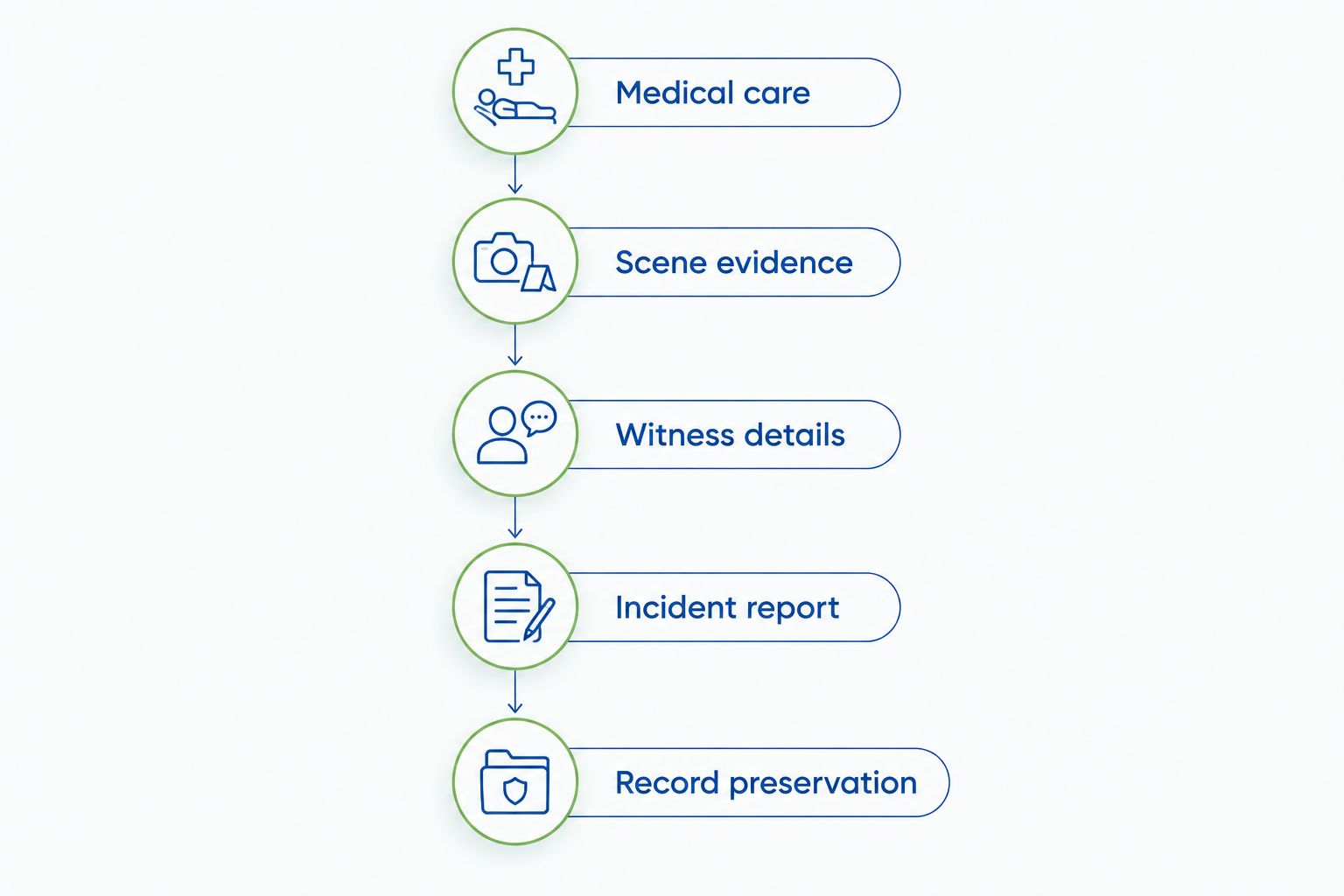
What should you do after a California slip and fall?
Get medical care first, then preserve the facts without putting yourself at risk. Give medical providers an accurate account of the fall and your symptoms.
- Medical care: Follow treatment instructions and keep your records.
- Scene evidence: Photograph the hazard, approach, warning signs, and location.
- Witness details: Obtain names and contact information when possible.
- Incident report: Report the incident and request a copy of any written report.
- Record preservation: Keep footwear, messages, receipts, and relevant documents; promptly request preservation of surveillance footage.
Do not guess when an incident form asks how long a hazard existed. State what you observed. Khachikyanlawfirm provides personal injury representation; legal advice can help you assess responsibility and preserve relevant evidence.
Discuss your slip and fall
Ask about personal injury representation and the evidence relevant to your California fall.
Check deadlines before negotiating
California Code of Civil Procedure section 335.1 generally sets a 2-year limitation period for personal injury lawsuits. Exceptions affect the calculation, so do not treat that period as permission to delay.
Claims involving public entities generally require a government claim within 6 months under Government Code section 911.2. The claim process and lawsuit deadline are separate requirements. For a fall in 2026, identify the responsible parties early and get advice on the deadlines that apply.
FAQ
What are the main causes of slip and fall accidents in California?
Causes of slip and fall accidents in California include wet floors, uneven pavement, loose mats, clutter, poor lighting, unsafe stairs, slippery flooring, outdoor water or debris, level changes, and damaged surfaces. This list is an investigation checklist, not a statewide frequency ranking.
Does a wet floor automatically make a business liable?
No. A claim needs evidence connecting the condition to negligence and your injury, including whether the responsible party created the hazard or knew or should have known about it.
What evidence should I collect after a fall?
Collect photographs of the hazard and your approach, witness contact details, incident records, and medical documentation. Preserve your footwear and promptly request preservation of relevant surveillance footage.
Can I bring a claim if there was a warning sign?
A warning sign does not automatically resolve liability. Its placement, visibility, wording, and relationship to the actual hazard matter when assessing reasonable care.
Can I recover compensation if I was partly at fault?
California comparative negligence allows damages to be reduced according to your share of responsibility. Partial fault does not automatically eliminate a claim, but the evidence determines how responsibility is allocated.
How long do I have to file a California slip and fall lawsuit?
California personal injury lawsuits generally have a 2-year limitation period under Code of Civil Procedure section 335.1. Public-entity claims generally require a government claim within 6 months, and exceptions can change the applicable deadlines.
Who can help assess a California slip and fall claim?
A personal injury attorney can assess the hazard, responsible parties, evidence, and applicable deadlines. Khachikyanlawfirm offers personal injury legal representation.
One last thing
The photograph showing your approach can be as important as the close-up of the defect. A close-up records damage; the wider view explains visibility, walking direction, and nearby warnings. Preserve both before the scene changes.