
Suing after a minor car accident in Glendale is worth considering when another party caused documented losses that insurance will not fairly resolve—not simply because a collision happened. In 2026, weigh your injuries, evidence, remaining losses, and ability to collect against the expense and demands of litigation; a claim or negotiated settlement can resolve the dispute without a lawsuit.
- Is it worth suing after a minor car accident in Glendale? Documented losses and unresolved liability drive the decision.
- An insurance claim does not require filing a lawsuit; start by documenting injuries, vehicle damage, and lost earnings.
- Khachikyanlawfirm provides personal injury representation in Glendale; seek legal review when injuries or disputed fault complicate your claim.
- California filing deadlines differ for personal injury, property damage, and claims involving public entities.
Is it worth suing after a minor car accident in Glendale?
A lawsuit makes sense when you have a legally supported claim, meaningful uncompensated harm, and a realistic collection path. A damaged bumper alone does not answer that question. Neither does an insurer calling the crash minor.
Compare your available routes before deciding. For a damage-only dispute, start with the evidence that strengthens a property damage claim, including photographs, repair documentation, and proof connecting the damage to the collision.
| Route | Best for | Main advantage | Main limitation |
|---|---|---|---|
| Insurance claim and negotiation | Documented losses that the insurer can resolve | Gives you a path to payment without filing suit | The insurer can dispute fault, coverage, or damages |
| California small claims court | Eligible disputes within the court's limits | Individuals generally present their own cases at the initial hearing | Recovery limits and procedural restrictions apply |
| Civil lawsuit | Injury claims or disputes requiring formal litigation | Allows formal evidence gathering and a court decision | Requires procedural work, time, and litigation expenses |
These are routes, not automatic recommendations. Use the least burdensome route that protects your claim and addresses your documented losses.
Why this matters
A collision that looks minor can still leave you with a disputed repair bill, missed work, or an injury requiring care. The legal question is what the other party caused and what you can prove—not how dramatic the crash photographs look.
The reverse matters, too. An unpleasant accident does not automatically justify litigation if the responsible insurer has already addressed your documented losses. Your 2026 decision should turn on the unresolved claim, not frustration with the process.
Separate three questions: who was responsible, what harm resulted, and who can pay. Strong evidence on only one of those questions does not establish the entire case.
Insurance negotiation: best for resolving documented losses without suit
Start with a complete claim rather than an unsupported demand. Give the insurer evidence of responsibility and a clear explanation of the losses you are asking it to cover.
Ask for disputed issues in writing. An insurer questioning a repair estimate presents a different problem from an insurer denying that its driver caused the collision. Your response should address the actual disagreement.
The advantage is avoiding litigation when an agreement will resolve the claim. The limitation is that negotiation does not force agreement or suspend the filing deadline. Continue tracking deadlines while settlement discussions are open.
Before accepting payment, read any release. Determine whether it resolves vehicle damage only, injury claims, or all claims arising from the accident. Do not assume a payment's description tells you everything the accompanying agreement releases.
Small claims court: best for eligible, limited disputes
California small claims court offers a route for eligible claims within its jurisdictional limits. Individuals generally represent themselves at the initial hearing rather than having a lawyer present the case for them.
That can suit a straightforward dispute supported by repair records, photographs, and a clear account of responsibility. You still need to identify the correct defendant, complete service, organize evidence, and explain the amount requested.
The trade-off is the court's limited scope and the responsibility you carry for presenting the case. Do not reduce a potentially significant injury claim to a simple repair dispute without understanding what you are giving up. Ask about the consequences of splitting claims or accepting a release before choosing this route.
Civil litigation: best for claims needing formal court procedures
A civil lawsuit permits formal discovery, such as requests for documents and sworn testimony. Those procedures can matter when responsibility, injuries, or the connection between the crash and your losses is disputed.
The benefit is access to a process for developing evidence and obtaining a binding decision. The drawback is the work required: pleadings, service, discovery, court deadlines, and preparation for a possible trial.
Filing does not guarantee recovery. A judgment and payment are different things, so consider insurance coverage and collectability alongside the strength of the claim. Ask counsel what litigation would accomplish that a supported settlement demand has not.
Why the decision to sue varies
Your decision depends on the facts of your claim, not a universal accident-severity threshold. Review these factors together:
- Documented harm: Repair records, medical documentation, and earnings records establish different parts of your loss.
- Responsibility: Witness accounts, photographs, video, and other evidence affect whether you can establish fault.
- Causation: You must connect the losses you claim to the collision, especially when an insurer disputes an injury or prior damage.
- Unresolved payment: Identify what remains unpaid and why; disagreement alone does not establish the correct recovery.
- Coverage and collectability: A strong liability case still requires a realistic source of payment.
- Litigation demands: Consider case expenses, participation requirements, and the consequences of the proposed fee agreement.
California uses comparative fault. Your share of responsibility can reduce your recovery rather than automatically eliminate it. Do not treat either driver's initial account as a final allocation of fault.
How do I decide whether to file a lawsuit?
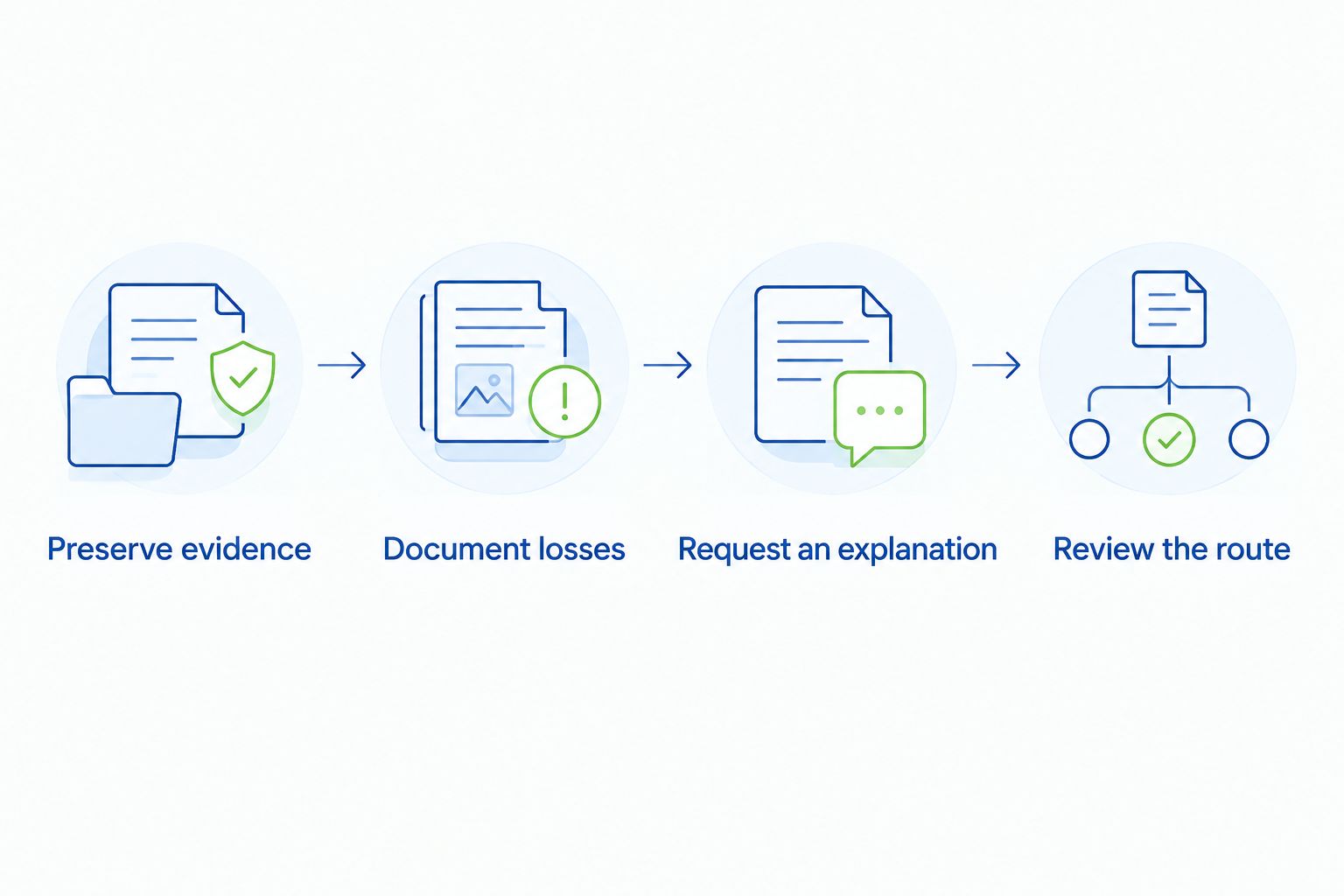
Use this sequence to organize the decision in 2026. It keeps the focus on proof and unresolved harm rather than choosing court first and assembling a case afterward.
Preserve evidence
Save collision photographs, witness details, correspondence, repair estimates, invoices, and any available incident report. Preserve original files and request relevant video promptly, because recordings are not necessarily retained indefinitely.
Write a factual timeline while events remain fresh. Separate what you personally observed from what someone later told you, and do not alter records to make the claim appear stronger.
Document losses
Seek appropriate medical care for symptoms and describe the accident accurately to your provider. Keep records of treatment, work restrictions, missed earnings, and vehicle-related losses.
Medical records support an injury claim, but they do not replace proof of responsibility. Likewise, a repair invoice establishes an expense without automatically proving the other driver caused it.
Request an explanation
Ask the insurer to identify what it accepts and what it disputes. Request clarification when an offer or denial does not explain its treatment of the evidence.
Then address the specific gap. Missing documentation calls for records; a disputed collision account calls for evidence about how the crash happened.
Review the route
Compare negotiation, eligible small claims proceedings, and civil litigation against the remaining dispute. Check deadlines before spending more time negotiating.
Khachikyanlawfirm is a fit for Glendale drivers seeking personal injury representation. Bring the documents, the insurer's position, and any proposed release to a legal review so the discussion centers on your actual claim.
What deadlines apply to a Glendale accident claim?
California generally gives you 2 years to file a personal injury lawsuit and 3 years to file a property damage lawsuit. These general periods appear in California Code of Civil Procedure sections 335.1 and 338; exceptions can change the calculation.
For California claims in 2026, claims involving public entities require separate attention. Government Code section 911.2 generally requires presenting a claim for personal injury or personal property damage within 6 months, subject to applicable rules and exceptions. That claim-presentation requirement is different from filing a lawsuit.
Do not assume every deadline begins or ends the same way. Public-entity involvement, the claimant's age, and other circumstances require individual review. A lawyer should calculate the applicable dates rather than relying on a general article.
An insurance claim is not a substitute for timely court filing. Keep copies of submissions and communications, but do not interpret continued insurer correspondence as permission to miss a deadline.
Can I sue if I was not physically injured?
You can pursue a property damage claim without a physical injury when another party is legally responsible for damage to your vehicle or other property. The claim still requires proof of responsibility, causation, and recoverable loss.
A documented damage-only dispute does not automatically require a civil lawsuit. Review insurance options and small claims eligibility before choosing a more demanding process.
What if pain starts after I leave the accident scene?
Seek medical assessment when symptoms appear, and describe their timing accurately. Do not dismiss symptoms because the vehicles looked lightly damaged or diagnose the injury yourself.
Preserve the treatment records and report the claim accurately. Later-reported symptoms do not remove the need to establish that the collision caused the condition you are claiming.
Should I accept a settlement before treatment is finished?
Do not sign a final injury release without understanding the claim it closes. If treatment is ongoing, discuss how unresolved medical needs affect the proposed settlement before accepting it.
An accepted release can prevent you from seeking additional recovery for claims it covers. Distinguish a property-only agreement from a release that also settles bodily injury claims.
What should I ask a lawyer before deciding?
A useful consultation should clarify the decision, not simply produce a recommendation to sue. Bring your records and ask direct questions:
- What evidence supports responsibility, and what evidence is missing?
- Which losses are supported by the current records?
- What does the insurer dispute?
- What filing and claim-presentation deadlines apply?
- What fees, expenses, and reimbursement obligations affect the net recovery?
- What would filing accomplish that negotiation has not?
Ask how medical liens or reimbursement claims would be handled if they apply. Gross settlement figures do not tell you what remains after applicable deductions.
Khachikyanlawfirm provides personal injury representation in Glendale. Review the proposed engagement agreement and the scope of representation before hiring counsel; representation does not guarantee a settlement or court result.
Discuss your accident claim
Ask about evidence, deadlines, and representation for your Glendale personal injury claim.
FAQ
Is it worth suing after a minor car accident in Glendale?
Suing is worth considering when another party caused documented losses that remain unresolved and there is a realistic collection path. Compare insurance negotiation, small claims eligibility, and civil litigation before deciding.
Do I have to sue to get an insurance settlement?
No, you do not have to file a lawsuit to negotiate an insurance settlement. Negotiation does not suspend the applicable filing deadline.
How long do I have to sue for an injury in California?
California generally allows 2 years to file a personal injury lawsuit under Code of Civil Procedure section 335.1. Exceptions and public-entity claim requirements can change the applicable timeline.
Can I recover anything if I was partly at fault?
California comparative fault rules allow recovery to be reduced by your share of responsibility rather than automatically barred. Evidence determines how responsibility is allocated.
Can I use small claims court for vehicle damage?
You can use California small claims court for an eligible vehicle damage dispute within its jurisdictional limits. Confirm eligibility, service requirements, and the consequences for any related injury claim before filing.
Does minor vehicle damage mean I cannot have an injury claim?
Minor vehicle damage does not automatically rule out an injury claim. You still need evidence connecting the collision to the injury and claimed losses.
Can Khachikyanlawfirm help with a Glendale accident injury claim?
Khachikyanlawfirm provides personal injury representation in Glendale. Discuss the accident facts, documentation, applicable deadlines, and engagement terms before deciding on representation.
One last thing
Before debating whether to sue, identify exactly what remains unresolved. Write down the disputed loss, the evidence supporting it, and the insurer's explanation. That exercise separates a missing-document problem from a genuine disagreement requiring legal action.
For your 2026 claim, give equal attention to any release you are asked to sign. Filing a lawsuit is one consequential decision; permanently closing claims through a settlement is another.
This article provides general California legal information, not legal advice for your circumstances.