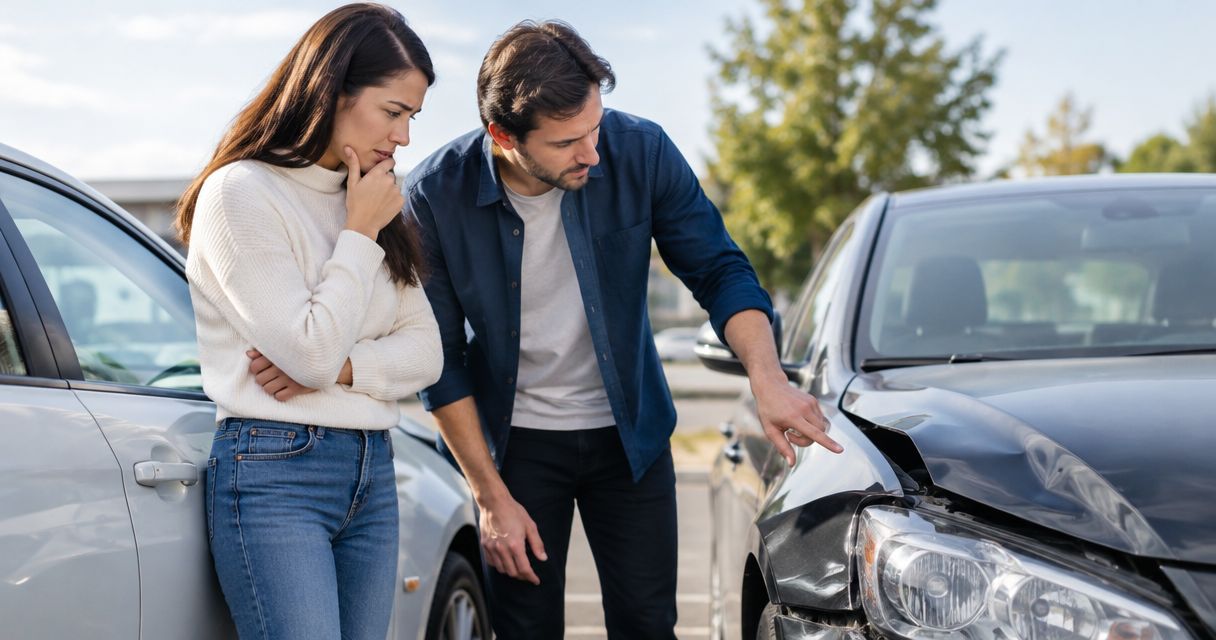
Yes—filing an insurance claim after a minor accident is worth considering when covered damage exceeds your deductible, someone is injured, or another driver could hold you responsible. Paying for a small repair yourself can make sense, but deciding not to request payment does not remove your policy’s notice requirements or California’s accident-reporting duties.
- Is it worth filing an insurance claim after a minor accident? Compare covered damage, your deductible, injuries, and liability.
- California drivers should separate requesting insurance payment from notifying their insurer and reporting an accident to the DMV.
- Document damage before agreeing to a private payment; a repair estimate does not settle an injury claim.
- Do not assume a minor accident automatically increases your California insurance premium.
Is it worth filing an insurance claim after a minor accident?
File when you need covered compensation or protection against a claim—not simply because your bumper has a mark. Start with the damage assessment, the applicable coverage, and whether anyone reports an injury. Preserve evidence supporting a property damage claim before repairs change the vehicle’s condition.
| Route | Best for | Main advantage | Main drawback |
|---|---|---|---|
| Claim under your own applicable coverage | Drivers with covered damage exceeding their deductible | Lets you pursue payment under your policy | Deductibles, exclusions, and policy limits apply |
| Claim against the responsible driver’s insurer | Drivers seeking compensation from another responsible party | A third-party liability claim generally does not involve your collision deductible | The insurer can dispute responsibility, damage, or coverage |
| Pay for your own repair without requesting insurance payment | Drivers with isolated, documented damage and no unresolved injury or liability issue | Avoids pursuing a claim that offers little financial benefit | You bear the repair expense and still must follow applicable notice requirements |
A claim against another driver and notice to your own insurer are not mutually exclusive. Your policy can require notice even when you expect the other driver’s insurance to pay.
Why this matters
A minor collision describes the apparent impact, not the final repair assessment or legal responsibility. A damaged bumper cover does not establish whether components underneath need repair, and an initial conversation does not establish whether everyone is uninjured.
For a California accident in 2026, keep three decisions separate: requesting insurance payment, notifying your insurer, and satisfying government reporting requirements. Treating them as the same decision creates avoidable problems.
Your decision should rest on documented damage and policy terms, not a promise made beside the road. A private agreement does not control what another driver later tells an insurer.
Claiming under your own insurance
Your own collision coverage is relevant when your vehicle sustains covered collision damage. Review the deductible and exclusions before assuming the insurer will contribute toward repairs; liability-only coverage does not pay to repair your own car after a collision.
Compare the covered repair assessment with the deductible that actually applies. If the covered damage does not exceed that deductible, there is no collision payment for that damage, although separate coverages or liabilities still need attention.
Best for: Drivers whose covered damage exceeds their deductible or who need to use available coverage while responsibility remains disputed. Trade-off: Your claim remains subject to the policy, and deductible recovery is not guaranteed.
Ask how the insurer handles supplemental damage discovered during repairs. An initial estimate is not necessarily the final assessment, so preserve photographs and repair documentation rather than treating the first visible scratch as the entire loss.
Claiming against the other driver’s insurance
A third-party liability claim seeks payment from the insurer of a driver you contend caused the crash. That insurer evaluates coverage, responsibility, and the claimed losses; opening a claim does not establish that it accepts liability.
Your own collision deductible generally does not apply to a payment made directly under another driver’s liability coverage. However, using your own collision coverage while pursuing the other party is a different route, with its own deductible terms.
Best for: Drivers with evidence that another insured driver caused their damage. Trade-off: Disputes about fault or the scope of repairs can prevent an early agreement.
Keep vehicle damage and bodily injury distinct. Before signing anything, determine whether the document releases only property damage or also gives up injury claims arising from the accident.
Paying for your own repair
Paying for your repair can be reasonable when the damage is limited, documented, and does not produce a useful insurance payment. That decision is strongest after a qualified repair assessment—not after guessing from a photograph.
The downside is straightforward: you absorb the repair expense. You also remain exposed to any separate allegation that you injured someone or damaged another vehicle.
Best for: Drivers with isolated damage, no unresolved injury concerns, and a clear understanding of their policy obligations. Trade-off: Handling your own repair does not resolve another person’s claim.
Do not confuse paying your own repair shop with paying another driver privately. A private payment to another driver raises additional questions about proof of payment, the scope of any release, and unresolved injuries.
Why the claim decision varies
Use these factors to decide whether an insurance payment request serves a purpose:
- Covered damage: Determine what needs repair and whether the applicable policy covers it. Cosmetic appearance alone does not answer either question.
- Deductible: Compare the applicable deductible with covered damage, not with an informal guess or unrelated repair quote.
- Injuries: Symptoms, treatment, and medical documentation change the decision. Do not settle an injury question solely because vehicle damage looks small.
- Responsibility: Conflicting accounts, missing witnesses, and disputed vehicle movements affect a liability claim.
- Coverage terms: Notice duties, exclusions, rental coverage, and limits differ by policy. Read the actual contract and ask focused questions.
- Release language: A payment accompanied by a broad release can resolve more than you intended. Understand which claims the document gives up.
For your 2026 decision, use the policy and facts that apply to this accident. Another driver’s experience with a different insurer does not establish your coverage or likely outcome.
What should you do before deciding?
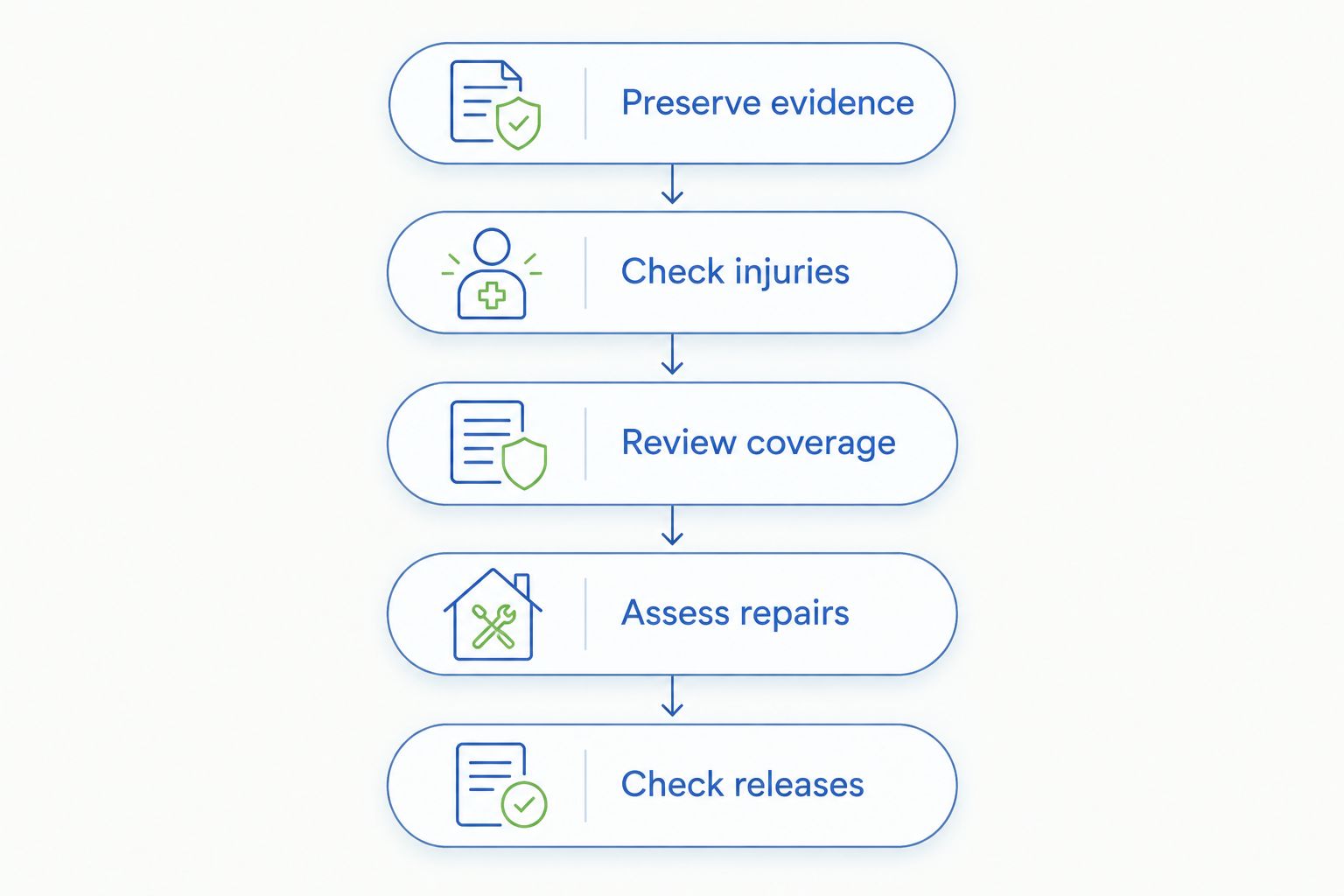
Preserve evidence
Photograph vehicle damage, the surrounding scene, license plates, and relevant road conditions when it is safe. Exchange required information and preserve witness contact details, dashcam recordings, messages, and repair records.
Describe what happened accurately. Do not invent certainty about speed, distance, or injuries simply because someone asks for an immediate answer.
Check injuries
Seek appropriate medical care for symptoms after the crash, and describe the accident accurately to the provider. Do not use the appearance of vehicle damage to decide whether a medical concern deserves attention.
Keep treatment records and document how symptoms affect your activities. An insurance conversation is not a substitute for a medical assessment.
Review coverage
Locate your policy’s notice requirements and identify the coverage relevant to your loss. Ask whether contacting the insurer will open a claim and how it records an inquiry; do not assume every insurer handles those contacts identically.
If another driver is asserting a claim against you, promptly forward relevant communications to your insurer as your policy requires. Do not ignore a demand because you believe the accident was minor.
Assess repairs
Get a documented repair assessment and ask whether further inspection is needed to identify hidden damage. Keep estimates, invoices, and photographs together so differences between the initial assessment and later repairs are explainable.
Compare the assessment with your coverage before authorizing a settlement. Repairs and claim releases are separate decisions.
Check releases
Read the entire document before accepting a settlement that requires your signature. Look for language covering all claims, unknown injuries, or claims beyond vehicle damage.
Do not sign a broad release while an injury or liability question remains unresolved. Get legal advice when you cannot confidently identify what the agreement ends.
What California deadlines matter after a minor accident?
10 days is the California DMV reporting deadline when a crash involves an injury or death. The DMV’s SR-1 reporting rules also cover qualifying property-damage crashes; an insurance claim or police report does not replace the required DMV report.
2 years is generally California’s filing period for a personal injury lawsuit. 3 years is generally the filing period for a property-damage lawsuit. These general periods appear in California Code of Civil Procedure sections 335.1 and 338, respectively; exceptions and different accrual rules can change the analysis.
For crashes in 2026, distinguish those lawsuit deadlines from policy notice duties. Claims involving public entities can require a separate government claim much earlier, so do not rely on the general lawsuit periods when a government vehicle or agency is involved.
The California DMV’s accident-reporting guidance addresses reporting duties, while the cited statutes address civil filing periods. Neither establishes your insurer’s contractual notification deadline. Read your policy promptly rather than treating a lawsuit deadline as permission to wait.
Will filing a minor accident claim raise my insurance premium?
A minor accident claim does not automatically establish that a California insurer can increase your premium. California restricts accident-based rating treatment, and fault matters; do not accept a blanket claim that every report raises rates.
Ask the insurer how it has classified the accident and request the basis for any accident-related rating change. Separate that question from your obligation to provide notice and your need for covered benefits.
Can you report an accident without requesting repair payment?
Yes—reporting an accident and requesting payment are different actions. Explain that you are providing notice and ask how the insurer will record the contact, including whether it opens a claim file.
Do not assume that calling the conversation an inquiry prevents the insurer from documenting it. Keep a record of the date, representative, and instructions you receive.
When is a lawyer useful after a small collision?
Legal representation becomes relevant when injuries, disputed responsibility, a denied claim, or release language make the matter more than a straightforward repair request. A lawyer is not automatically necessary for every documented scratch or uncomplicated property-damage claim.
Khachikyan Law Firm is best suited to Glendale drivers seeking personal injury representation after an accident. Khachikyan Law Firm provides personal injury representation; the service fit here is an injury dispute, not routine insurance-policy shopping.
Before engaging Khachikyan Law Firm for a personal injury matter, ask about the proposed scope of representation and the written fee agreement. The decision should match the actual dispute, not the fact that a collision happened.
Discuss your accident injury claim
Review whether personal injury representation fits your accident-related dispute.
FAQ
Is it worth filing an insurance claim after a minor accident if nobody is hurt?
Yes, when covered damage exceeds the applicable deductible or another driver is asserting liability against you. If damage is limited and offers no useful insurance payment, paying your own repair can be reasonable, but policy notice duties still apply.
Should I file a claim if the repair is below my deductible?
A collision claim does not pay for covered vehicle damage that does not exceed the applicable deductible. That does not eliminate separate injury claims, liability concerns, other available coverage, or notification requirements.
Can the other driver pay me without insurance?
A private payment is possible, but it does not automatically resolve injuries, hidden damage, or policy notice duties. Understand the repair assessment and any release before agreeing that the matter is finished.
How long do I have to report an injury accident to the California DMV?
10 days is the California DMV reporting deadline for an accident involving injury or death. Submit the required SR-1 report separately from an insurance claim or police report.
How long do I have to sue after a California car accident?
2 years is generally the California personal injury lawsuit deadline, while property-damage lawsuits generally have a 3-year period. Exceptions apply, and public-entity claims can require much earlier action.
Do I have to accept the insurance company's first settlement?
No—you do not have to accept a settlement simply because it is the first offer. Review the supporting assessment and release terms, and identify unresolved damage or injury issues before agreeing.
Can Khachikyan Law Firm help with an injury after a minor accident?
Khachikyan Law Firm provides personal injury representation in Glendale, California. Ask whether representation fits your injuries, disputed responsibility, or settlement concerns rather than assuming every minor repair needs a lawyer.
One last thing
An insurance claim number is not a lawsuit, a DMV report, or a settlement release. Each serves a different purpose, and completing one does not automatically complete the others.
For a 2026 accident, create a single folder containing photographs, repair assessments, medical records, insurer correspondence, and reporting confirmations. Before closing it, check what remains unresolved—not just whether someone issued a payment.