
Challenging a denied lemon law arbitration decision is worth considering when you can identify a legal ground for court review or still have the right to bring a separate lawsuit. In California in 2026, the first question is whether the decision binds you: rejecting a nonbinding manufacturer-program decision is different from asking a court to overturn a binding arbitration award.
- Is it worth appealing a denied lemon law arbitration decision? Yes, when a valid challenge or separate lawsuit remains available.
- A nonbinding manufacturer-program denial and a binding arbitration award require different next steps.
- Disagreeing with the arbitrator does not, by itself, establish grounds to overturn a binding award.
- Khachikyanlawfirm provides lemon law representation in Glendale, California.
Is it worth appealing a denied lemon law arbitration decision?
Pursue the available legal route, not an appeal that the program does not offer. Your arbitration agreement, program rules, written decision, and any acceptance documents determine which route needs review. The arbitration denial to civil lemon law lawsuit workflow explains that transition separately.
| Route | Best for | Main advantage | Main limitation |
|---|---|---|---|
| Program reconsideration | Consumers whose program expressly permits another review | Addresses eligible errors within the program | Rules restrict what can be reviewed; do not assume deadlines pause |
| Separate civil lawsuit | Consumers who remain unbound by the decision and have a viable claim | Allows the warranty claim to be presented in court | Eligibility, evidence, defenses, and filing deadlines still apply |
| Petition to vacate a binding award | Consumers with a recognized legal ground for setting aside the award | Challenges defects in the arbitration process or authority | Usually does not permit a fresh decision on the merits |
None of these routes guarantees a different result. Choose the route by its legal requirements, not by which name sounds strongest.
Why this matters
A denial does not always end your warranty rights. But treating every denial as nonbinding creates a different risk: you can miss the deadline to challenge an award that does bind you.
For a California vehicle owner reviewing a denial in 2026, the useful starting point is the paperwork—not the manufacturer's description of the outcome. Khachikyanlawfirm is an option for Glendale drivers seeking lemon law representation after an arbitration denial.
Separate two questions: whether you can challenge the decision, and whether your underlying vehicle claim has enough support to pursue. A legal route without supporting repair records is not the same as a strong case.
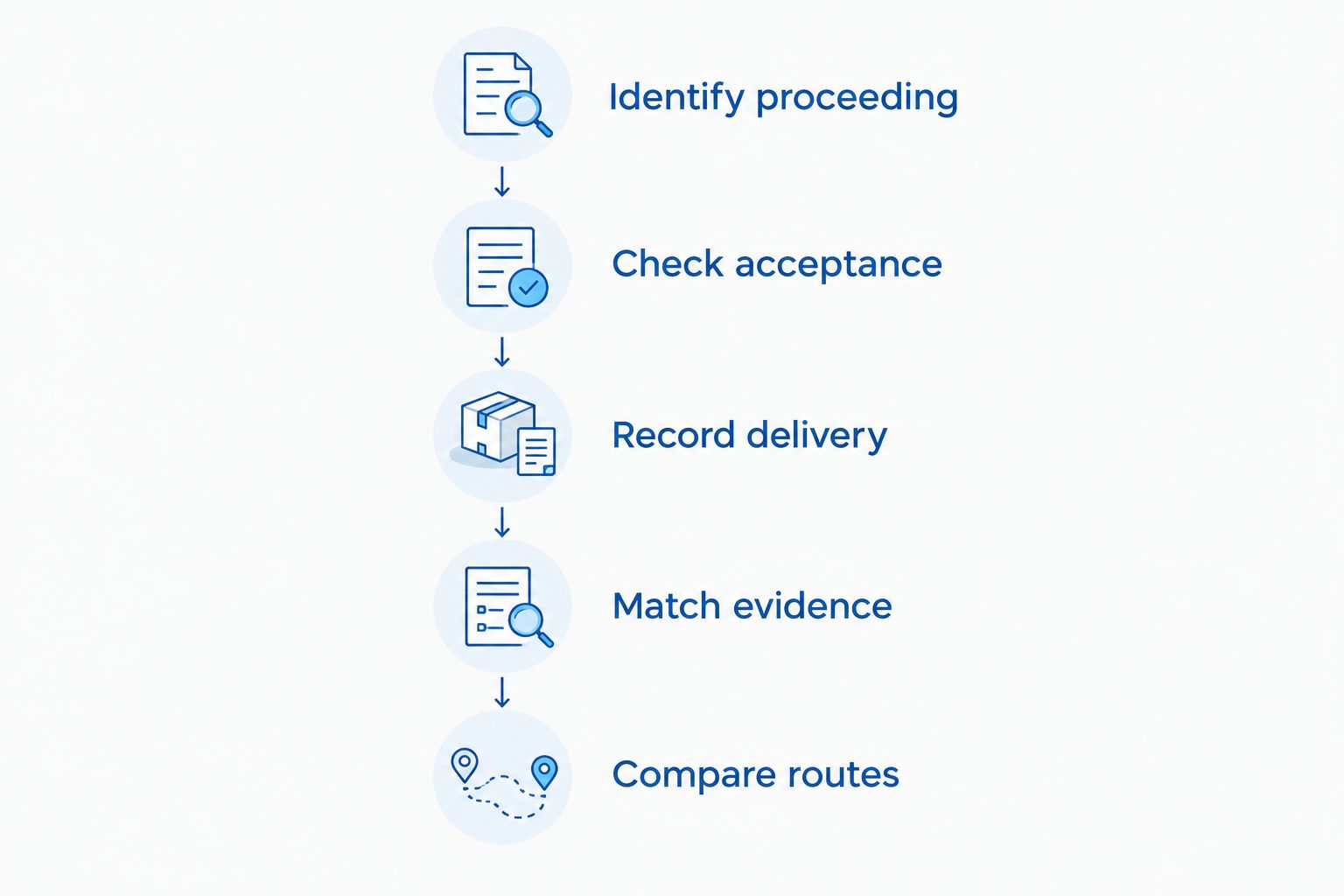
Review the denial in 5 steps
1. Identify the proceeding
Find the arbitration agreement, application, program rules, and decision. Determine whether you used a manufacturer's informal dispute program or participated in binding contractual arbitration.
Do not rely on the word arbitration alone. Both processes can use that label while producing different consequences for your right to sue.
2. Check what you signed or accepted
Read any acceptance form, settlement agreement, release, or electronic acknowledgment connected to the decision. These documents require separate attention from the arbitrator's reasoning.
Accepting an outcome or releasing claims can affect later options. Keep the complete document, including attachments and acceptance instructions, rather than a screenshot of the final page.
3. Record delivery dates
Save the envelope, email, portal notice, and any proof showing when the award or decision was served. Write down dates without replacing the underlying records.
A deadline can turn on service of the award, not the day you finally read it. Give counsel the actual notice and delivery information so the applicable trigger can be identified.
4. Match each denial reason to evidence
Create a short list of the reasons given for denial. Beside each reason, identify the repair order, warranty provision, communication, or other record that supports your response.
Distinguish an unfavorable factual finding from a procedural problem. A missing repair invoice and a refusal to hear material evidence raise different questions and call for different legal analysis.
5. Compare the available next steps
Ask which route remains available, what it requires, and what it can accomplish. Request a separate assessment of deadlines, proof problems, likely work, and your responsibilities under the proposed representation agreement.
Do not send another appeal letter simply because the first decision feels wrong. First establish whether reconsideration exists, a lawsuit remains available, or a court petition is necessary.
Nonbinding denial: evaluate a separate lawsuit
A manufacturer-sponsored informal dispute decision is not automatically a binding judgment against the consumer. Federal Trade Commission rules governing qualifying warranty dispute mechanisms state that their decisions are not legally binding on any person, under 16 CFR § 703.5(j).
That does not make the decision irrelevant. California's certified-program framework addresses the use of arbitration findings in later proceedings, and your acceptance of an outcome requires review.
Best for: consumers who remain free to sue and have evidence supporting a warranty claim. The advantage is the opportunity to pursue the underlying claim rather than prove that an arbitrator committed a reviewable error. The limitation is that you still must establish the claim, meet deadlines, and address the manufacturer's defenses.
Before filing, assess vehicle eligibility, applicable warranties, repair opportunities, the defect's effect on use, value, or safety, and the remedy supported by the facts. A denial does not establish eligibility for a buyback.
Binding award: identify a recognized ground for court review
A binding arbitration award is different. Courts generally do not retry the vehicle dispute merely because you believe the arbitrator misunderstood the facts or reached the wrong conclusion.
California Code of Civil Procedure § 1286.2 identifies grounds for vacating awards. These include specified circumstances involving corruption, fraud, arbitrator misconduct, an arbitrator exceeding permitted powers, and prejudicial refusal to hear material evidence.
Best for: consumers with evidence of a recognized defect in the arbitration process or the arbitrator's authority. The advantage is a legal procedure for challenging an invalid award. The limitation is narrow review: an argument that the vehicle deserved more repair attempts is not automatically a ground for vacatur.
Even a successful challenge does not necessarily produce a buyback. The court's order and governing law determine what happens next, including whether further arbitration follows.
Why the value of challenging a denial varies
The decision depends on specific facts, not a general success percentage. Review these factors before committing to another proceeding:
- Binding effect: A separate lawsuit and a petition to vacate serve different purposes.
- Reason for denial: Missing warranty coverage requires a different response from excluded evidence.
- Quality of the record: Repair orders and contemporaneous communications support facts more directly than an unsupported recollection.
- Available legal ground: A court challenge needs a recognized basis, not just dissatisfaction.
- Remaining deadlines: An otherwise useful route loses value if its filing or service requirements were missed.
- Practical burden: Consider document preparation, participation, legal expenses, and the relief actually available.
A stronger case addresses the denial's actual reasoning. Repeating the original complaint without addressing that reasoning does not supply the missing proof.
Which deadlines should I check immediately?
In California, 100 days is a critical statutory period for many petitions to vacate or correct an arbitration award. California Code of Civil Procedure § 1288 measures that period from service of a signed copy of the award on the petitioner.
For awards governed by the Federal Arbitration Act, 9 U.S.C. § 12 provides a 3-month period for serving notice of a motion to vacate, modify, or correct an award. These are different statutory rules; do not choose between them without reviewing the agreement and applicable law.
For a 2026 denial, keep the award, proof of service, arbitration agreement, and court papers together. Filing, service, jurisdiction, and any applicable exception require individual analysis.
A separate lemon law lawsuit has its own deadline analysis. Do not assume that arbitration, a reconsideration request, or continued manufacturer discussions pause every applicable clock. Ask counsel to identify each deadline and its triggering event in writing.
What evidence makes another proceeding worth pursuing?
Start with the reason you lost. If the denial says the manufacturer lacked a reasonable repair opportunity, collect records showing when the vehicle was presented and what work was requested or performed.
Organize these 5 document groups for a 2026 case review:
- Decision documents: The award, reasons, rules, agreement, notices, and service records.
- Vehicle documents: Purchase or lease paperwork, warranty materials, and relevant disclosures.
- Repair documents: Complete repair orders showing dates, mileage, complaints, findings, and work performed.
- Manufacturer communications: Emails, letters, case numbers, and responses about repairs or requested relief.
- Defect evidence: Dated photographs, videos, warning messages, and a factual symptom log.
Keep originals unchanged. If a repair order contains an error, preserve it and request a written correction or clarification rather than editing it yourself.
New evidence has different significance depending on the route. It can support a claim that remains open to litigation, but it does not automatically permit a court to revisit the merits of a binding award.
Can I sue after losing manufacturer arbitration?
A nonbinding denial does not, by itself, bar a later lawsuit. Whether you can proceed depends on the program, any acceptance or release, the claim's legal basis, and applicable deadlines.
Ask for a review of both the arbitration outcome and the underlying warranty claim. Those are separate legal questions, and an answer to one does not resolve the other.
Is new evidence enough to overturn a binding award?
New evidence alone is generally not enough to reopen the merits of a binding arbitration award. Court review focuses on recognized legal grounds for disturbing the award, not on giving every disappointed party another opportunity to present the case.
Preserve the evidence anyway. Counsel needs to assess what it proves, when it became available, and whether it relates to a recognized challenge.
Should I request reconsideration before contacting a lawyer?
Get deadline advice before relying on reconsideration. A program's willingness to receive another letter does not establish that a court deadline has stopped running.
If reconsideration is available, follow the written rules while protecting other rights. Keep proof of submission and every response.
Get a focused review before choosing your next move
Khachikyanlawfirm provides lemon law representation in Glendale, California. Bring the complete decision and repair history, not just a summary of what happened.
Ask for clear answers: Is the outcome binding? What route remains available? What evidence is missing? Which deadline applies? Review the representation agreement before authorizing work, including its scope and your financial responsibilities.
Discuss your arbitration denial
Bring your decision, arbitration agreement, and repair records to discuss your next legal step.
FAQ
Is it worth appealing a denied lemon law arbitration decision?
A challenge is worth evaluating when a separate lawsuit remains available or evidence supports a recognized ground to vacate a binding award. First determine whether the decision binds you and which deadlines apply.
Does losing arbitration mean my car is not a lemon?
No. An arbitration denial does not automatically resolve every possible warranty claim, although a binding award can restrict further litigation. Review the decision, agreement, and any acceptance or release.
Can a judge reconsider all the evidence after binding arbitration?
Generally, no. Judicial review of a binding arbitration award is limited and does not ordinarily provide a new trial simply because you disagree with the outcome.
How long do I have to challenge a California arbitration award?
California Code of Civil Procedure § 1288 generally provides 100 days after service of a signed award for a petition to vacate or correct it. Applicable law, service requirements, and the specific proceeding need prompt legal review.
Should I keep making vehicle payments after an arbitration denial?
An arbitration denial does not itself change your loan or lease obligations. Do not assume that a warranty dispute authorizes you to stop paying; review your contract and get advice before changing payments.
What should I bring to a lawyer after losing arbitration?
Bring the decision, arbitration agreement, program rules, proof of service, warranty documents, repair orders, and manufacturer communications. Include any acceptance form or release because it can affect the remaining options.
One last thing
The most useful document is often the denial's explanation, not another description of the defect. It tells you which issue must be addressed—and whether the disagreement concerns missing proof, legal eligibility, or the arbitration process.
For a 2026 review with Khachikyanlawfirm, place that explanation beside the records that answer it. Preserve every deadline before arguing the merits.
This article provides general California legal information, not advice about a particular dispute. The agreement, program rules, governing law, and case facts determine your options.


