
Yes. Delaying medical treatment does not automatically prevent you from filing a California personal injury claim, but you still need evidence connecting your injuries to the accident and must meet the applicable filing deadline. A treatment gap creates a separate problem: the insurer can question when your injury began, what caused it, and whether waiting made it worse.
- For a delayed medical treatment injury claim California residents pursue, the treatment gap affects proof—not automatic eligibility.
- Khachikyan Law Firm provides personal injury representation in Glendale; medical diagnosis belongs with your treating clinician.
- California generally allows 2 years for a personal injury lawsuit; government claims generally require action within 6 months.
- Get appropriate medical care, explain the delay truthfully, and preserve records showing when symptoms began.
Can I still file a claim if I delayed seeing a doctor?
Yes, provided your claim meets the legal requirements and applicable deadlines. California does not impose a universal deadline for your first medical appointment that automatically determines whether an ordinary negligence claim survives. Your medical history, accident evidence, and explanation for waiting matter.
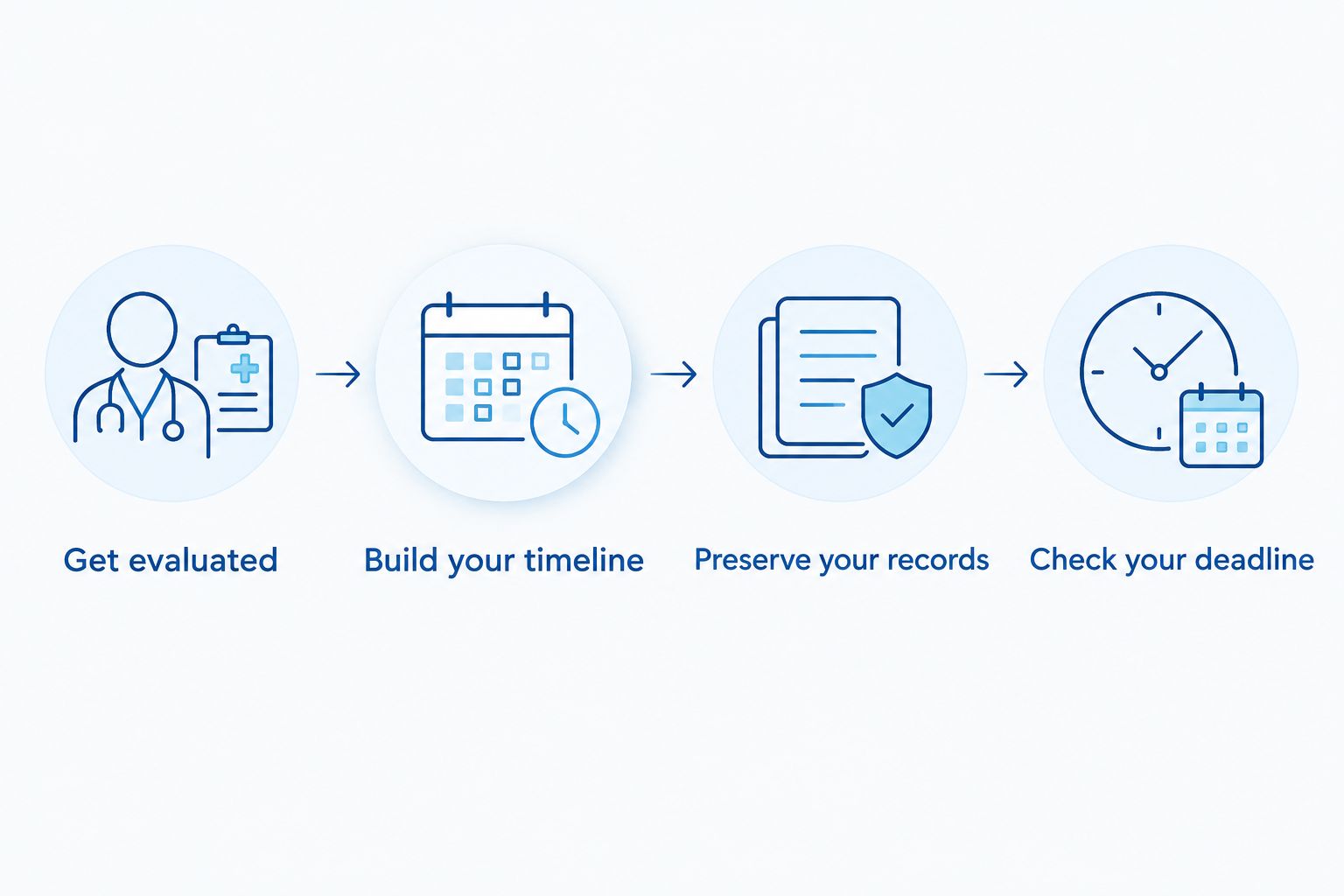
Take these steps now:
- Get evaluated. Tell the clinician what happened, when symptoms started, and how they changed. Seek emergency care for severe or rapidly worsening symptoms rather than waiting for a legal appointment.
- Build your timeline. Record the accident date, symptom onset, appointment requests, first visit, and any later treatment gaps. Separate what you remember from what existing records confirm.
- Preserve your records. Keep medical records, messages, photographs, incident reports, and appointment communications. The medical records to injury demand letter workflow explains how those documents support a demand.
- Check your deadline. Identify the responsible parties and whether a government entity is involved. Do not assume an open insurance claim protects your right to sue.
Why this matters
A first medical visit documents your condition when you finally seek care. It does not automatically establish what your condition was immediately after the accident. Earlier messages, photographs, witnesses, and appointment requests help fill that factual gap.
For a California injury claim in 2026, focus on evidence rather than a supposedly acceptable waiting period. The question is not simply how long you waited; it is whether you can prove the accident caused the harm you claim.
How different treatment gaps affect your claim
A delayed first appointment and a break in ongoing treatment create different questions. Neither automatically defeats your claim, but each needs an accurate explanation supported by available records.
| Treatment situation | Evidence that helps | Main limitation |
|---|---|---|
| Symptoms began immediately, but you waited for care | Dated messages, witness observations, appointment requests | No contemporaneous clinical examination |
| Symptoms appeared after the accident | Accurate symptom timeline and medical evaluation | The connection to the accident still needs support |
| You sought care, then missed follow-up visits | Initial records, scheduling communications, clinician instructions | The insurer can question ongoing symptoms or avoidable worsening |
| You had similar symptoms before the accident | Earlier records and documentation of changes afterward | Separating prior symptoms from accident-related harm requires careful review |
A documented explanation helps establish what happened; it does not replace medical evidence. Likewise, a diagnosis establishes a condition, but the diagnosis alone does not necessarily establish its cause.
What if symptoms did not appear right away?
Tell your clinician exactly when you first noticed symptoms. Some accident-related symptoms develop or become noticeable later, but timing alone does not establish that the accident caused them.
Avoid changing your account to make the claim sound stronger. A truthful record that distinguishes immediate symptoms from later symptoms is more useful than an inaccurate statement that everything hurt from the start.
What if you stopped treatment after the first visit?
Explain whether the break followed medical advice, symptom improvement, difficulty obtaining appointments, or another actual circumstance. Keep records supporting that explanation, including referral requests or canceled appointments.
Follow care recommendations because they address your health, not because someone says you need a larger medical file. If you cannot follow the plan, tell your clinician and ask about appropriate alternatives.
Why the effect of delayed treatment varies
There is no standard deduction from a settlement simply because you waited. The effect depends on the evidence and the disputed issues:
- Symptom timing: Records showing when pain or limitations began help establish the sequence after the accident.
- Medical findings: Examination findings and a clinician's assessment help evaluate the injury and its possible causes.
- Reason for waiting: Appointment shortages, transportation problems, or other actual barriers explain the gap when supported by records.
- Earlier health history: Similar prior symptoms require an honest comparison between your condition before and after the event.
- Events during the gap: Another accident, injury, or physical activity can raise questions about alternative causes.
- Treatment instructions: Whether you followed reasonable medical advice affects disputes about avoidable additional harm.
These factors do not operate as a scoring system. A longer gap with a documented explanation presents different evidence from a shorter gap with inconsistent accounts.
What evidence helps connect your injury to the accident?
Build a record that answers separate questions: what happened, when symptoms began, and how the injury affected you. No single document necessarily answers all of them.
Medical records and an accurate history
Give the clinician the accident date, the mechanism of injury, symptom timing, and relevant prior conditions. Do not ask anyone to backdate records or state a medical conclusion they cannot support.
Review records for factual errors, such as the wrong accident date or body part. Ask the provider about its correction process rather than altering a document yourself.
Messages and appointment communications
Save existing texts, emails, patient portal messages, and appointment requests. A message describing pain before your first appointment can support your timeline, although it is not a medical diagnosis.
Keep originals when possible. Screenshots are useful, but retaining the underlying conversation preserves context that a cropped image leaves out.
Work and daily activity records
Preserve records of missed work, changed duties, and specific activities your symptoms prevented. Describe what you could not do rather than relying only on broad statements about pain.
A symptom journal started now should identify when you began keeping it. Label reconstructed entries as recollections; do not present them as notes written on the accident date.
Which California deadlines matter in 2026?
A treatment delay and a filing deadline are separate issues. Starting care does not restart the ordinary lawsuit deadline, and negotiating with an insurer does not automatically pause it.
For an ordinary California personal injury lawsuit, Code of Civil Procedure section 335.1 generally provides 2 years from the injury. Exceptions and different claim types can change the analysis, so do not calculate your deadline from a general article alone.
If a public entity is involved, Government Code section 911.2 generally requires presenting a personal injury claim within 6 months after the cause of action accrues. This administrative claim requirement is separate from filing a lawsuit.
After a qualifying written rejection notice, Government Code section 945.6 generally provides 6 months to sue. Different rules apply when the required written notice is not given, and other exceptions can affect the deadline.
For a 2026 deadline review, identify whether the accident involved a city vehicle, public property, or another public entity. Late-claim procedures exist in some circumstances, but they are not an automatic extension.
Does discovering the injury later give me more time?
Not automatically. Delayed-discovery rules require a separate legal analysis; a later diagnosis or first appointment does not by itself move the filing deadline.
Tell your attorney when you first noticed symptoms and when you first suspected their connection to the accident. Preserve the records supporting both dates.
Can an insurer reduce compensation because I waited?
An insurer can dispute whether your medical treatment relates to the accident or whether the claimed harm is supported. That is different from a rule automatically reducing every delayed-treatment claim.
California also recognizes avoidable-consequences principles. Under Judicial Council civil jury instruction CACI No. 3930, a defendant asserting failure to mitigate must establish the applicable elements concerning reasonable efforts to avoid additional harm.
Waiting does not erase the original injury. A dispute about preventable worsening concerns the additional harm allegedly caused by unreasonable conduct, not an automatic loss of the entire case.
Keep the issues separate when reviewing a denial or settlement offer in 2026:
- Is the insurer disputing whether the accident caused the injury?
- Is the insurer disputing whether particular treatment was necessary?
- Is the insurer claiming your actions caused avoidable additional harm?
Ask for the basis of the dispute in writing. A general statement about a treatment gap does not explain which evidence the insurer accepts or rejects.
Should I give a recorded statement about the delay?
Understand who is requesting the statement and which insurance policy applies before agreeing. Your own policy can impose cooperation duties, while a request from the other party's insurer raises different considerations.
Answer truthfully and distinguish facts from uncertainty. If you do not remember a date, check the record rather than guessing; do not let someone else's summary replace your actual account.
Do not sign a broad medical authorization without understanding its scope. Relevant prior records can matter, but you should know what information the authorization permits someone to obtain.
When should I ask a personal injury attorney for help?
Seek legal advice promptly when an insurer disputes causation, a government entity is involved, or the filing deadline is uncertain. You do not need to finish treatment before asking about deadlines and evidence preservation.
Khachikyan Law Firm is best for Glendale residents seeking personal injury representation, not medical diagnosis. Legal representation addresses liability, evidence, and filing requirements; it cannot replace treatment or guarantee that a medical professional will connect an injury to an accident.
Bring the records you already have to a discussion with Khachikyan Law Firm. Include unfavorable facts, previous similar symptoms, and any other injuries during the treatment gap so the legal assessment reflects the full history.
Discuss your injury claim
Explain the treatment gap, identify available records, and ask about your filing deadline.
FAQ
Can I still file an injury claim if I waited weeks to see a doctor?
Yes, waiting weeks does not automatically prevent a California personal injury claim. You still need evidence connecting the injury to the accident and must meet the applicable filing deadline.
Is there a legal deadline for seeing a doctor after a California accident?
California does not impose a universal first-appointment deadline that automatically controls an ordinary negligence claim. Seek appropriate care promptly because your health and the available evidence both matter.
How long do I have to file a California personal injury lawsuit in 2026?
California generally allows 2 years for an ordinary personal injury lawsuit under Code of Civil Procedure section 335.1. Government claims, exceptions, and other claim types require a separate deadline review.
What if I could not get a medical appointment sooner?
Preserve appointment requests, referral records, cancellation notices, and messages showing your efforts to obtain care. Those records explain the delay, but medical evidence must still support the claimed injury and its connection to the accident.
Will waiting for treatment automatically lower my settlement?
No, California has no automatic settlement reduction based solely on a treatment gap. The dispute turns on evidence of causation, damages, and any avoidable additional harm.
Can I claim an injury if I already had pain before the accident?
An accident-related worsening of a preexisting condition can support compensation under California law. Be accurate about your earlier symptoms and preserve records showing what changed after the accident.
Can Khachikyan Law Firm help before I finish treatment?
Khachikyan Law Firm provides personal injury representation in Glendale. You can contact the firm before treatment ends to discuss the accident, the treatment gap, and applicable deadlines; medical decisions remain with your clinician.
One last thing
Do not hide the gap—document it. Appointment requests and messages written before your first visit can explain a delay even when no examination occurred at that time.
For your 2026 claim review, keep original records and create a separate timeline. That preserves the distinction between evidence created during the events and your later recollection.
This article provides general California legal information, not advice about your specific claim. Your facts, defendants, and applicable deadlines require individual review.