
Yes—you can obtain a refund under California lemon law when your vehicle qualifies and the manufacturer cannot repair a covered defect after a reasonable number of attempts. But a statutory buyback is not necessarily every dollar back in your pocket: a permitted mileage deduction and any outstanding loan payoff affect what you receive.
- Can I get a full refund under California lemon law? Yes, but qualifying buybacks can include a mileage deduction.
- California lemon law restitution can include covered vehicle payments, certain government charges, and qualifying incidental expenses.
- A manufacturer buyback must address the outstanding vehicle loan; the entire settlement is not necessarily payable to you.
- Khachikyanlawfirm provides lemon law representation for vehicle owners seeking legal help in Glendale, California.
Why this matters
A full refund and a full financial recovery are not interchangeable. California lemon law separates the amounts recoverable from the manufacturer, permitted deductions, and payments needed to resolve vehicle financing.
For a claim evaluated in 2026, start with the contract and complete repair history—not a dealer's verbal estimate. Organize the documents you need for a California lemon law claim before comparing any proposed refund with what you have paid.
Can I get a full refund under California lemon law?
Yes, if the applicable warranty protections cover your vehicle and the manufacturer fails to repair a qualifying defect after a reasonable number of opportunities. California Civil Code section 1793.2(d)(2) sets out replacement and restitution remedies for qualifying new motor vehicles.
The defect must substantially impair the vehicle's use, value, or safety. A minor annoyance alone does not establish entitlement to a buyback, and an expensive repair does not automatically prove the manufacturer had a reasonable opportunity to fix the problem.
For a qualifying restitution claim, review these components separately:
| Refund component | What to examine | Important limit |
|---|---|---|
| Vehicle transaction | Actual amounts paid or payable for the vehicle | Not every item added to the transaction is necessarily recoverable |
| Government charges | Applicable sales tax, license fees, registration, and other official fees | The calculation must follow the governing restitution rules |
| Incidental expenses | Documented towing, rental transportation, and other qualifying expenses | Expenses must qualify legally and connect to the defect |
| Mileage deduction | Use before the first repair presentation for the defect supporting the claim | The manufacturer cannot simply substitute current mileage |
| Loan resolution | Outstanding lender payoff and payment allocation | Money used to resolve financing is not additional cash to you |
A buyback should be checked line by line, not judged by its headline amount. Ask for the calculation, the deduction, the proposed lender payment, and the amount payable directly to you.
How does the California lemon law mileage deduction work?
For qualifying new motor vehicle restitution, California Civil Code section 1793.2(d)(2)(C) provides a use-deduction formula. It uses mileage directly attributable to your use before the vehicle was first delivered for correction of the problem that supports the claim, divided by 120,000 miles, multiplied by the statutory purchase-price base.
The important date is the first relevant repair presentation—not necessarily the latest visit or the date you requested a buyback. Identifying the correct repair order can change the calculation.
Review the following before accepting the deduction:
- First repair presentation: Identify when you first presented the vehicle for the defect supporting the claim.
- Recorded mileage: Compare the repair order with your delivery records and service history.
- Calculation base: Ask which transaction amounts the manufacturer included in the statutory formula.
- Defect history: Check whether different descriptions concern the same unresolved condition.
The 120,000-mile denominator is a calculation rule, not a promise that every vehicle remains eligible until that mileage. Warranty coverage, the defect, and the repair history still control eligibility.
What if I financed or leased the vehicle?
An outstanding loan does not automatically prevent a qualifying buyback. It changes how the transaction must be resolved: the lender's interest and the amount payable to you need separate accounting.
Do not treat the loan payoff as an extra payment on top of the same purchase amount. A proper review distinguishes payments you already made, outstanding financing, recoverable charges, and permitted deductions without counting the same amount twice.
A leased vehicle requires its own review. The lease agreement, amounts paid, remaining obligations, and lessor's interest affect the proposed resolution; a purchase-loan worksheet is not a substitute for checking the lease.
Do not stop making required payments solely because you requested a buyback. Obtain advice about your contract obligations while the claim remains unresolved, and require written confirmation of how financing or lease obligations will be handled.
Is a refund better than a replacement or cash settlement?
A refund is a different remedy from receiving a replacement vehicle or settling while keeping the vehicle. For qualifying new motor vehicle claims, California law gives the buyer the choice of restitution rather than requiring acceptance of a replacement.
A cash-and-keep settlement is negotiated. Its terms—not the label—determine what you receive, which claims you release, and whether the agreement addresses future warranty rights.
| Resolution | Best for | Main benefit | Main drawback |
|---|---|---|---|
| Manufacturer buyback | Owners seeking to return a qualifying vehicle | Resolves ownership through restitution | Permitted deductions and financing affect the direct payment |
| Replacement vehicle | Owners who prefer another vehicle instead of restitution | Provides a replacement under the applicable remedy | Replacement terms and financing treatment need careful review |
| Cash-and-keep settlement | Owners willing to retain the vehicle under negotiated terms | Allows continued ownership with an agreed settlement | The owner keeps the vehicle, and the release can limit future claims |
Choose the resolution based on the written obligations, not the settlement's name. If you want to return the vehicle, an offer that requires you to keep it does not accomplish that goal.
Why California lemon law refunds vary
Two owners with similar symptoms can receive different refund calculations because their contracts, repair histories, and financing differ. For a 2026 claim review, focus on these documented factors:
- Vehicle eligibility: New, leased, and used transactions do not necessarily carry identical rights. A remaining original warranty alone does not establish every used buyer's entitlement to the new-motor-vehicle buyback remedy.
- Warranty coverage: The relevant warranty and the timing of the defect determine which obligations apply.
- Repair opportunities: The nature of the defect, repair attempts, and time out of service affect whether the manufacturer received a reasonable opportunity to repair.
- Mileage before repair: The first relevant repair presentation affects the permitted use deduction.
- Transaction structure: Financing, leasing, trade-in accounting, and separately purchased items require individual review.
- Supporting expenses: Receipts and a connection to the covered defect support claims for qualifying incidental losses.
The practical next move is to resolve disputed inputs before debating the final total. A disagreement about first-repair mileage is different from a disagreement about whether the vehicle qualifies at all.
Do I need a certain number of repair attempts?
California does not impose one universal repair count for every lemon law claim. A reasonable number depends on the defect and circumstances; the statutory presumption is a separate evidentiary rule, not the only route to proving a claim.
California Civil Code section 1793.22(b) describes a presumption involving qualifying events within 18 months of delivery or 18,000 miles, whichever occurs first. Its alternatives include specified repair-attempt thresholds and more than 30 calendar days out of service for repairs, subject to statutory conditions and exceptions.
Those figures are not interchangeable. The 18-month and 18,000-mile limits concern the presumption's window; the 30-calendar-day provision concerns cumulative repair downtime under that rule.
Do not wait for a particular counter to turn over before seeking advice. A vehicle can require legal review without satisfying the presumption, and meeting a numerical threshold does not remove the need to establish the other requirements.
How do I prepare a refund claim in 2026?
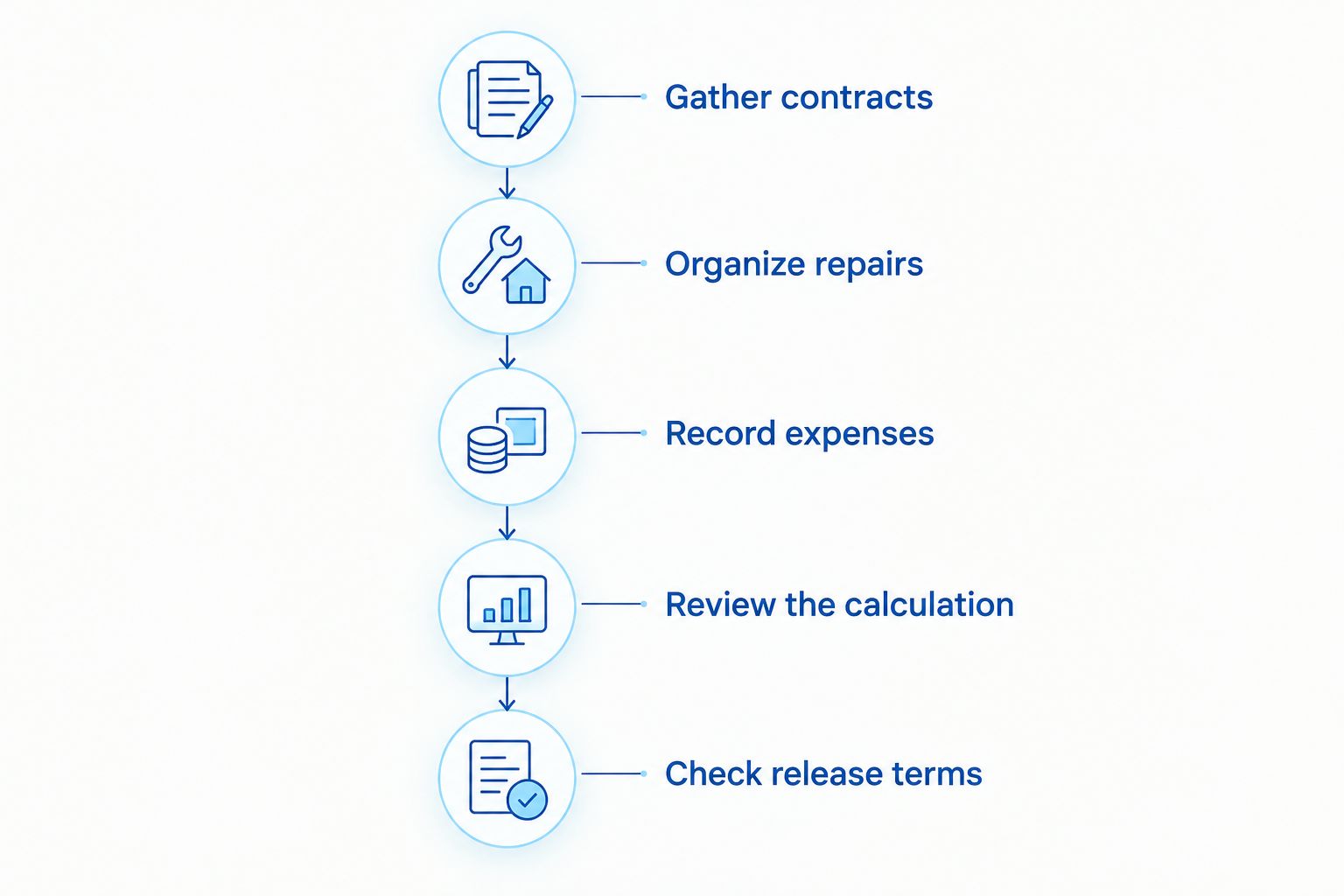
Build a record that connects the covered problem to the repair opportunities and the requested restitution. Keep original documents and save readable copies of communications.
- Gather contracts. Collect the purchase or lease agreement, warranty materials, financing documents, and records of payments or trade-in treatment.
- Organize repairs. Put repair orders in date order, including mileage, your reported symptoms, work performed, and vehicle return dates.
- Record expenses. Keep receipts for towing, rental transportation, and other expenses connected to the defect.
- Review the calculation. Request an itemized proposal identifying recoverable amounts, mileage deduction, lender or lessor treatment, and payment to you.
- Check release terms. Review surrender requirements, payment conditions, financing resolution, and the claims you would give up before signing.
These steps separate proof of eligibility from proof of the amount owed. A repair history can support the defect claim while the proposed refund still needs correction.
When should you get legal help with a refund offer?
Get legal advice when the manufacturer disputes coverage, uses a disputed mileage figure, omits documented expenses, or offers a release you do not understand. Procedural requirements and filing deadlines also need review under the rules applicable to your claim in 2026.
Khachikyanlawfirm is a fit for Glendale vehicle owners seeking California lemon law representation. The firm provides personal injury and lemon law legal representation; the outcome of any refund claim depends on its facts and governing law.
You can discuss your circumstances with Khachikyanlawfirm. Bring the actual refund proposal and repair orders so the discussion addresses the disputed terms rather than a general estimate.
FAQ
Can I get all my car payments back under California lemon law?
A qualifying restitution claim can include covered vehicle payments, but that does not mean every payment returns to you without adjustment. The statutory use deduction, outstanding financing, and recoverability of individual charges affect the accounting.
Does the manufacturer deduct mileage when buying back a lemon?
California's qualifying new motor vehicle restitution formula permits a use deduction using a 120,000-mile denominator. The relevant mileage concerns use before the first repair presentation for the problem supporting the claim, not automatically the mileage at settlement.
Can I get a lemon law refund if I still owe on the car?
An outstanding loan does not automatically prevent a qualifying lemon law refund. The resolution must address the lender's interest and distinguish the loan payoff from the amount paid directly to you.
Do I have to accept a replacement instead of a refund?
A qualifying new motor vehicle buyer can elect restitution instead of being required to accept a replacement. Eligibility and the applicable remedy still need to be established.
Does my car need to spend 30 days in the shop to qualify?
More than 30 calendar days of qualifying repair downtime is one route within California's statutory presumption, not a universal eligibility requirement. A claim can require review based on repair attempts and the defect's circumstances even without that downtime.
Can a used car qualify for a California lemon law refund?
A used-car refund claim requires review of the sale, warranties, and applicable legal remedy. A remaining original manufacturer warranty does not automatically give every used buyer the same buyback rights as a new-car buyer.
Should I sign a buyback agreement before the loan is addressed?
Do not sign without understanding how the agreement resolves your vehicle loan and return obligations. Confirm the payment allocation, surrender conditions, and release terms in writing.
One last thing
The oldest relevant repair order can matter more than the newest odometer reading. Before accepting a mileage deduction, locate the first documented presentation for the defect supporting your claim and compare it with the manufacturer's worksheet.
For a 2026 refund review, ask Khachikyanlawfirm about both eligibility and the proposed accounting. Winning agreement to a buyback and receiving a correctly calculated resolution are separate issues.
This article provides general information, not legal advice. Your rights depend on your transaction, warranty, repair history, and applicable law.