Top priority: medical expenses. Best for missed work: lost income. Best for lasting limitations: future care, reduced earning capacity, and pain and suffering. California truck accident compensation depends on the losses you prove—not a standard payout chart. This 2026 guide explains the main categories and the evidence each needs.
- Truck accident claim compensation California categories include medical expenses, lost income, property damage, and pain and suffering.
- Claim future care and reduced earning capacity when medical and employment evidence support lasting losses.
- Punitive damages require more than ordinary negligence; do not treat them as guaranteed compensation.
- Khachikyan Law Firm provides personal injury representation in Glendale, California.
Why this matters
A truck collision can leave you with overlapping losses: treatment bills, missed shifts, reduced mobility, and a damaged vehicle. A demand that lists only current bills leaves future needs unaddressed.
Khachikyan Law Firm is an option for people seeking personal injury representation in Glendale, California. Before discussing a settlement, separate what you have already lost from what your injuries will require later.
For a 2026 claim, document the full injury—not just the first hospital visit. This ranking puts ordinary compensatory losses first and exceptional punitive damages last; it does not rank what your injuries are worth.
What makes a compensation category worth pursuing?
Use these criteria to decide which damages belong in your demand:
- Connection to the crash: Tie each expense or limitation to the collision.
- Reliable records: Support losses with medical records, receipts, employment documents, or testimony.
- Future consequences: Include reasonably certain future losses, not unsupported possibilities.
- Distinct losses: Separate categories without counting the same expense twice.
- Legal eligibility: Check fault rules, statutory restrictions, and the requirements for exceptional damages.
California truck accident compensation at a glance
| Priority and category | Best for | What it covers | Key limitation |
|---|---|---|---|
| 1. Medical expenses | Treatment and ongoing recovery | Reasonable past care and reasonably necessary future care | Future treatment needs supporting evidence |
| 2. Lost income | Work already missed | Earnings lost during injury-related absence | Missed earnings must be documented |
| 3. Reduced earning capacity | Lasting work restrictions | Reduced ability to earn in the future | Requires more than a prediction of lower income |
| 4. Pain and suffering | Physical and emotional harm | Pain, distress, and lost enjoyment of life | No automatic calculation applies |
| 5. Property damage | Vehicle and belongings losses | Repair or replacement-related losses and loss of use | Valuation and overlapping payments need review |
| 6. Household assistance | Lost ability to manage daily tasks | Reasonable replacement services | Tasks and limitations must be established |
| 7. Punitive damages | Legally qualifying misconduct | Punishment rather than reimbursement | Ordinary negligence is insufficient |
1. Medical expenses: best for treatment and ongoing recovery
Medical damages address reasonable treatment expenses caused by the truck crash. They also include reasonably necessary future care when the evidence establishes that need with reasonable certainty.
Keep emergency records, diagnostic reports, prescriptions, rehabilitation notes, and billing documents together. For ongoing injuries, ask your treating provider to explain the expected treatment—not simply state that you still hurt.
Medical expense strengths:
- Treatment records connect injuries to the collision.
- Billing records document past care.
- Medical opinions support future treatment needs.
Medical expense limitations:
- An invoice alone does not establish the recoverable amount.
- Unrelated treatment does not become recoverable because it occurred after the crash.
Best for: Injured people receiving treatment or facing continued care.
Verdict: Hold this category open until the evidence addresses future medical needs; do not assume today's bills represent the entire loss.
2. Lost income: best for work already missed
Lost income addresses earnings you missed because crash-related injuries prevented you from working. Employees and self-employed people need different records, but both must connect the income loss to the injury.
Employees should preserve pay statements, attendance records, and employer confirmation. Self-employed claimants should collect tax records, business records, and evidence of work they could not perform; gross business revenue is not automatically personal lost income.
Lost income strengths:
- Payroll records establish regular earnings.
- Attendance records identify missed work.
- Medical restrictions explain why you could not work.
Lost income limitations:
- Unsupported estimates invite disputes.
- Irregular earnings require additional explanation and records.
Best for: Employees, contractors, and business owners who missed income-producing work.
Verdict: Hold the final calculation until you reconcile missed dates, earnings records, and work restrictions. Keep future earning losses separate.
3. Reduced earning capacity: best for lasting work restrictions
Reduced earning capacity concerns your ability to earn after the injury, not just wages already missed. A permanent lifting restriction, for example, can affect future work even after you return to employment.
Medical opinions establish functional limits. Vocational and economic evidence can explain how those limits affect employment options and future earnings; the need for that evidence depends on the dispute.
Earning capacity strengths:
- Addresses losses beyond the recovery period.
- Accounts for reduced ability to perform work.
- Does not require treating past wages as the only measure of earning ability.
Earning capacity limitations:
- Future losses require a supported factual basis.
- The calculation must avoid duplicating lost income.
Best for: People whose injuries limit future work, hours, duties, or career options.
Verdict: Wait for a supported medical and employment assessment before agreeing that this category has no value.
4. Pain and suffering: best for physical and emotional harm
Pain and suffering addresses harm that does not come with an invoice. California's civil jury instructions recognize losses including physical pain, mental suffering, emotional distress, and loss of enjoyment of life, subject to applicable legal restrictions.
Describe concrete changes: interrupted sleep, difficulty sitting, fear while traveling, or activities you stopped doing. Accurate medical notes, your testimony, and observations from people who know you help explain those changes.
Pain and suffering strengths:
- Recognizes the human impact of an injury.
- Addresses consequences beyond financial expenses.
- Allows evidence about past and future suffering.
Pain and suffering limitations:
- No fixed multiplier determines the award.
- Legal restrictions can affect recovery, including California rules governing certain uninsured motorists.
Best for: Injured people experiencing physical pain, emotional distress, or lost enjoyment of life.
Verdict: Skip automatic multiplier promises. Document what changed, how severely, and for how long instead.
5. Property damage: best for vehicle and belongings losses
Property damages address crash-related harm to your vehicle and other personal property. Depending on the facts, recoverable losses include reasonable repair costs or vehicle value for a total loss, loss of use, and supported remaining loss in value.
Preserve photographs, repair estimates, valuation documents, towing records, and transportation receipts. Keep the property file separate from injury records so vehicle payments do not obscure unresolved bodily injury issues.
Property damage strengths:
- Photographs establish visible damage.
- Estimates and valuations support the claimed loss.
- Transportation records help establish loss-of-use needs.
Property damage limitations:
- You cannot recover the same loss twice.
- A repaired vehicle does not automatically establish a diminished-value claim.
Best for: People with damaged vehicles, belongings, or documented loss of vehicle use.
Verdict: Hold your agreement until you understand the valuation and exactly which claims the release settles.
6. Household assistance: best for lost ability to manage daily tasks
An injury can prevent you from cleaning, cooking, maintaining your home, or performing other household services. California damages instructions recognize the reasonable value of household services lost because of an injury.
Identify the tasks you performed before the crash and the injury-related limits that now prevent them. Preserve service invoices and explain any unpaid replacement help; payment is not the only evidence relevant to lost household services.
Household assistance strengths:
- Captures losses outside paid employment.
- Recognizes practical limits during recovery.
- Supports a clearer account of daily functioning.
Household assistance limitations:
- Ordinary preexisting expenses are not automatically additional damages.
- Future services require evidence of continuing need.
Best for: People whose injuries prevent household tasks they previously handled.
Verdict: Hold this category in your damages inventory even if relatives provide the replacement help.
7. Punitive damages: best for legally qualifying misconduct
Punitive damages punish qualifying wrongdoing rather than reimburse an ordinary loss. California Civil Code section 3294 requires clear and convincing evidence of oppression, fraud, or malice.
A truck crash, a serious injury, or a traffic violation does not automatically meet that standard. Claims against a trucking employer also require attention to the statute's separate rules for employer responsibility.
Punitive damage strengths:
- Addresses qualifying misconduct beyond ordinary negligence.
- Serves a different purpose from compensatory damages.
- Directs attention to evidence of the defendant's conduct.
Punitive damage limitations:
- The proof standard is demanding.
- Corporate employer liability requires additional statutory findings.
Best for: Cases with evidence supporting the specific statutory requirements.
Verdict: Skip punitive damages as an assumed part of your recovery. Evaluate them only when the facts support the claim.
How these compensation types are ranked
This 2026 guide ranks categories by their role in documenting a claim, not by a promised award. Medical losses come first because they establish treatment needs; income, daily-life harm, and property losses follow. Punitive damages come last because they require a separate legal showing.
The California Judicial Council's CACI damages instructions provide the framework for these categories. The ranking is not a formula, and a lower-ranked category can represent a substantial loss in an individual case.
Build the evidence before discussing a final settlement
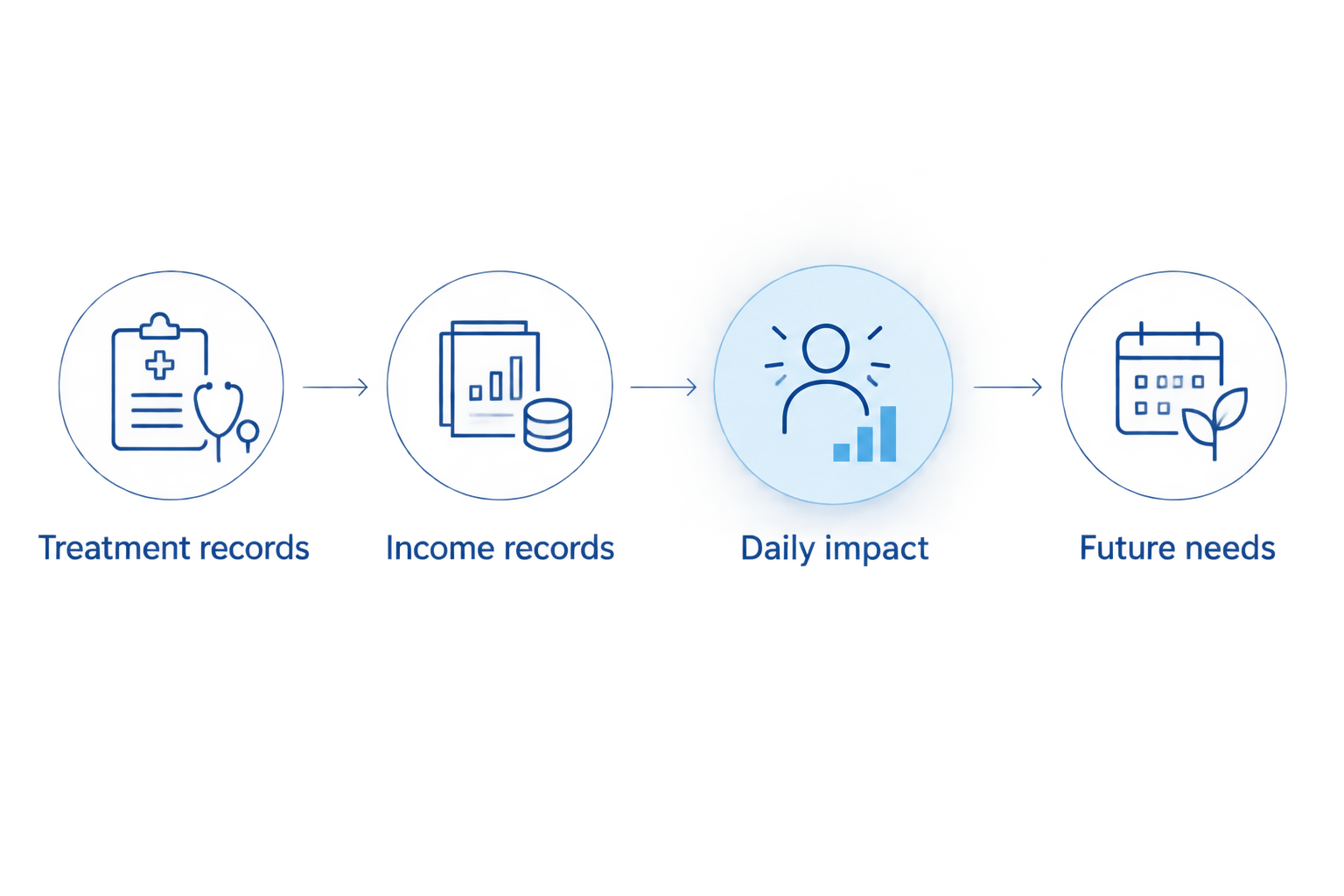
Organize your claim around a short sequence:
- Treatment records: Collect diagnoses, restrictions, bills, and treatment recommendations.
- Income records: Match missed work with earnings and medical restrictions.
- Daily impact: Record specific changes in sleep, movement, household tasks, and activities.
- Future needs: Request supported assessments of continuing care and work limitations.
Preserve crash evidence separately, including photographs, witness information, and correspondence. Trucking records and electronic data require prompt attention; an attorney can assess preservation requests and the parties involved.
If you are deciding whether to seek representation, the guide to hiring a lawyer after a truck accident in Glendale explains that decision. Khachikyan Law Firm provides personal injury representation; bring existing records rather than waiting for a perfect file.
Discuss your injury claim
Contact Khachikyan Law Firm about personal injury representation in Glendale, California.
Check deadlines and fault before negotiating
For California claims evaluated in 2026, the general personal injury filing period is 2 years, while injury to personal property generally carries 3 years. Claims involving public entities generally require an administrative claim within 6 months for personal injury or property damage. Exceptions and different triggering dates require individual review.
These general rules come from California Code of Civil Procedure sections 335.1 and 338(c), and Government Code section 911.2. Insurance negotiations do not automatically extend a lawsuit deadline.
California's pure comparative fault rule also reduces recoverable damages by your share of responsibility. Separate the documented amount of your losses from disputes over fault and from the practical sources available to pay a judgment.
Which compensation types should you pursue?
Start with every supported compensatory loss, not a single headline category. Include past and future consequences where the evidence supports them, then check for overlap and legal restrictions.
For a 2026 claim, the default approach is straightforward: document treatment, earnings, daily limitations, and property losses before assessing a final offer. Reserve punitive damages for facts that satisfy the separate legal standard.
FAQ
What compensation can I claim after a truck accident in California?
Recoverable categories include medical expenses, lost income, reduced earning capacity, pain and suffering, property damage, and lost household services. Each requires proof connecting the loss to the collision, and legal restrictions can affect recovery.
Is there an average California truck accident settlement I should expect?
There is no standard payout that determines your claim's value. Injury evidence, future losses, fault, applicable law, and available recovery sources affect the result.
Can I recover future medical expenses before treatment is finished?
Future medical expenses are recoverable when the evidence establishes reasonably necessary future care with reasonable certainty. A treating provider's assessment helps distinguish supported needs from speculation.
Can I claim lost income if I am self-employed?
Self-employed people can claim injury-related lost income with supporting records. Tax documents, business records, and evidence of work you could not perform help establish the loss.
Can I recover compensation if I was partly at fault?
California's pure comparative fault rule permits recovery reduced by your percentage of responsibility. Fault disputes are separate from documenting the full amount of your damages.
Are punitive damages automatic when a truck driver causes a crash?
Punitive damages are not automatic. California requires clear and convincing evidence of oppression, fraud, or malice, with additional rules for holding an employer responsible.
How long do I have to file a California truck accident lawsuit in 2026?
The general California personal injury filing period is 2 years, subject to exceptions. Public-entity claims generally require an administrative claim within 6 months, so obtain advice promptly rather than relying on the ordinary deadline.
One last thing
A property damage payment and an injury settlement are not interchangeable. Read the release, not just the payment amount: its wording determines which claims you give up. Before signing, confirm that unresolved treatment, income losses, and future needs remain protected.
This article provides general California legal information, not legal advice for your circumstances.


