The vehicle defects covered under California lemon law in 2026 include recurring problems with brakes, steering, engines, transmissions and other systems when a defect substantially impairs the vehicle’s use, value or safety and the manufacturer cannot repair it after a reasonable number of attempts. The defect alone does not decide the claim; the warranty and repair record do.
- Brakes and steering lead this 2026 guide to vehicle defects covered under California lemon law because failures directly affect control.
- Engine, transmission, electrical and charging problems can also qualify when they substantially impair use, value or safety.
- Khachikyanlawfirm handles California lemon law representation; preserve every repair order before seeking a claim review.
- California’s repair-attempt presumption is not a checklist every claimant must satisfy.
Why this matters
A defect does not qualify merely because it is frustrating or expensive to repair. California’s lemon law focuses on a vehicle that fails to conform to an applicable manufacturer’s warranty, substantially impairing its use, value or safety, after the manufacturer or its authorized repair facility has had a reasonable opportunity to fix it. A repair order connects your complaint to what the dealer inspected, attempted and observed.
If the same problem keeps returning in 2026, Khachikyanlawfirm can review the warranty and repair history. You do not need to identify the failed component yourself. You do need to describe what the vehicle does and keep records of each repair visit.
What makes a vehicle defect a strong lemon law issue?
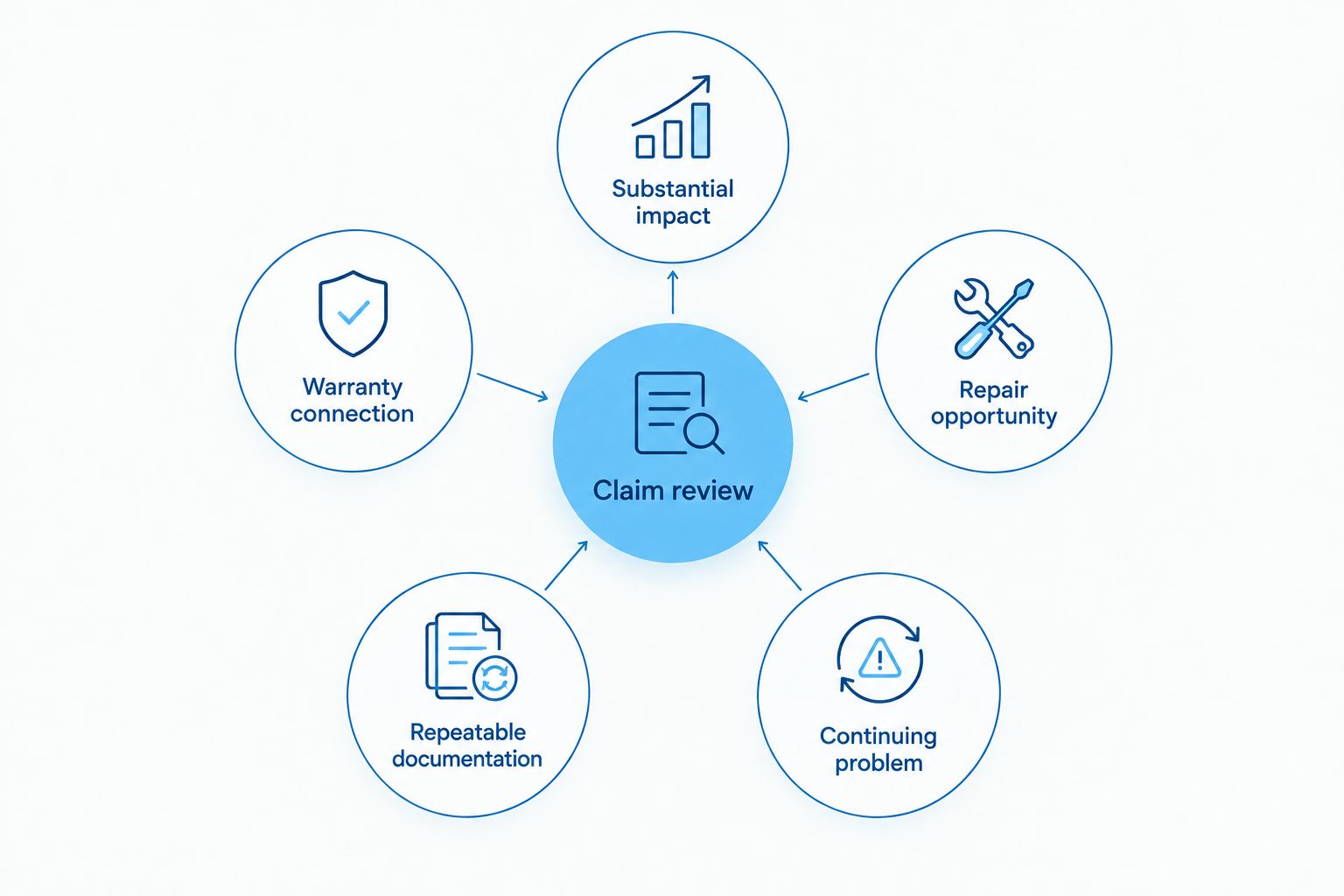
Use these criteria before treating any ranked defect as a claim:
- Substantial impact: The problem meaningfully affects how you use the vehicle, its value or its safety.
- Warranty connection: The problem falls within an applicable manufacturer’s warranty; a repair bill alone does not establish coverage.
- Repair opportunity: The manufacturer or an authorized repair facility has had a reasonable chance to address the problem.
- Repeatable documentation: Repair orders show what you reported, when you reported it and what work was performed.
- Continuing problem: The defect remains or returns despite repair attempts; a repaired issue presents a different case.
California also has a legal presumption about what counts as a reasonable number of repair attempts in certain circumstances. Within the first 18 months or 18,000 miles, whichever occurs first, it can apply when the same defect has been subject to 4 or more repair attempts, when a defect likely to cause death or serious bodily injury has been subject to 2 or more attempts, or when warranty repairs leave the vehicle out of service for more than 30 calendar days in total. Conditions apply, and missing those thresholds does not automatically end a claim. In 2026, judge your record against the law’s full requirements, not an isolated number.
The top 10 defects at a glance
This 2026 ranking puts problems that directly affect vehicle control first. It is a guide to assessing your symptoms, not a ranking of claim frequency or a guarantee that any defect qualifies.
| Defect | Best for identifying | What to document | Key limitation |
|---|---|---|---|
| Brake failure | Loss of stopping control | Pedal feel and stopping behavior | Normal wear is not enough |
| Steering failure | Loss of directional control | Pulling, binding or steering assist loss | An isolated sensation needs diagnosis |
| Engine stalling | Unexpected loss of propulsion | When and how the engine shuts off | Cause and warranty coverage matter |
| Transmission malfunction | Unreliable acceleration or shifting | Slipping, hesitation or gear failure | Driving conditions affect diagnosis |
| Electrical system failure | Repeated system interruptions | Affected functions and warning messages | A warning light alone proves little |
| Battery or charging failure | Loss of reliable vehicle operation | Charging interruptions or shutdowns | Coverage differs by component |
| Airbag or restraint failure | Failure of a safety system | Warning messages and dealer findings | A warning needs investigation |
| Fuel system failure | Unreliable fuel delivery | Stalling, starting difficulty or leaks | Symptoms can have other causes |
| Suspension failure | Instability or loss of ride control | Handling changes and inspection findings | Wear and damage require separation |
| Climate-control failure | Serious loss of cabin usability | Repeated failure and effect on use | Minor discomfort may not be substantial |
1. Brake failure: best for identifying stopping-control problems
A brake defect belongs at the top of a safety-focused review when the vehicle does not stop as expected or a braking system repeatedly malfunctions. Tell the repair facility what happens during braking, not simply that the brakes feel wrong. Note whether the problem returns after service.
Brake-failure claim strengths:
- Repair orders consistently describe the same stopping problem.
- Dealer findings connect the complaint to a covered component.
- The defect continues after repair attempts.
Brake-failure claim limitations:
- Worn brake parts alone do not establish a warranty defect.
- A complaint without a documented repair opportunity leaves a gap.
Best for: Drivers facing recurring braking problems that affect safe operation. Verdict: Act by reporting the behavior promptly and keeping each repair order.
2. Steering failure: best for identifying loss of vehicle control
Steering problems include binding, unexpected pulling and loss of steering assistance. Each symptom has different possible causes, so describe precisely when it occurs and what the vehicle does. A 2026 steering complaint is strongest when the same symptom appears across repair visits and remains unresolved.
Steering-failure claim strengths:
- Consistent descriptions help the dealer investigate the same issue.
- Repair orders document recurring loss of control or assist.
- Warranty repairs fail to resolve the complaint.
Steering-failure claim limitations:
- Tire condition or external damage can complicate the diagnosis.
- A single unusual sensation does not establish a continuing defect.
Best for: Drivers whose vehicle repeatedly becomes difficult to steer. Verdict: Act on a control problem rather than waiting for it to become easier to reproduce.
3. Engine stalling: best for identifying sudden loss of propulsion
An engine that shuts off while driving can substantially affect use and safety. Record whether stalling happens at idle, during acceleration or while moving, and give that description to the repair facility. Keep the repair paperwork even if the dealer says it could not reproduce the problem.
Engine-stalling claim strengths:
- Multiple repair orders describe the same shutdown behavior.
- Diagnostic findings or attempted repairs appear in the record.
- Stalling continues after the manufacturer has had an opportunity to repair it.
Engine-stalling claim limitations:
- Different causes can produce similar symptoms.
- Missing service records make the repair history harder to establish.
Best for: Drivers dealing with repeated, unexplained shutdowns. Verdict: Act by documenting the conditions of each occurrence and seeking authorized service.
4. Transmission malfunction: best for identifying unreliable shifting
A transmission defect can show up as slipping, hesitation, harsh shifting or failure to engage a gear. Explain the driving conditions each time you report it. In 2026, the useful question is whether the recurring behavior substantially affects operation and persists despite a reasonable repair opportunity.
Transmission claim strengths:
- The same shifting complaint appears across repair orders.
- The dealer records diagnostic findings or repair attempts.
- Unreliable shifting affects ordinary vehicle use.
Transmission claim limitations:
- A vague complaint makes repeat visits difficult to connect.
- A successful repair can change whether an unresolved defect remains.
Best for: Drivers whose vehicle repeatedly fails to shift or respond as expected. Verdict: Act by describing the symptom consistently at every visit.
5. Electrical system failure: best for identifying repeated interruptions
Electrical faults can affect several vehicle functions, but a warning light or glitch does not automatically make a vehicle a lemon. Identify the functions that stop working and how that changes your ability to use the car. Ask that the repair order reflect your actual complaint rather than a generic description.
Electrical-failure claim strengths:
- Repair orders identify a recurring function that fails.
- The problem remains after attempted warranty repairs.
- The failure substantially affects use, value or safety.
Electrical-failure claim limitations:
- Intermittent behavior can be difficult to diagnose.
- Unrelated electrical complaints do not necessarily form one recurring defect.
Best for: Drivers with repeated, consequential failures of vehicle electronics. Verdict: Hold on any claim conclusion until the repair history identifies the affected functions and attempts to fix them.
6. Battery or charging failure: best for identifying unreliable operation
A recurring battery or charging problem can leave a vehicle unable to operate as intended. Record what fails: starting, charging, maintaining charge or continued operation. The component involved and the applicable warranty matter more than the general label of battery trouble.
Battery or charging claim strengths:
- The same failure repeatedly interrupts vehicle use.
- Authorized repair orders document the complaint and attempted fix.
- The relevant component is covered by an applicable manufacturer’s warranty.
Battery or charging claim limitations:
- Warranty terms differ by vehicle and component.
- A one-time discharged battery does not establish an unresolved defect.
Best for: Drivers whose repeated charging or battery failure limits reliable use. Verdict: Act by preserving the warranty terms and every service record.
7. Airbag or restraint failure: best for identifying safety-system problems
An airbag or restraint-system warning calls for prompt investigation. Ask the repair facility to document the warning, its findings and the work performed. Do not assume a dashboard message proves that a system would fail in a collision; the diagnosis matters.
Restraint-system claim strengths:
- Repair records identify a recurring safety-system concern.
- A covered defect remains after repair attempts.
- The problem affects vehicle safety.
Restraint-system claim limitations:
- A warning message needs diagnosis before its cause is clear.
- A corrected fault is different from an ongoing nonconformity.
Best for: Drivers with recurring airbag or restraint-system faults. Verdict: Act by arranging authorized service and retaining the written findings.
8. Fuel system failure: best for identifying unreliable fuel delivery
Fuel-system faults can appear as starting difficulty, stalling or a reported fuel leak. Describe the exact symptom and when it happens; do not guess which part failed. A repair order that records the actual behavior gives you a clearer account if the problem returns.
Fuel-system claim strengths:
- Repeated visits document the same symptom.
- Dealer findings identify a covered fault.
- The problem continues despite repair attempts.
Fuel-system claim limitations:
- Starting and stalling complaints can have causes outside the fuel system.
- The defect must substantially impair use, value or safety.
Best for: Drivers whose recurring fuel-related problem disrupts operation. Verdict: Act by reporting a suspected leak or repeated stall promptly and documenting the response.
9. Suspension failure: best for identifying unstable handling
A suspension problem can affect how a vehicle handles, but ordinary wear and damage are not interchangeable with a manufacturing defect. Explain the handling change, when it occurs and whether a repair altered it. Inspection findings and warranty coverage are central to the assessment.
Suspension claim strengths:
- Inspection and repair records identify a recurring covered problem.
- The handling issue substantially affects use or safety.
- The issue persists after attempted repair.
Suspension claim limitations:
- Wear, road damage and alignment concerns can have different causes.
- A change in ride feel alone does not identify a defect.
Best for: Drivers with repeatedly unstable handling tied to a warranty-covered issue. Verdict: Hold on a lemon law conclusion until the inspection and repair records clarify the cause.
10. Climate-control failure: best for identifying serious usability problems
A recurring heating or air-conditioning failure can affect vehicle use, but the degree of impairment matters. Describe what stops working and how the failure affects ordinary use. A minor comfort complaint and a substantial, unresolved defect are not the same thing.
Climate-control claim strengths:
- The same failure appears in repeated repair orders.
- Authorized repairs do not resolve it.
- The record shows a substantial effect on use or value.
Climate-control claim limitations:
- Minor inconvenience alone does not establish substantial impairment.
- A repaired fault is not an ongoing defect.
Best for: Drivers with a persistent climate-control failure that materially affects use. Verdict: Hold until the repair history establishes its impact and whether it remains unresolved.
How the defects were ranked
The order prioritizes direct effects on stopping, steering and propulsion, then other safety and usability issues. It does not measure how often claims succeed. Khachikyanlawfirm’s lemon law claim review should start with the warranty, the repeated symptom and the manufacturer’s repair opportunity, regardless of where a defect appears in this list.
Which vehicle defect should you act on first?
Start with a braking, steering, stalling or other immediate safety concern, and describe it to an authorized repair facility promptly. For any defect on this 2026 list, request a repair order that records your complaint even if the vehicle behaves normally during inspection. Keep copies of the warranty and every service record; a repeat visit is much easier to assess when the earlier complaint is in writing.
Khachikyanlawfirm provides lemon law representation in Glendale, California. If a covered problem keeps returning, bring the full repair history for review rather than relying on the defect’s name alone.
Review your repair history
Bring your warranty and repair orders to discuss a recurring vehicle defect.
FAQ
What vehicle defects are covered under California lemon law in 2026?
Recurring warranty-covered defects that substantially impair a vehicle’s use, value or safety can qualify in 2026 if they remain unresolved after a reasonable number of repair attempts. The diagnosis, warranty and repair history determine whether a specific problem meets the law’s requirements.
Does a brake problem automatically qualify as a lemon?
No. A brake problem must meet California lemon law requirements, including substantial impairment, applicable warranty coverage and a reasonable repair opportunity. Preserve repair orders that describe the stopping problem and each attempted fix.
Can an intermittent defect qualify under California lemon law?
Yes, an intermittent defect can qualify when the evidence establishes the required impairment and repair history. Report the same symptom each time and keep the repair order even when the dealer cannot reproduce it.
How many repair attempts does California lemon law require?
California requires a reasonable number of repair attempts, not one fixed number for every case. A separate legal presumption can apply under specified conditions, but failing to meet its thresholds does not automatically defeat a claim.
Do 30 days out of service automatically make my car a lemon?
No. More than 30 calendar days out of service for warranty repairs can support a California legal presumption when its conditions are met. The warranty, reason for the repairs and other requirements still matter.
Can a transmission problem qualify under California lemon law?
Yes, a recurring transmission problem can qualify if it meets the law’s warranty, substantial-impairment and repair-opportunity requirements. Keep records of shifting symptoms and each authorized repair visit.
What should I save before asking a lemon law firm to review my case?
Save your warranty, repair orders and records showing when the vehicle was unavailable for warranty repairs. Describe the same recurring symptom consistently so the repair history shows what happened after each visit.
One last thing
A dealer’s note that it could not reproduce a defect does not erase the symptom you reported. In 2026, check that every repair order accurately states your complaint before you leave. Khachikyanlawfirm can assess a recurring issue more clearly when your records show the symptom across visits, including visits that did not produce a repair.