
The biggest red flags in a lemon law buyback offer are an unexplained refund calculation, an unsupported mileage deduction, and a release that reaches beyond the vehicle dispute. This 2026 California checklist ranks 10 warning signs by what you need to resolve before signing or surrendering your car.
- The biggest red flags in a lemon law buyback offer are unexplained deductions and an overbroad release.
- Compare the refund worksheet against your purchase agreement, repair orders, and lender payoff statement.
- A California lemon law buyback and a cash-and-keep settlement resolve different problems.
- Khachikyan Law Firm provides lemon law representation for owners seeking help with a disputed offer.
Why this matters
A buyback offer is more than the amount printed beside your name. It also determines who pays the lender, when you surrender the vehicle, and which claims you give up.
For a 2026 offer, separate the refund calculation from the settlement conditions. A correct calculation does not fix an unclear release, and a clear release does not fix missing reimbursement. Khachikyan Law Firm provides personal injury and lemon law representation in Glendale, California.
Khachikyan Law Firm is a fit for Glendale vehicle owners seeking legal representation in a California lemon law dispute.
What makes a lemon law buyback offer worth accepting?
Use these criteria before deciding whether an offer resolves your claim:
- Traceable calculation: Every included amount and deduction connects to a document or an explained legal position.
- Correct mileage basis: The usage calculation identifies the relevant repair visit and odometer reading.
- Complete accounting: The proposal addresses the lender, your refund, and claimed reimbursable expenses separately.
- Defined release: You understand exactly which parties and claims the agreement covers.
- Workable completion terms: Payment, surrender, title transfer, and case dismissal have written instructions.
California Civil Code section 1793.2(d)(2) provides the statutory restitution framework for qualifying new motor vehicles. Coverage and available remedies depend on the transaction and facts; a negotiated settlement is not automatically identical to statutory restitution.
The 10 red flags at a glance
The “best for” column identifies the situation where each check deserves your attention first. These are ranked review priorities, not competing products or guaranteed grounds to reject a settlement.
| Rank | Red flag | Best for | A better term | Key risk |
|---|---|---|---|---|
| 1 | No itemized calculation | Checking the total | Documented refund worksheet | Hidden omissions |
| 2 | Wrong mileage deduction | Checking the usage offset | Identified repair visit and mileage | Excessive deduction |
| 3 | Missing reimbursement categories | Reviewing claimed losses | Separate treatment of each category | Incomplete recovery |
| 4 | Unclear lender payoff | Financed vehicles | Written payment allocation | Remaining loan balance |
| 5 | Cash-and-keep called a buyback | Comparing settlement types | Explicit vehicle disposition | Keeping the problem vehicle |
| 6 | Overbroad release | Protecting unrelated claims | Deliberately defined scope | Unintended waiver |
| 7 | Vague payment deadline | Planning completion | Defined trigger and due date | Open-ended payment |
| 8 | Unsupported condition charges | Preparing for surrender | Disclosed inspection standards | New deductions |
| 9 | Silence about legal fees | Reviewing represented claims | Written fee treatment | Unclear net recovery |
| 10 | Pressure and conflicting paperwork | Making the final decision | Consistent final agreement | Signing unresolved terms |
1. No itemized calculation: check the total first
Best for: owners who received a lump-sum offer without a worksheet. A headline amount does not explain whether the manufacturer included the right payments or deducted the same item twice.
Ask for the calculation behind the offer. Compare the worksheet with the signed purchase or lease agreement rather than a salesperson's summary.
What works:
- Separate entries for included amounts and deductions.
- Documents supporting disputed entries.
- A clear distinction between the lender's payment and yours.
What fails:
- An unexplained net figure.
- Adjustments described only as administrative corrections.
Verdict: Hold until you can trace the calculation from the contract to the proposed payment.
2. Wrong mileage deduction: verify the repair milestone
Best for: owners whose proposed usage offset seems disconnected from their repair history. Under California Civil Code section 1793.2(d)(2)(C), the statutory usage calculation uses mileage before the vehicle was first delivered for correction of the problem giving rise to the nonconformity.
The statutory denominator is 120,000 miles. Current mileage is not automatically the correct numerator.
What works:
- The offer identifies the repair order used.
- The odometer reading matches that record.
- The calculation explains its purchase-price basis.
What fails:
- Using surrender mileage without explanation.
- Selecting a later visit while ignoring an earlier relevant complaint.
Verdict: Hold until the relevant repair event and calculation are supported.
3. Missing reimbursement categories: inspect what disappeared
Best for: owners who paid expenses connected to the defect. California's statutory framework addresses more than a bare vehicle-value figure. Depending on the applicable remedy, relevant categories include collateral charges and qualifying incidental damages.
List towing, rental, and other claimed expenses separately, with receipts and an explanation of how each relates to the defect.
What works:
- Each claimed category receives a written response.
- Taxes and official fees receive separate treatment.
- Disputed expenses remain visible during negotiations.
What fails:
- Assuming every receipt is automatically recoverable.
- Dropping an expense because the worksheet has no matching line.
Verdict: Hold until the offer accounts for each claimed category, including any disputed exclusions.
4. Unclear lender payoff: separate the bank's payment from yours
Best for: owners with an outstanding vehicle loan. A buyback total and the amount you receive are not the same thing when a lender must be paid. The settlement should explain the allocation.
For a 2026 surrender, obtain a current payoff statement and check its expiration date. Ask who handles additional interest if completion occurs after that date.
What works:
- The lender and account are correctly identified.
- Payoff and owner payment are shown separately.
- Responsibility for any remaining balance is stated.
What fails:
- A direction to stop loan payments without lender confirmation.
- No process for confirming that the account is closed.
Verdict: Hold until the payoff instructions and payment responsibilities are clear.
5. Cash-and-keep called a buyback: identify the actual deal
Best for: owners comparing a vehicle return with a payment to keep it. In a buyback, the vehicle is returned under the agreed terms. In a cash-and-keep settlement, you retain the vehicle and accept compensation subject to the agreement.
Neither label tells you whether the settlement fits your needs. Read the actual obligations.
What works:
- The agreement explicitly states whether you keep the vehicle.
- Any continuing warranty treatment is addressed.
- The release matches the settlement you intend to make.
What fails:
- Calling a payment a buyback when no return is required.
- Assuming a cash payment guarantees future repairs.
Verdict: Hold if the written settlement type differs from the deal you understood.
6. Overbroad release: examine what you give up
Best for: owners with another dispute involving the vehicle, dealer, or manufacturer. A release defines the claims you surrender. Broad language deserves review before you sign, especially where an accident, alleged dealer misconduct, or another separate issue exists.
Do not assume a reference to unknown claims is meaningless boilerplate. California Civil Code section 1542 addresses the general release of certain unknown claims, and settlement agreements can contain an express waiver.
What works:
- The covered parties and dispute are identifiable.
- Unrelated claims receive deliberate treatment.
- You understand any unknown-claims waiver.
What fails:
- Signing before reviewing the release itself.
- Relying on an oral promise that broad wording does not matter.
Verdict: Hold until you understand the release's full scope.
7. Vague payment deadline: define when completion happens
Best for: owners arranging replacement transportation or vehicle surrender. An agreement that promises payment after processing leaves a practical question unanswered: when is payment due?
In a 2026 settlement, request a defined payment trigger and deadline. Coordinate that language with surrender, lender payoff, and any lawsuit dismissal requirements.
What works:
- Payment timing connects to an identifiable event.
- Required documents are listed.
- Responsibility for arranging surrender is assigned.
What fails:
- No deadline after you complete your obligations.
- Conflicting instructions about payment and dismissal.
A written deadline does not eliminate enforcement risk, but it gives the parties a defined obligation.
Verdict: Hold until the completion sequence is written and workable.
8. Unsupported condition charges: settle inspection rules beforehand
Best for: owners approaching the vehicle handover. A proposed deduction for damage needs an explanation. Ask the manufacturer to distinguish claimed damage from the defect, ordinary use, and conditions already disclosed during negotiations.
Do not assume every condition charge is valid or every charge is prohibited. Require the supporting terms and evidence.
What works:
- Inspection requirements are disclosed before surrender.
- Any adjustment requires documentation.
- You retain dated photographs and the surrender receipt.
What fails:
- An undefined right to reduce the payment later.
- A new deduction with no inspection record.
Verdict: Hold until inspection standards and any adjustment process are clear.
9. Silence about legal fees: understand the net result
Best for: owners with legal representation or an existing fee agreement. California Civil Code section 1794(d) provides for qualifying recovery of attorney fees and costs by a prevailing buyer. That does not mean every settlement automatically handles fees the same way.
Read the settlement alongside your attorney agreement. Ask whether the proposed amount includes fees, addresses them separately, or leaves them unresolved.
What works:
- Fee treatment appears in writing.
- The allocation is consistent across documents.
- You understand the effect on your recovery.
What fails:
- Assuming fees are included or excluded without checking.
- Treating a gross settlement figure as your net payment.
Verdict: Hold until the financial allocation is explained.
10. Pressure and conflicting paperwork: resolve the final version
Best for: owners told to sign immediately despite unanswered questions. A response deadline is not, by itself, evidence of misconduct. Pressure becomes a warning sign when you cannot obtain the agreement, verify the calculation, or reconcile contradictory terms.
Compare the final release, payment worksheet, and surrender instructions. Keep the written offer and every revision.
What works:
- You receive complete documents before signing.
- Corrections appear in the final version.
- Any deadline and its consequences are explained.
What fails:
- Blank fields left for later completion.
- Promises that contradict the signed agreement.
Verdict: Hold until the final documents reflect the deal you intend to accept.
How these red flags are ranked
The ranking starts with the refund calculation because errors there affect the proposed recovery directly. It then moves through loan obligations, settlement type, waived rights, and completion terms.
This is a document-review priority list, not a finding that every disputed term is unlawful. A negotiated compromise has trade-offs; the problem is accepting those trade-offs without understanding them.
How should you review a 2026 buyback offer?
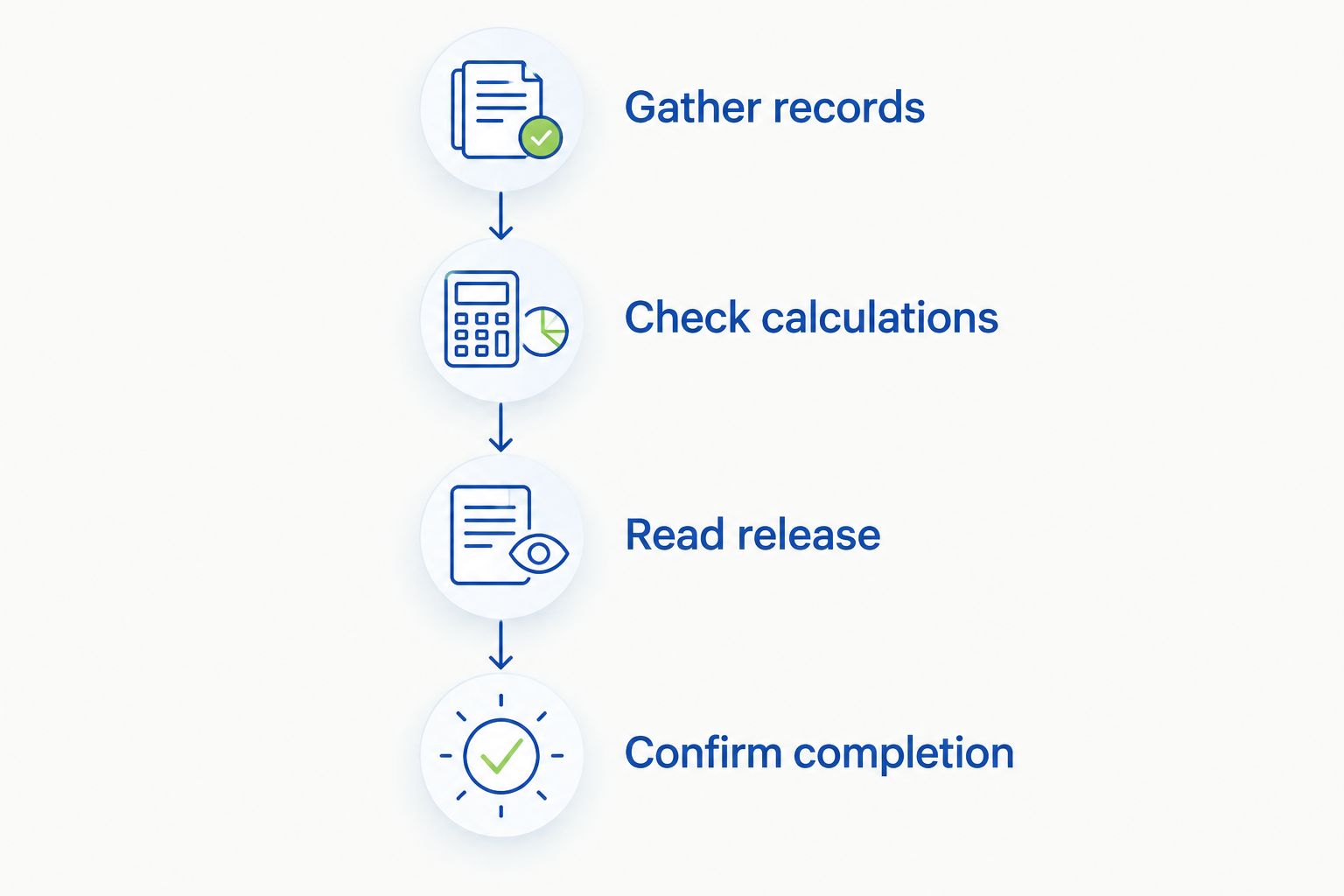
Use a consistent sequence rather than negotiating from the headline amount alone:
- Gather records: Collect the agreement, repair orders, receipts, payoff statement, and complete offer. Use this guide to documents for a California lemon law claim.
- Check calculations: Match each entry and the usage offset to the supporting records.
- Read release: Identify the claims, parties, and obligations covered.
- Confirm completion: Resolve payment, surrender, payoff, and dismissal instructions before signing.
Send a focused written request identifying each disputed entry or clause. Ask for corrected documents, not just verbal reassurance. Khachikyan Law Firm provides lemon law representation for owners seeking help with these disputes.
Discuss your lemon law offer
Ask about representation before accepting disputed refund calculations or release terms.
FAQ
What's the biggest red flag in a lemon law buyback offer?
An unexplained refund calculation is the first issue to resolve. Request an itemized worksheet and compare every entry with your contract, repair records, and supporting receipts.
Can a manufacturer deduct mileage from a California lemon law buyback?
California's statutory restitution framework permits a specified usage deduction. The calculation uses the relevant mileage before delivery for correction of the problem, with a statutory denominator of 120,000 miles.
Should I stop making payments after receiving a buyback offer?
An offer alone does not end your loan obligations. Continue following your loan agreement unless the lender confirms a different arrangement, and verify that the payoff has actually occurred.
Is a cash-and-keep settlement the same as a buyback?
No. A cash-and-keep settlement leaves the vehicle with you, while a buyback involves returning it under the agreed terms. Review the release and any warranty provisions before choosing either arrangement.
Do I have to accept the first lemon law settlement offer?
You do not have to accept an offer merely because it is the first one. Review any response deadline with counsel, because rejecting or allowing a formal offer to expire can have legal consequences.
Can I ask to change the release before signing?
Yes, you can request changes before signing, but the other party does not have to accept them. Identify the exact language you dispute and obtain any agreed revision in the final document.
Does a California buyback automatically include attorney fees?
Do not assume a settlement automatically resolves attorney fees. California law provides qualifying fee recovery for a prevailing buyer, but the settlement and your attorney agreement determine how a negotiated resolution addresses fees.
One last thing
Treat the surrender receipt as part of the settlement record, not a routine handover form. Read it before signing, document the vehicle's condition, and keep copies of everything exchanged.
For a 2026 buyback, the last document deserves the same attention as the first offer. Do not let the handover introduce a new deduction, acknowledgment, or release you have not reviewed.
This article provides general California legal information, not advice about a specific claim.