
Yes, you can settle a lemon law claim without going to court if you and the manufacturer agree on a resolution; you can also settle after filing a lawsuit without going to trial. A California settlement in 2026 still requires careful review of your repair history, the proposed remedy, and the rights you give up when you sign.
- Can I settle a lemon law claim without going to court? Yes, through an agreement with the manufacturer.
- A settlement before filing avoids a lawsuit; settling after filing can still avoid trial.
- Compare buyback, replacement, and cash settlement terms before signing a release.
- Khachikyan Law Firm provides lemon law legal representation in Glendale, California.
Can I settle a lemon law claim without going to court?
Yes. A negotiated settlement does not require a judge to decide your claim. You and the manufacturer can agree on a remedy before a lawsuit begins, during litigation, or through mediation. The manufacturer must agree to the terms; sending a demand does not automatically produce a settlement.
Start with your evidence. Gather the documents you need for a California lemon law claim, including repair orders, warranty information, and your purchase or lease agreement.
These routes differ in who controls the outcome:
| Route | Best for | Main advantage | Main limitation |
|---|---|---|---|
| Direct negotiation | Owners seeking an agreement before filing | The parties control whether to accept | The manufacturer can reject the demand |
| Mediation | Parties willing to negotiate with a neutral person | A mediator helps address disputed terms | The mediator cannot impose a settlement |
| Arbitration | Owners evaluating a specific dispute program | An arbitrator considers evidence and issues a decision | Rules and the decision's effect depend on the program |
| Settlement during litigation | Owners whose claims remain disputed after filing | Agreement can end the case without trial | Court deadlines and litigation obligations continue until properly resolved |
Arbitration is not the same as settlement. Settlement rests on an agreement; arbitration involves a decision under the applicable program's rules.
Why this matters
Avoiding trial and avoiding a lawsuit are different goals. A manufacturer might reject an informal request but later agree to settle a filed case. Filing does not mean a trial is inevitable, and negotiating does not mean your filing deadline stops running.
For a California claim in 2026, identify the applicable notice requirements and deadlines before choosing a route. Those requirements depend on the claim and governing procedure, so do not rely on a general settlement discussion as permission to wait.
Judge an offer by the complete written terms, not just the promise that you can avoid court. A settlement can resolve the vehicle problem while also requiring a broad release of legal claims.
How do I pursue a settlement without filing a lawsuit?
A clear demand gives the manufacturer a repair history it can evaluate and a specific resolution to consider. Follow this sequence while protecting any applicable deadlines.
- Gather records. Collect complete repair orders, warranty documents, purchase or lease paperwork, and communications with the dealer and manufacturer. Keep copies rather than sending your only originals.
- Build chronology. List the complaint reported at each visit, mileage, work performed, and dates the vehicle remained unavailable. Separate what you experienced from what the technician diagnosed.
- Request resolution. Explain the recurring or unresolved problem and state the remedy you seek. Identify the vehicle and preserve proof that the manufacturer received your communication.
- Review terms. Ask for the complete proposed agreement and any calculation supporting it. Compare the offer with your documents rather than relying on a phone summary.
- Confirm completion. Establish who handles payment, lender communication, vehicle transfer, and any remaining paperwork. Keep the signed agreement and proof that the obligations were completed.
Do not describe an unresolved defect as repaired simply to move the conversation along. An accurate record is more useful than an optimistic summary that conflicts with later evidence.
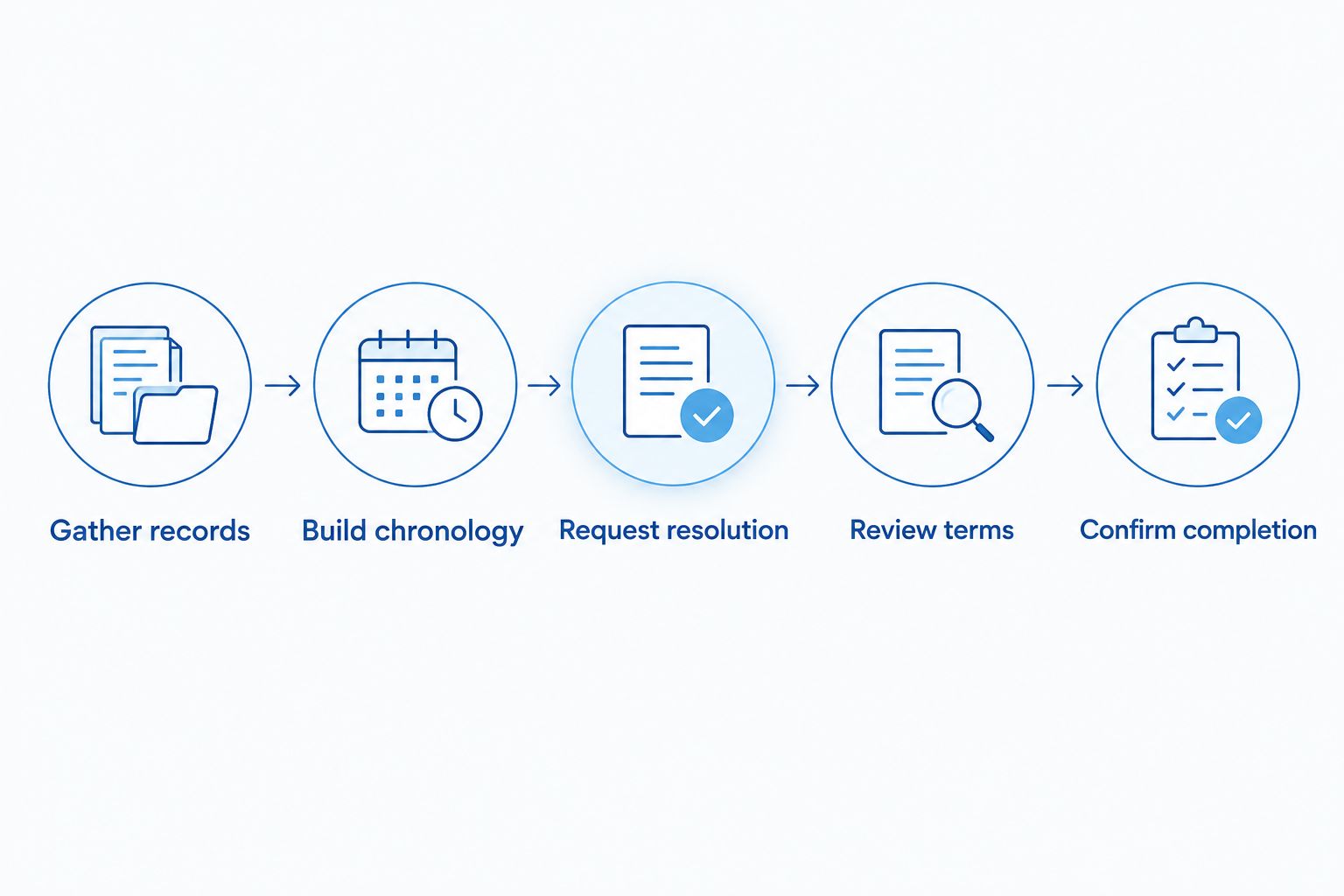
An organized demand supports negotiation, but it does not establish eligibility by itself. The warranty, vehicle history, and applicable law still determine the strength of the claim.
Buyback settlement: resolve the vehicle and the financing
Best for: owners seeking to return the vehicle and resolve the associated purchase or lease obligations. A buyback proposal needs more than a statement that the manufacturer will take the car back.
Review how the proposed agreement addresses the lender or lessor, payments already made, claimed deductions, and vehicle surrender. California's statutory restitution rules can include a mileage-based use deduction; a buyback is not automatically a return of every payment without adjustment.
The advantage is a defined exit from the vehicle. The limitation is that a disputed calculation or unclear payoff arrangement can leave an important issue unresolved even when both sides agree in principle.
Ask for a written explanation of each deduction and compare the calculation with the underlying records. Do not assume that agreeing to a buyback immediately ends your payment obligations.
Replacement settlement: inspect the complete agreement
Best for: owners who want a replacement vehicle rather than a negotiated exit from ownership. Identify the replacement vehicle precisely and review how the agreement addresses financing, title, warranty coverage, and the return of the original vehicle.
Replacement can address your need for transportation, but the label alone does not explain every obligation. Confirm whether the agreement requires additional documents or changes an existing financing arrangement before accepting it.
In a 2026 replacement negotiation, distinguish the manufacturer's proposal from the remedy you believe the law requires. A negotiated term deserves review even when it sounds similar to a statutory remedy.
Cash settlement: understand what keeping the car means
Best for: owners considering compensation while keeping the vehicle. A cash-and-keep settlement generally leaves the vehicle with you in exchange for an agreed payment and release.
The advantage is that you retain the vehicle. The limitation is that the agreement can settle claims connected to a problem that still affects the car; payment does not itself repair a defect.
Review whether the release addresses future problems, remaining warranty obligations, or claims unrelated to the reported defect. Do not accept compensation as a substitute for determining whether the vehicle is safe to drive. Ask the repair provider for guidance on any unresolved safety concern.
Why the path to settlement varies
Your settlement route depends on the evidence and the issues the parties dispute. These factors deserve attention:
- Warranty coverage. The parties can disagree about whether the reported condition falls within the applicable warranty and legal protections.
- Repair history. Complete repair orders help establish what was reported, what repairs were attempted, and whether the concern continued.
- Effect of the defect. California lemon law examines whether a qualifying defect substantially impairs use, value, or safety.
- Requested remedy. Returning the vehicle, obtaining a replacement, and keeping it under a cash settlement require different terms.
- Procedural requirements. Notice provisions, dispute-program rules, and filing deadlines affect the available next steps.
- Release language. Agreement on compensation does not necessarily mean agreement on which claims end.
A denial is not a court judgment. Read the manufacturer's stated reason and compare it with your records before deciding whether to supply additional evidence, pursue a dispute program, or file suit.
Do I need a certain number of repairs before negotiating?
You can ask the manufacturer to resolve a warranty dispute without first satisfying a universal repair-count rule. Whether you have an enforceable lemon law claim is a separate question.
California Civil Code section 1793.22 contains a rebuttable presumption tied to events within the first 18 months or 18,000 miles, whichever comes first. One branch concerns a vehicle being out of service for warranty repairs for more than 30 cumulative days, subject to statutory conditions and exceptions.
Those figures are not a complete eligibility checklist. The presumption also contains repair-attempt provisions, and notice requirements can matter. A vehicle outside the presumption's window is not automatically outside all lemon law protection.
For a claim assessed in 2026, use these statutory figures to identify questions for legal review—not as a reason to delay reporting a defect or to assume a settlement is guaranteed. Keep the exact repair dates and mileage so the applicable rules can be evaluated against evidence.
What should I check before signing a settlement?
Read the agreement as a set of obligations, not a congratulatory letter. Compare the final document with every promise that influenced your decision.
Check these points before signing:
- Parties and vehicle: Correct names, vehicle identification, and lender or lessor details.
- Remedy and calculation: What you receive, what gets deducted, and how disputed items are treated.
- Performance conditions: What each party must do before payment or vehicle transfer occurs.
- Financing obligations: Who addresses the outstanding balance and how you receive confirmation.
- Release scope: Which claims you give up and whether the language extends beyond the vehicle dispute.
- Enforcement terms: What happens if a party fails to perform as agreed.
A verbal promise is not a substitute for a matching written term. If the agreement says something different from the negotiator's explanation, resolve the difference before signing.
Do I need a lawyer to settle outside court?
You can communicate with the manufacturer yourself, but legal representation can help you evaluate eligibility, deadlines, calculations, and release language. Hiring counsel does not guarantee acceptance or eliminate the possibility of litigation.
Khachikyan Law Firm is for Glendale drivers seeking lemon law legal representation. You can contact Khachikyan Law Firm to discuss representation and the issues in your vehicle dispute.
Before hiring a lawyer, ask who handles negotiations, how fees and costs are addressed, and what happens if the manufacturer refuses to settle. Representation is a decision about legal help, not a promise that your case will stay out of court.
Can I settle after a lawsuit has already been filed?
Yes, filing a lawsuit does not prevent a later settlement. The parties can negotiate directly or use mediation while the case remains pending.
Keep complying with court obligations until the case is properly resolved. Your agreement should address performance and dismissal so that signing, payment, and closing the lawsuit do not become separate disputes.
Does a manufacturer offer mean my claim is fully resolved?
No, an offer alone does not complete a settlement. Acceptance, a signed agreement where required, and performance of the agreed obligations are distinct steps.
Preserve communications and avoid treating a preliminary proposal as a completed buyback. For a 2026 settlement, confirm the final written obligations before arranging a vehicle handover or assuming the lender has been paid.
FAQ
Can I settle a lemon law claim without going to court in California?
Yes, you can settle a California lemon law claim through an agreement with the manufacturer without filing a lawsuit. You can also settle a filed lawsuit without going to trial.
Is mediation the same as arbitration for a lemon law claim?
No, mediation helps the parties negotiate, while arbitration involves a decision by an arbitrator. Review the arbitration program's rules to understand the decision's effect and any further rights.
Do I have to accept the manufacturer's first settlement offer?
No, you do not have to accept the manufacturer's first settlement offer. Compare the proposed remedy, deductions, release, and performance terms before deciding whether to accept or negotiate.
Can I keep my car after a lemon law settlement?
Yes, a negotiated cash-and-keep settlement can let you retain the vehicle. Review the release and remaining warranty terms, and address unresolved safety concerns separately.
Should I stop making car payments while negotiating?
Do not assume settlement negotiations suspend your loan or lease obligations. Confirm your obligations with the lender or lessor and review the settlement's payoff provisions before changing payments.
Can Khachikyan Law Firm represent me in a lemon law dispute?
Khachikyan Law Firm offers lemon law legal representation in Glendale, California. Contact the firm to discuss your vehicle history, the manufacturer's response, and representation.
One last thing
A settlement can be signed before the practical work is finished. Save confirmation of lender payoff, payment receipt, vehicle surrender, and any required case dismissal alongside the agreement itself.
Your final check is completion, not just a signature. A clear paper trail lets you identify an unfinished obligation without reconstructing months of calls and emails.
This article provides general California legal information, not advice about your specific claim. Applicable requirements and deadlines need individual review.


