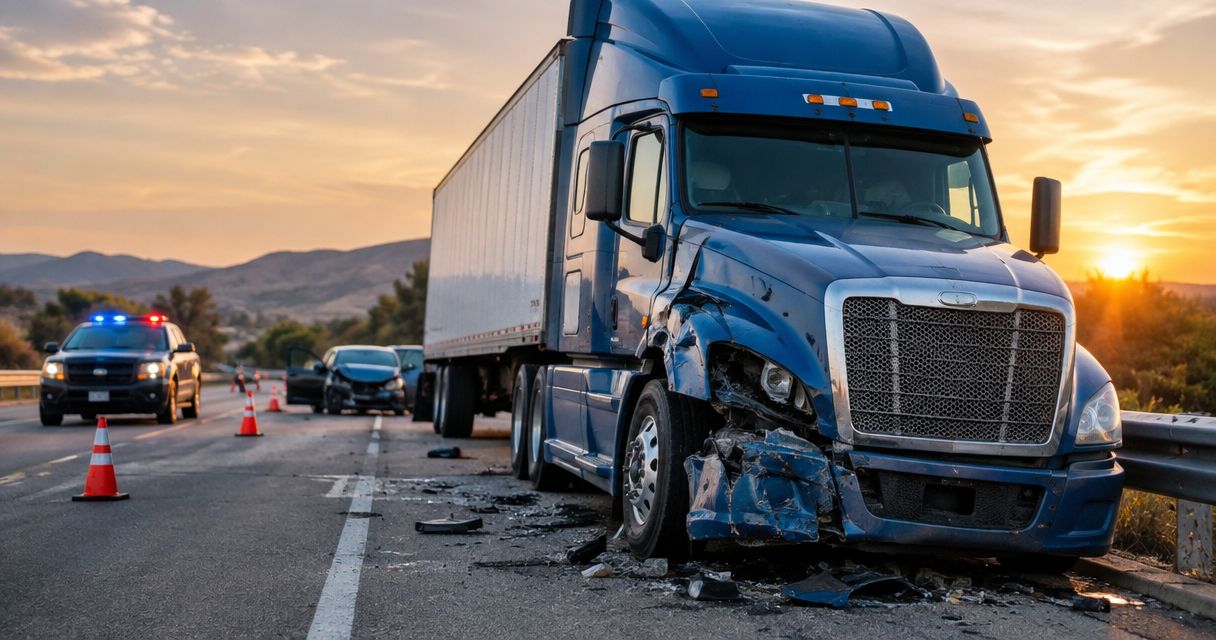
Driver fatigue, distraction, unsafe speed, following too closely, unsafe lane changes, mechanical failures, unsecured cargo, impairment, poor weather, and inadequate training are causes of truck accidents California drivers should investigate. This 2026 guide explains the evidence behind each cause; the numbering is an investigation checklist, not a statewide frequency ranking.
- Causes of truck accidents California drivers should investigate include fatigue, distraction, speed, equipment failures, and unsecured cargo.
- Khachikyanlawfirm provides personal injury representation in Glendale; preserve truck accident evidence before discussing settlement.
- A crash can involve several causes and responsible parties; evidence must connect each failure to the collision.
- Photographs help explain a collision, but electronic records, maintenance files, and witness accounts can reveal missing details.
Why this matters
The immediate driving mistake is not always the whole cause. A truck that rear-ends your vehicle might involve an inattentive driver, defective brakes, unsafe scheduling, or several failures together. Each explanation calls for different evidence.
Khachikyanlawfirm provides personal injury and lemon law representation in Glendale. For a truck accident injury claim, focus on what happened, who controlled the risk, and how the collision affected you. A company name on a trailer does not, by itself, establish responsibility.
What makes a useful truck accident investigation?
Use these criteria to assess a truck accident claim in 2026:
- Crash connection: Identify how the suspected conduct contributed to the impact.
- Independent support: Compare driver statements with video, physical evidence, and witnesses.
- Record preservation: Request relevant electronic data and business records before they disappear.
- Responsible parties: Separate the driver's conduct from maintenance, loading, and company decisions.
- Injury documentation: Connect medical findings and financial losses to the collision.
A traffic violation is evidence to examine, not an automatic answer to every liability question. Likewise, a serious injury does not establish which party caused the crash.
Truck accident causes at a glance
The table identifies the best evidence focus for each suspected cause. Its limitations explain why no single clue should carry the entire claim.
| Cause | Best evidence focus | Useful evidence | Key limitation |
|---|---|---|---|
| Driver fatigue | Work and rest history | Logs, dispatch messages, trip records | Legal hours do not prove alertness |
| Distracted driving | Attention before impact | Video, phone records, witness accounts | Phone activity alone does not establish causation |
| Unsafe speed | Speed relative to conditions | Electronic data, roadway evidence | Posted limits do not establish safe speed |
| Following too closely | Available stopping space | Video, vehicle positions, reconstruction | Rear impact alone does not explain the sequence |
| Unsafe lane changes | Vehicle positions and visibility | Cameras, damage patterns, witnesses | A blind spot does not determine fault |
| Mechanical failures | Equipment condition before impact | Inspections, repair records, expert examination | Crash damage can resemble earlier defects |
| Unsecured cargo | Loading and load movement | Loading records, securement equipment, photographs | A shifted load can result from the crash |
| Impairment | Driver condition near impact | Timely testing, observations, medical evidence | Suspicion is not proof of impairment |
| Poor weather | Conditions and driver response | Weather records, video, roadway photographs | Bad weather alone does not establish negligence |
| Inadequate training | Preparation for the driving task | Training files, policies, driving history | Missing paperwork alone does not prove causation |
1. Driver fatigue: examine work and rest history
Fatigue reduces alertness and slows a driver's response to changing traffic. A tired driver can miss a stopped vehicle or drift from a lane even without falling asleep.
For property-carrying drivers subject to federal hours-of-service rules, 49 CFR section 395.3 generally permits up to 11 hours of driving after 10 consecutive hours off duty. Exceptions and separate rules require attention; do not apply this federal limit automatically to every California truck trip.
- Best for: Investigating lane drift, delayed braking, or demanding work schedules.
- Evidence strength: Logs and dispatch records help reconstruct the driver's workday.
- Evidence limitation: A compliant log does not prove the driver was rested.
Verdict: Preserve the work history, not just the crash report.
2. Distracted driving: establish attention before impact
Distraction includes texting, interacting with navigation equipment, eating, or looking away from traffic. The important question is whether the distraction interfered with driving at the relevant moment.
Phone records can help, but they need context. A call record does not establish where a driver was looking, and silence in a phone log does not rule out other distractions.
- Best for: Explaining an unexplained delay in braking or steering.
- Evidence strength: Video can connect attention, traffic conditions, and the impact sequence.
- Evidence limitation: A witness's brief view might not capture the full event.
Verdict: Connect the distraction to the collision timeline.
3. Unsafe speed: compare speed with actual conditions
Speed affects stopping distance and the force of a collision. Driving within a posted limit does not necessarily mean the speed was safe for rain, congestion, visibility, or a curve.
For a 2026 California investigation, Vehicle Code section 22406 establishes a 55 mph maximum for specified vehicles, including trucks with three or more axles and vehicles towing another vehicle. Vehicle classification matters; this is not a blanket rule for every vehicle called a truck.
- Best for: Investigating loss of control or insufficient stopping distance.
- Evidence strength: Recorded vehicle data can support a reconstruction.
- Evidence limitation: Data availability and recorded parameters vary by vehicle.
Verdict: Evaluate both the applicable limit and the conditions.
4. Following too closely: reconstruct stopping space
A truck needs room to respond when traffic slows. Following too closely removes that margin, especially when the roadway is wet or the truck carries a heavy load.
Photographs taken after vehicles move cannot reliably show the original following distance. Preserve video and witness accounts that describe the traffic sequence before impact.
- Best for: Investigating rear-end crashes and sudden braking events.
- Evidence strength: Continuous video can show spacing as traffic changes.
- Evidence limitation: A rear-end collision alone does not resolve every contributing cause.
Verdict: Reconstruct the approach, not only the final vehicle positions.
5. Unsafe lane changes: examine visibility and positioning
A truck can strike another vehicle while merging, changing lanes, or turning across an occupied lane. Wide turns and limited visibility make the vehicle positions especially important.
A blind spot describes a visibility problem; it does not automatically excuse an unsafe maneuver or assign fault to the other driver. Look at signals, movement, mirror use, and available space.
- Best for: Investigating sideswipes, merging impacts, and turning collisions.
- Evidence strength: Damage patterns and video help establish the vehicles' relative positions.
- Evidence limitation: Damage alone rarely explains everything that happened before contact.
Verdict: Preserve evidence showing where each vehicle was before contact.
6. Mechanical failures: distinguish defects from crash damage
Brake problems, tire failures, steering defects, and lighting failures can contribute to a truck collision. Responsibility depends on the defect, who controlled maintenance, and whether the problem contributed to the crash.
A post-crash inspection must distinguish preexisting failures from damage caused by impact. Repairing or disposing of the truck before examination can remove important evidence.
- Best for: Investigating a reported equipment failure or unexplained loss of control.
- Evidence strength: Physical examination and maintenance records can support each other.
- Evidence limitation: A repair entry does not establish that a defect caused this crash.
Verdict: Seek preservation before repair, salvage, or disposal.
7. Unsecured cargo: investigate loading and movement
Improperly secured or distributed cargo can shift, affect vehicle control, or fall into traffic. The investigation should identify who loaded the shipment and who had securement responsibilities.
Do not assume the driver performed every loading task. Loading records and contracts help identify the businesses involved, while physical evidence helps explain what failed.
- Best for: Investigating rollovers, falling loads, or load-related instability.
- Evidence strength: Photographs of cargo and securement equipment preserve the immediate condition.
- Evidence limitation: Cargo movement during impact can resemble an earlier loading problem.
Verdict: Document the load before cleanup changes the scene, when safe.
8. Impairment: prioritize timely, reliable evidence
Alcohol, drugs, and some medications can impair driving. A prescription does not make a substance irrelevant, but taking medication alone does not establish impairment.
Timing matters because a later observation does not necessarily describe the driver's condition at impact. Test results also need interpretation in light of the substance and collection circumstances.
- Best for: Investigating erratic driving supported by specific observations.
- Evidence strength: Timely testing and independent observations can establish a clearer timeline.
- Evidence limitation: An allegation without supporting evidence is not proof.
Verdict: Rely on documented observations and properly interpreted testing.
9. Poor weather: assess the response to conditions
Rain, fog, wind, and reduced traction create hazards. The liability question is not simply whether the weather was bad; it is whether the driver responded reasonably to the conditions.
Speed choice, following distance, visibility, and vehicle condition belong in the same analysis. Weather can combine with another cause rather than replace it.
- Best for: Investigating sliding, reduced visibility, or wind-related loss of control.
- Evidence strength: Local weather records and scene footage establish conditions.
- Evidence limitation: Regional weather reports might not describe the exact crash location.
Verdict: Compare driving decisions with conditions at the scene.
10. Inadequate training: connect preparation to the maneuver
A driver needs appropriate qualifications and preparation for the assigned vehicle and task. A difficult turn, steep descent, or cargo-related handling problem can require a closer look at training and supervision.
A company policy is not proof that employees followed it. Conversely, an incomplete file does not automatically prove inadequate driving skill or explain the collision.
- Best for: Investigating task-specific errors and company oversight.
- Evidence strength: Training records and dispatch instructions show preparation and expectations.
- Evidence limitation: A training concern must connect to the crash-producing conduct.
Verdict: Tie any training failure to the maneuver that caused harm.
How the causes are organized
This 2026 checklist groups driver behavior first, then equipment, cargo, conditions, and company preparation. It does not claim that fatigue causes more California truck accidents than distraction, or that any listed cause applies to your collision.
The strongest investigation follows evidence rather than forcing the crash into one category. Several failures can contribute to the same impact.
What should you do after a truck accident?
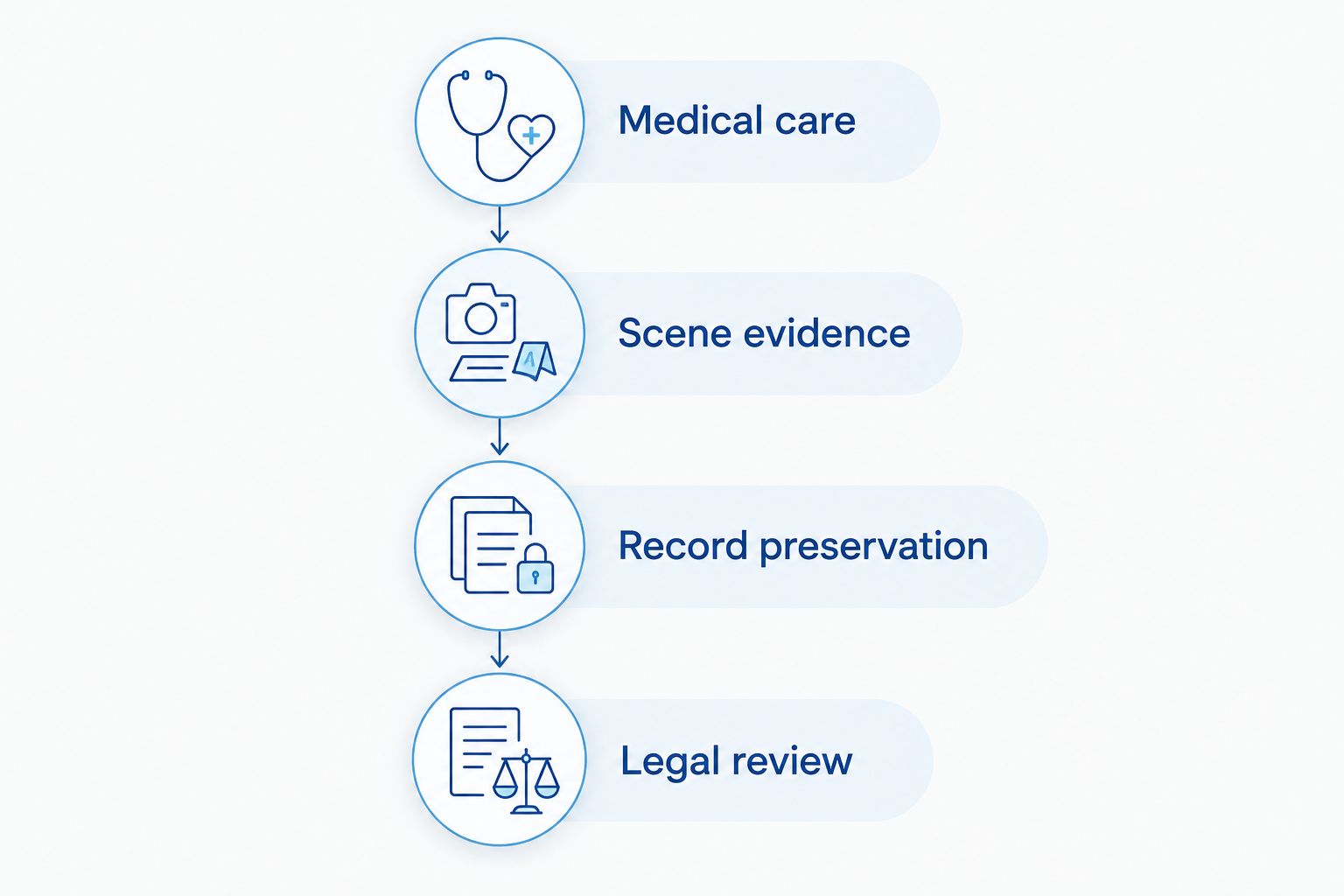
Get medical attention and preserve evidence before debating fault. Khachikyanlawfirm is an option for Glendale readers seeking personal injury representation after a truck accident.
- Medical care: Obtain appropriate care and keep treatment records.
- Scene evidence: Save photographs, witness details, and available footage without entering danger.
- Record preservation: Ask counsel about preserving truck data, logs, maintenance records, and dispatch communications.
- Legal review: Discuss responsible parties, insurance communications, and filing deadlines.
California Code of Civil Procedure section 335.1 generally provides 2 years to file a personal injury lawsuit. Government claims and other exceptions can involve different requirements, so do not treat the general deadline as permission to wait.
For a 2026 collision, ask Khachikyanlawfirm about the facts and deadlines specific to your claim. Representation cannot guarantee recovery; liability, injury evidence, insurance, and applicable law affect the outcome.
Discuss your truck accident claim
Ask about injury evidence, potentially responsible parties, and the deadlines that apply to your collision.
FAQ
What's the most common cause of truck accidents in California?
This guide does not identify a statistically most common cause. Fatigue, distraction, unsafe speed, equipment problems, and other factors require investigation; a frequency ranking needs a defined dataset and period.
Can more than one party cause a truck accident?
Yes, several parties can contribute to a truck accident. The driver, a trucking company, a maintenance provider, or a cargo loader can have different responsibilities, depending on the evidence.
Does a truck driver automatically owe compensation after a rear-end crash?
No, a rear-end crash does not automatically resolve every liability issue. The investigation should examine following distance, braking, traffic movements, equipment condition, and other contributing conduct.
Can I bring a California truck accident claim if I was partly at fault?
Yes, California's comparative fault rules allow an injured person to pursue recovery despite partial fault. A person's share of responsibility reduces recoverable damages; the allocation depends on the evidence.
What evidence should I save after a truck accident?
Save photographs, witness information, medical records, correspondence, and available video. Ask counsel about preserving electronic truck data and company records that you cannot obtain yourself.
How long do I have to sue after a California truck accident?
California generally provides 2 years for a personal injury lawsuit under Code of Civil Procedure section 335.1. Exceptions and government-claim requirements can change the analysis, so obtain advice promptly.
Does a police report decide who caused a truck accident?
No, a police report does not conclusively determine civil liability. Video, witnesses, vehicle data, and physical evidence can support or challenge its account.
One last thing
A truck accident claim can turn on records you never see at the roadside. Dispatch instructions, inspection history, and electronic data can explain why a driver failed to stop. For a 2026 claim, request preservation early rather than assuming those records will remain accessible.


