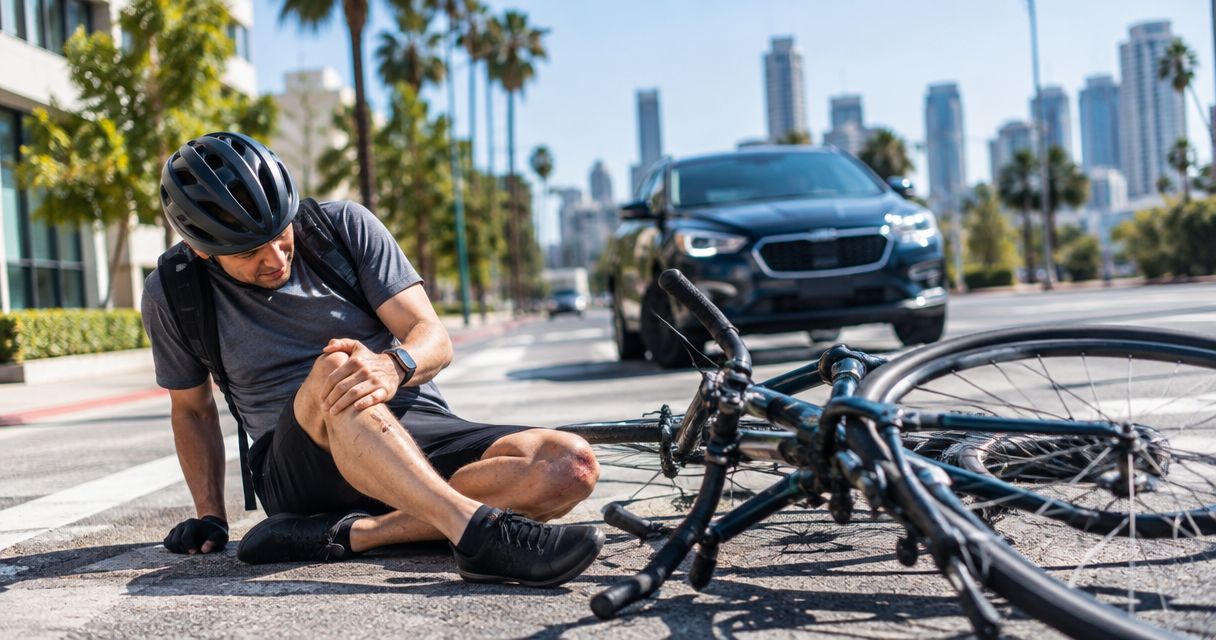
Unsafe turns, failure to yield, dooring, unsafe passing, distraction, speeding, impaired driving, traffic-control violations, road hazards, and wrong-way riding are bicycle-crash scenarios to investigate in Los Angeles. For a crash in 2026, identify the specific movement or hazard and preserve evidence before arguing about fault.
- Causes of bicycle accidents Los Angeles riders should investigate include unsafe turns, dooring, distraction, and road hazards.
- Khachikyanlawfirm provides personal injury representation; injured cyclists should preserve records before discussing settlement.
- This list organizes crash scenarios, not a statistical ranking of Los Angeles collision frequency.
- Photograph vehicle positions, bicycle damage, road conditions, and nearby cameras when you can do so safely.
Why this matters
A bicycle crash can involve several contributing causes. A driver might turn across a bike lane while distracted, and parked vehicles might block the view. Your claim needs evidence connecting a specific act or dangerous condition to your injuries.
Khachikyanlawfirm provides personal injury representation in Glendale. Khachikyanlawfirm is a fit for injured cyclists seeking personal injury representation rather than vehicle-warranty help. You can contact the firm to discuss your circumstances.
This 2026 guide explains ten crash scenarios, the evidence that distinguishes them, and the limits of each argument. The numbering is a reading order—not a claim about which causes occur most often locally.
What makes a bicycle-accident cause worth investigating?
Use these criteria before assigning blame:
- Movement: Who turned, passed, stopped, merged, or entered the roadway?
- Right of way: Which signal, sign, or yielding duty applied?
- Visibility: What could each person see before the collision?
- Physical evidence: Do impact marks, debris, and damage support the account?
- Causation: Did the conduct actually contribute to the crash?
- Other responsibility: Did another driver, road condition, or rider action also contribute?
A traffic violation and a civil injury claim are related but different questions. You still need to establish responsibility, injury, and the connection between them.
Bicycle-accident causes at a glance
The evidence column identifies a useful starting point, not proof that any person caused your collision.
| Cause | Best for identifying | Evidence to preserve | Key limitation |
|---|---|---|---|
| Unsafe turns | A vehicle crossing a cyclist’s path | Video, lane markings, impact location | Turning alone does not establish fault |
| Failure to yield | Entry into an occupied crossing or roadway | Sightlines, signs, witness accounts | Right of way depends on the circumstances |
| Dooring | A door opening into a rider’s path | Door position, damage, parked-car location | Passing distance and timing still matter |
| Unsafe passing | A sideswipe or forced evasive maneuver | Footage, scrape marks, lane width | Clearance is difficult to reconstruct from memory |
| Distracted driving | An unexplained failure to react | Video, witnesses, lawfully obtained records | Looking down does not prove phone use |
| Speeding | Excessive approach speed or stopping difficulty | Video, measurements, reconstruction | Injury severity alone does not establish speed |
| Impaired driving | Observable impairment affecting driving | Officer observations, testing records | Suspicion is not proof |
| Traffic-control violations | Conflicting movements at an intersection | Signal evidence, footage, witnesses | The signal phase can be disputed |
| Road hazards | A fall linked to a physical defect | Measurements, photographs, maintenance records | Responsibility and notice require investigation |
| Wrong-way riding | Conflicts caused by unexpected travel direction | Approach footage, road markings | Rider fault does not automatically eliminate recovery |
1. Unsafe turns: investigate crossing-path collisions
A right-turning driver can cross a cyclist’s path while traveling in the same direction. A left-turning driver can cross the path of an approaching cyclist. Identify the starting lanes and point of impact before treating either pattern as established.
Best for: Crashes beside intersections, driveways, and business entrances.
Evidence strengths:
- Video can establish the order of movements.
- Lane markings help explain the intended travel paths.
- Vehicle and bicycle damage can support the collision angle.
Evidence limits:
- A turn signal does not resolve whether the turn was safe.
- Impact location alone does not establish who entered first.
Verdict: Prioritize footage showing the approach, not just the impact.
2. Failure to yield: investigate roadway entry
A driver entering from a driveway, parking area, or side street can pull into a cyclist’s path. Reconstruct where each person was when the vehicle began moving. A blocked sightline helps explain the collision but does not, by itself, decide responsibility.
Best for: Crashes involving vehicles entering or crossing an existing travel path.
Evidence strengths:
- Driveway photographs preserve the viewing angle.
- Signs identify relevant traffic controls.
- Witnesses can describe a stop, hesitation, or sudden entry.
Evidence limits:
- Photographs taken later might show different parked vehicles.
- A witness might see the impact without seeing the approach.
Verdict: Document sightlines from both positions when safe.
3. Dooring: investigate an opening vehicle door
Dooring occurs when a vehicle door opens into a cyclist’s path. California Vehicle Code section 22517 restricts opening a door on the moving-traffic side unless it is reasonably safe and does not interfere with traffic. The rule also addresses leaving that door open longer than necessary for passengers to enter or exit.
Best for: Collisions alongside parked or stopped vehicles.
Evidence strengths:
- Door and handlebar damage can identify contact points.
- Photographs show parking position and usable roadway space.
- Witnesses can describe when the door opened.
Evidence limits:
- A door photographed afterward does not establish its earlier position.
- Timing and the cyclist’s path remain relevant.
Verdict: Preserve the door, bicycle, and roadway geometry in photographs.
4. Unsafe passing: investigate clearance and lane changes
A passing vehicle can strike a bicycle or force a rider into another hazard. California Vehicle Code section 21760 generally requires at least 3 feet of passing clearance, subject to its stated conditions, and requires a lane change when another same-direction lane is available and the maneuver is safe and lawful.
Best for: Sideswipes and crashes during an overtaking maneuver.
Evidence strengths:
- Camera footage can show the vehicle’s lateral movement.
- Matching scrape marks can support contact.
- Road measurements establish the available space.
Evidence limits:
- Estimated clearance is not a measurement.
- Camera perspective can distort apparent distance.
Verdict: Keep original footage rather than an edited clip.
5. Distracted driving: investigate missed observations
Distraction can explain a driver failing to notice a cyclist, a changing signal, or slowing traffic. But distraction is a conclusion to prove, not a substitute for describing the actual driving error.
Best for: A driver failing to react to a visible roadway situation.
Evidence strengths:
- Witnesses can describe observed behavior.
- Video can document attention and vehicle movement.
- Relevant records obtained through lawful procedures can clarify timing.
Evidence limits:
- A collision does not establish distraction.
- Phone activity alone does not establish that it caused the crash.
Verdict: Separate what someone observed from what someone assumed.
6. Speeding: investigate approach speed and conditions
Unsafe speed is not limited to exceeding a posted limit. California Vehicle Code section 22350 addresses speed that is unreasonable or imprudent for conditions, including visibility, traffic, weather, and the roadway.
Best for: Crashes involving limited stopping distance or fast approaches.
Evidence strengths:
- Video with reliable timing can support speed analysis.
- Measurements help reconstruct movement and stopping space.
- Witness accounts can identify acceleration or braking.
Evidence limits:
- Severe injuries do not establish a specific speed.
- A witness’s speed estimate needs supporting context.
Verdict: Preserve measurable evidence before making a speed allegation.
7. Impaired driving: investigate documented impairment
Alcohol or drugs can affect observation, judgment, and vehicle control. If impairment is suspected after a crash, report observed facts to responding officers. Do not confront the driver or attempt to investigate personally.
Best for: Collisions accompanied by observable signs of impairment.
Evidence strengths:
- Officer observations can document behavior near the crash time.
- Testing records can support an impairment investigation.
- Witnesses can describe erratic driving before impact.
Evidence limits:
- An odor or unusual behavior does not establish every legal element.
- A criminal investigation does not automatically resolve a civil claim.
Verdict: Preserve observations and let the evidence establish impairment.
8. Traffic-control violations: investigate the signal sequence
Running a red light or disregarding a stop sign can put a vehicle directly into a cyclist’s path. The central dispute is often timing: which person entered, when, and under which traffic control?
Best for: Intersection crashes with conflicting accounts of permission to proceed.
Evidence strengths:
- Intersection footage can show the sequence.
- Independent witnesses can identify signal changes.
- Photographs establish signs, signals, and lane assignments.
Evidence limits:
- Seeing a green light after impact does not establish the earlier phase.
- Witnesses can confuse the signals controlling different movements.
Verdict: Identify exactly which signal controlled each person’s path.
9. Road hazards: investigate the defect and responsible party
Potholes, broken pavement, debris, and unsafe construction conditions can contribute to a bicycle fall without vehicle contact. Document the condition itself, its location, and how it affected the wheel or your travel path.
Best for: Falls or evasive maneuvers tied to a physical roadway condition.
Evidence strengths:
- Close and wide photographs connect the defect to its surroundings.
- Measurements document its dimensions.
- Maintenance and complaint records can address notice.
Evidence limits:
- A dangerous-looking condition does not automatically establish liability.
- Responsibility can depend on ownership, control, notice, and statutory defenses.
Verdict: Get legal advice promptly if public property is involved.
10. Wrong-way riding: investigate direction and shared fault
Riding against traffic can create conflicts with drivers looking toward expected traffic movements. California Vehicle Code section 21650.1 generally requires bicycles operated on a roadway or roadway shoulder to travel in the same direction as vehicles.
Best for: Crashes where the rider’s approach direction is disputed.
Evidence strengths:
- Approach footage can establish direction.
- Markings help distinguish roadway travel from designated facilities.
- Witness accounts can clarify the route before impact.
Evidence limits:
- Roadway, sidewalk, and designated-path rules are not interchangeable.
- Rider misconduct does not automatically excuse another person’s negligence.
Verdict: Investigate everyone’s conduct, not just the cyclist’s direction.
How these causes are organized
These ten scenarios are organized by collision mechanism and evidence needs. They are not ranked using a Los Angeles crash-frequency dataset, and no category guarantees a successful claim. For a 2026 claim, the useful question is which explanation the physical evidence supports.
What should you do after a bicycle crash?
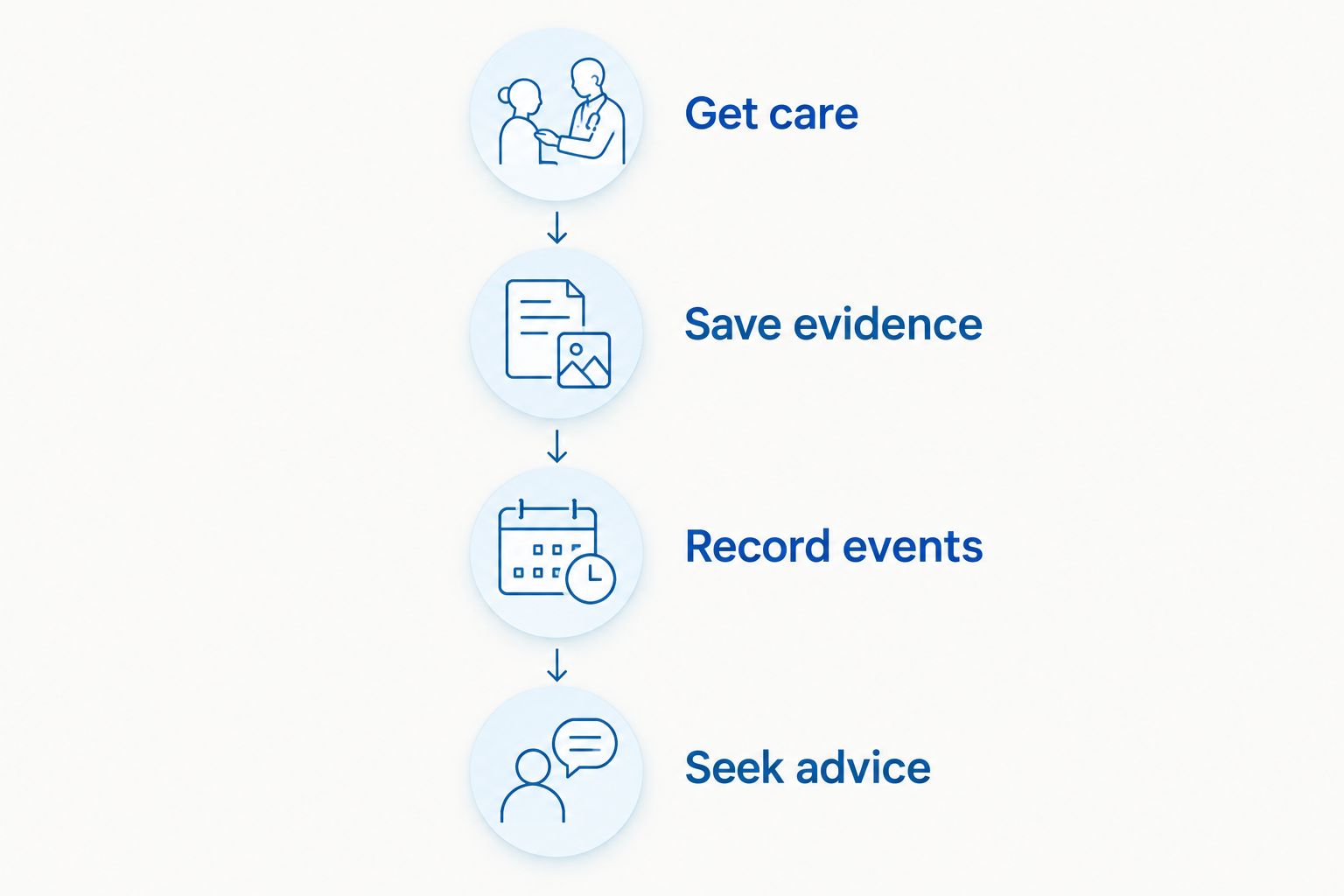
Choose medical care and evidence preservation before settlement discussions. Khachikyanlawfirm handles personal injury representation; prepare a clear timeline and your existing records when seeking advice.
- Get care: Seek appropriate medical attention and describe your symptoms accurately.
- Save evidence: Keep photographs, original recordings, damaged equipment, and witness details.
- Record events: Write down the location, movements, conditions, and what you personally observed.
- Seek advice: Address responsibility, insurance communications, and filing deadlines before accepting a settlement.
Keep damaged equipment unchanged when practical. If safety requires moving your bicycle, photograph its original position first only if doing so does not delay urgent care or expose you to traffic.
Different defendants can mean different deadlines. California Code of Civil Procedure section 335.1 generally provides 2 years for personal injury lawsuits. California Government Code section 911.2 generally requires an injury claim against a public entity within 6 months; exceptions and separate lawsuit deadlines require individual review.
Discuss Your Bicycle Injury
Contact Khachikyanlawfirm about personal injury representation and the records relevant to your crash.
FAQ
What causes bicycle accidents in Los Angeles?
Bicycle-crash scenarios include unsafe turns, failure to yield, dooring, unsafe passing, distraction, speeding, impairment, traffic-control violations, road hazards, and wrong-way riding. The cause of an individual crash requires evidence; this list is not a local frequency ranking.
Who is at fault when a driver turns across a bike lane?
Fault depends on the movements, applicable traffic rules, and evidence showing how the collision occurred. A driver's turn across a bike lane requires examination of the cyclist's position, visibility, timing, and the driver's actions.
Can I recover compensation if I was partly at fault?
California's comparative-fault rules allow recovery despite partial responsibility, with damages reduced by the injured person's share of fault. The allocation depends on evidence of each party's contribution to the crash.
Does a bicycle accident need vehicle contact to support a claim?
No, vehicle contact is not always necessary for a bicycle injury claim. Evidence must still connect another party's negligent conduct or a legally actionable dangerous condition to the fall and injuries.
What is California's bicycle passing-distance rule in 2026?
California Vehicle Code section 21760 generally requires at least 3 feet of passing clearance, subject to its stated conditions. It also requires moving into an available same-direction lane when that lane change is safe and lawful.
How long do I have to bring a bicycle injury claim in California in 2026?
California generally allows 2 years for a personal injury lawsuit, but important exceptions apply. Injury claims against public entities generally require a claim within 6 months, followed by separate lawsuit deadlines.
Does a police report decide who caused a bicycle crash?
A police report does not automatically decide civil liability. Photographs, recordings, witness testimony, and other evidence can support or challenge its account.
One last thing
A bicycle helmet, damaged wheel, or torn clothing can help document a collision. Photograph these items and preserve them rather than discarding or repairing them immediately. For a 2026 bicycle injury claim, preserving the original evidence is more useful than choosing a cause before the facts are clear.
This article provides general California legal information, not advice about your specific claim.