
Yes. You can fire your personal injury lawyer and switch attorneys in California in 2026, including after a lawsuit has been filed. Changing lawyers does not automatically erase the former lawyer’s claim for earned fees or advanced expenses, and it does not pause your case deadlines. Arrange the handoff in writing so you know who is responsible for your next filing, hearing, or settlement response.
- Can I fire my personal injury lawyer and switch attorneys? Yes; California clients can discharge their lawyers.
- Changing attorneys does not automatically cancel earned fees, expense obligations, or existing case deadlines.
- Get written confirmation that replacement counsel accepts responsibility before assuming the handoff is complete.
- Khachikyan Law Firm represents personal injury clients in Glendale, California.
Can I fire my personal injury lawyer and switch attorneys?
Yes. California Rule of Professional Conduct 1.16 requires a lawyer to withdraw when discharged, subject to court requirements. California Code of Civil Procedure section 284 governs changing the attorney of record in an existing lawsuit.
You do not need to prove malpractice to end the relationship. But firing your lawyer and completing the court paperwork are separate steps. Until the required substitution or withdrawal takes effect, the court record can still identify your former lawyer as counsel.
Khachikyan Law Firm provides personal injury representation in Glendale. Before retaining any replacement attorney, ask whether the attorney will accept your existing case, review its deadlines, and address the former lawyer’s asserted fee interests.
Why this matters
A lawyer change affects more than who answers your calls. Your file can contain pending settlement offers, unanswered discovery, medical liens, expert deadlines, and court orders. Someone must take responsibility for each item during the transition.
For a 2026 attorney change, protect the next deadline before debating the whole history of the relationship. A communication problem deserves attention, but an approaching hearing or unanswered discovery request needs immediate action.
Switching also does not undo decisions already made. A replacement lawyer must evaluate the case as it stands, including signed releases, prior testimony, evidence problems, and settlement communications.
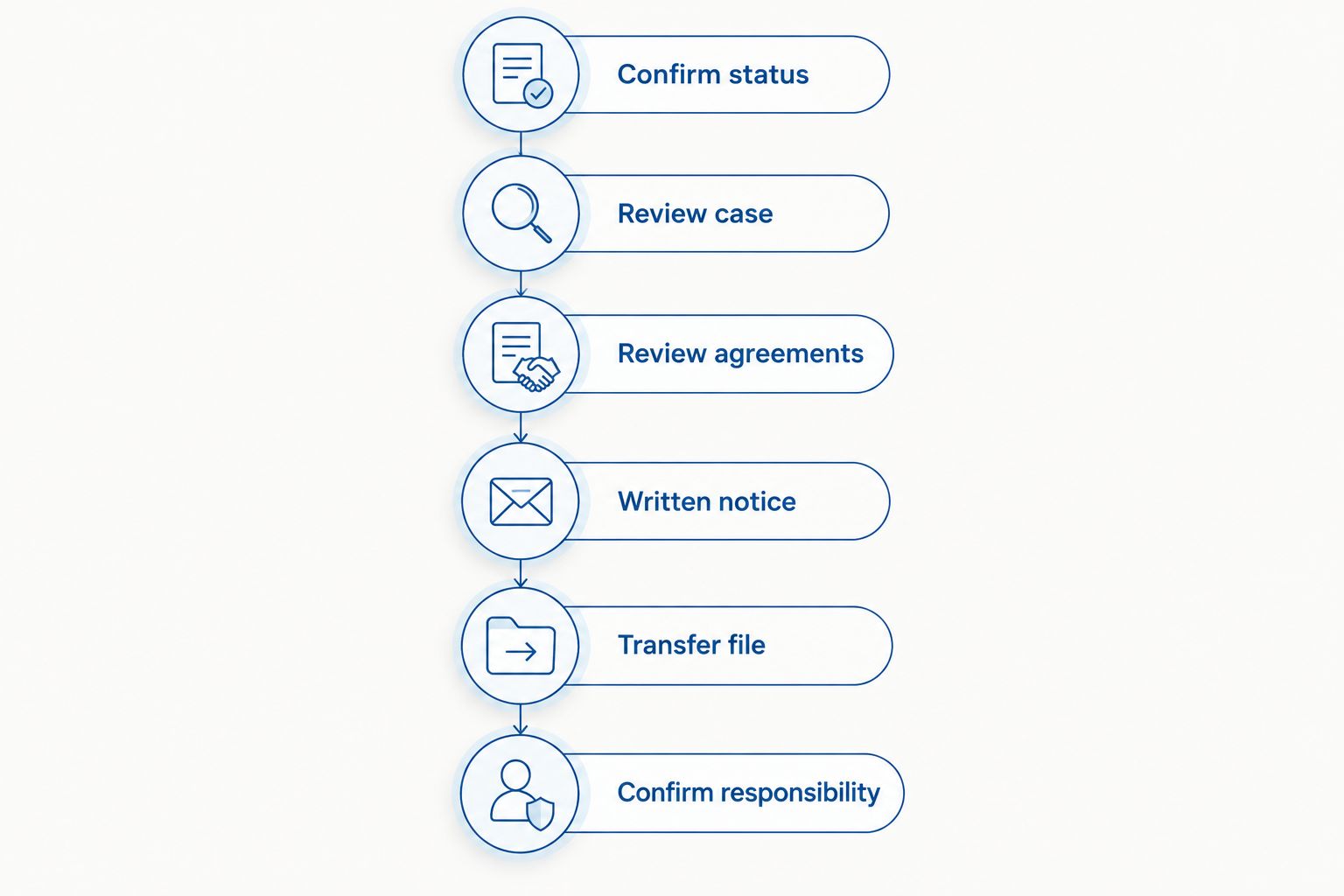
How to switch personal injury attorneys without losing track of your case
1. Confirm the case status
Ask your current lawyer for a written status update. Request the court name, case number, upcoming deadlines, pending offers, outstanding discovery, and any scheduled mediation or trial.
If no lawsuit has been filed, ask for the filing deadline and the reason for that calculation. Do not assume an insurance claim has preserved your right to sue; negotiations and court filing requirements are different things.
2. Have replacement counsel review the case
Give the prospective lawyer your representation agreement and the status information you received. Explain why you want to switch, but also disclose problems with liability, treatment gaps, prior injuries, or missed deadlines.
A consultation is not confirmation that a lawyer has taken your case. Ask for written acceptance and a clear statement of when representation begins. Do not assume sending records transfers responsibility.
3. Review agreements
Ask replacement counsel to explain the old and proposed representation agreements together. Focus on termination language, expense reimbursement, any attorney-lien provision, and how competing fee claims will be addressed.
Get the explanation in writing. A reassuring statement that the lawyers will work everything out is not a substitute for understanding your obligations and the handling of disputed settlement funds.
4. Send written notice
Tell your former lawyer that you are ending the representation. Identify replacement counsel if retained, request the file, and ask for a list of deadlines and any claimed fees, expenses, or liens.
Keep the notice factual. You do not need a long accusation letter to communicate that the representation has ended, and a short written record makes the instruction easier to verify.
5. Transfer the file
Authorize delivery of your client file to replacement counsel and retain a copy when possible. California Rule of Professional Conduct 1.16(e) requires prompt release of client materials and property upon request, subject to applicable protective orders or other legal restrictions.
That obligation is not conditioned on payment. Request correspondence, pleadings, discovery, medical records, expert materials, settlement communications, and expense records relevant to your case.
6. Confirm responsibility
If a lawsuit is pending, confirm who will prepare, file, and serve the substitution paperwork. California’s Substitution of Attorney—Civil form, MC-050, is commonly used when the required parties consent.
For a case transferred in 2026, keep written confirmation of the effective handoff and the next deadline. If signatures are disputed or unavailable, replacement counsel should determine the appropriate court procedure rather than treating an email as a completed substitution.
What happens to your former lawyer’s fees and expenses?
Firing your lawyer does not automatically eliminate a valid claim for compensation. It also does not establish that every amount the lawyer requests is enforceable. The agreement, work performed, reason for discharge, and applicable law matter.
California’s decision in Fracasse v. Brent recognizes a discharged contingency-fee lawyer’s potential right to the reasonable value of services, generally payable upon the contingency occurring. Whether misconduct limits or defeats a claim requires a separate legal assessment.
Ask replacement counsel to distinguish:
- Attorney fees: Compensation claimed for legal work already performed.
- Case expenses: Amounts advanced for records, filing, experts, or other case-related work.
- Attorney liens: Asserted rights against a recovery, whose validity and scope require review.
- Medical liens: Separate repayment claims that changing lawyers does not automatically resolve.
Do not assume you owe two complete contingency fees, and do not assume switching changes nothing financially. Ask who will negotiate any allocation and how a dispute will affect distribution of your recovery.
Should you stay, switch lawyers, or handle the case yourself?
The right choice depends on the problem you need to solve. Distinguish dissatisfaction with an outcome from an actual breakdown in communication, preparation, or trust.
| Option | Best fit | Main benefit | Main limitation |
|---|---|---|---|
| Stay with current counsel | A correctable communication problem with a clear recovery plan | Avoids a file transfer and attorney substitution | Leaves the underlying problem unresolved unless conduct changes |
| Hire replacement counsel | A breakdown in trust or case management requiring a new assessment | Provides a new attorney’s review and representation | Requires file review, deadline coordination, and fee clarification |
| Represent yourself | Someone prepared to assume every legal and procedural responsibility | Gives you direct control over decisions and filings | Leaves you responsible for evidence rules, deadlines, and negotiations |
Before staying, request a specific communication plan: who responds, how updates arrive, and what happens next. Before switching, confirm the new lawyer has accepted the actual case—not merely offered an initial impression.
Do not switch solely because another lawyer promises a larger recovery. No new attorney can establish your eventual result from a brief conversation, and changing counsel does not repair missing evidence by itself.
Why switching attorneys varies from case to case
Several factors determine how much coordination the transition requires. None changes your basic right to discharge counsel, but each affects the next steps.
- Whether a lawsuit exists: An insurance claim needs a representation handoff; a pending lawsuit also requires attention to the court record.
- Approaching deadlines: A hearing, discovery response, or trial creates immediate work for whoever assumes representation.
- Existing settlement activity: Replacement counsel must review offers, authorizations, releases, and any claimed agreement.
- File organization: Missing records or incomplete correspondence require follow-up before the new attorney has a reliable case picture.
- Fee and lien disputes: Competing claims require separate review and can complicate distribution of settlement funds.
- Case complexity: Experts, multiple defendants, disputed liability, and medical repayment claims increase the material requiring review.
Ask the prospective attorney which of these issues applies to you. A useful transition plan identifies the unfinished work and who owns it.
Which deadlines keep running when you change lawyers?
Changing attorneys does not automatically extend a filing deadline, discovery deadline, or court date. Ask for a deadline review based on your actual documents, not just the accident date.
For California claims in 2026, these rules illustrate why that review matters:
- 2 years: California Code of Civil Procedure section 335.1 generally provides this period for personal injury lawsuits. Accrual rules, exceptions, and other statutes can change the analysis.
- 6 months: California Government Code section 911.2 generally requires presentation of a government claim involving personal injury within this period after accrual. This is distinct from filing a lawsuit.
- 30 days: California Code of Civil Procedure section 2030.260 generally requires responses to interrogatories within this period after service. Service-method extensions, agreements, and court orders affect the actual due date.
These are different obligations, not interchangeable countdowns. Give replacement counsel the incident date, service documents, government notices, and every scheduling order so the attorney can calculate the applicable dates.
Can I switch lawyers after a lawsuit has been filed?
Yes, you can switch lawyers after filing a lawsuit in California. The transition must address the attorney of record, service of notices, and existing court obligations; a private termination message alone does not complete those steps.
Can I switch lawyers right before settlement?
Yes, you can change counsel while settlement discussions are underway, but replacement counsel needs to review the exact status immediately. Switching lawyers does not automatically cancel an enforceable settlement or signed release.
Can my lawyer refuse to give me my file?
Your former California lawyer must promptly release client materials and property upon request under Rule 1.16(e), subject to applicable legal restrictions. An unpaid bill does not by itself permit withholding those materials.
What should you send the prospective attorney?
Start with the documents that show what exists and what happens next. A complete medical history matters, but a hearing notice arriving tomorrow needs to be visible immediately.
Prepare this packet:
- Your current representation agreement and amendments.
- Written case updates and the most recent court orders.
- Pending settlement offers, releases, and mediation notices.
- Discovery requests and documents showing when they were served.
- Medical records, bills, photographs, and incident reports already collected.
- Any termination notice, expense statement, or attorney-lien notice.
Keep originals secure and send copies through the method the prospective attorney requests. Include unfavorable documents too; replacement counsel needs to assess the actual record rather than discover problems after accepting responsibility.
Choosing representation in Glendale
Khachikyan Law Firm represents Glendale clients seeking personal injury legal representation. If you are considering a change, ask whether the firm can accept your pending matter and what documents it needs to evaluate the transition.
The firm's stated practice includes personal injury and lemon law. That description does not establish whether a particular pending case will be accepted; confirm case acceptance, responsibility for deadlines, and agreement terms directly.
Discuss your attorney change
Ask about your pending injury case, its deadlines, and the documents needed for review.
FAQ
Do I need my current lawyer’s permission to fire them?
No. You can discharge your California personal injury lawyer without proving misconduct, but a pending lawsuit still requires the appropriate substitution or withdrawal procedure.
Will I owe two lawyers if I switch attorneys?
Switching does not automatically mean you owe two complete contingency fees. The former lawyer can assert a claim for compensation or expenses, so have replacement counsel explain the agreements and proposed handling of those claims.
Can my former attorney keep my medical records until I pay?
An unpaid bill alone does not allow a California lawyer to withhold client materials that must be released under Rule 1.16(e). Request the file in writing and identify where it should be delivered.
Will changing lawyers delay my injury claim?
Changing lawyers requires file review and coordination, but there is no fixed transition period that applies to every case. Existing deadlines continue unless a valid extension or court order changes them.
Can I change attorneys if my case is close to trial?
Yes, but an approaching trial makes acceptance and deadline coordination urgent. A new lawyer is not required to accept the case, and substitution does not automatically move the trial date.
What should I ask Khachikyan Law Firm about switching?
Ask whether Khachikyan Law Firm can accept your personal injury matter and assume responsibility for its current deadlines. Also request an explanation of file transfer, representation terms, and any former-attorney fee or lien claims.
Does switching lawyers let me reopen a settlement I already signed?
Switching lawyers does not itself invalidate a signed settlement or release. Ask replacement counsel to review the documents before assuming you can restart negotiations.
One last thing
Before ending the relationship, save the document that proves your next deadline. A served discovery request, court notice, or pending offer can matter more during the handoff than a long account of missed calls.
For a 2026 transition, keep a written record of three things: who represents you, when that responsibility began, and what must happen next. This article provides general California legal information, not advice about your specific case.


