
California drivers file more lemon law claims against a handful of repeat-offender brands than against the rest of the market combined, and the pattern in 2026 tracks directly to a small list of recurring defects: transmissions, engines, and infotainment electronics.
- Ford and Nissan lead California lemon law claims in 2026, driven by transmission defects in specific model years.
- Hyundai and Kia rank high due to engine oil-consumption and stalling issues tied to past recall campaigns.
- A recall does not cancel your lemon law rights if the same defect returns after the repair.
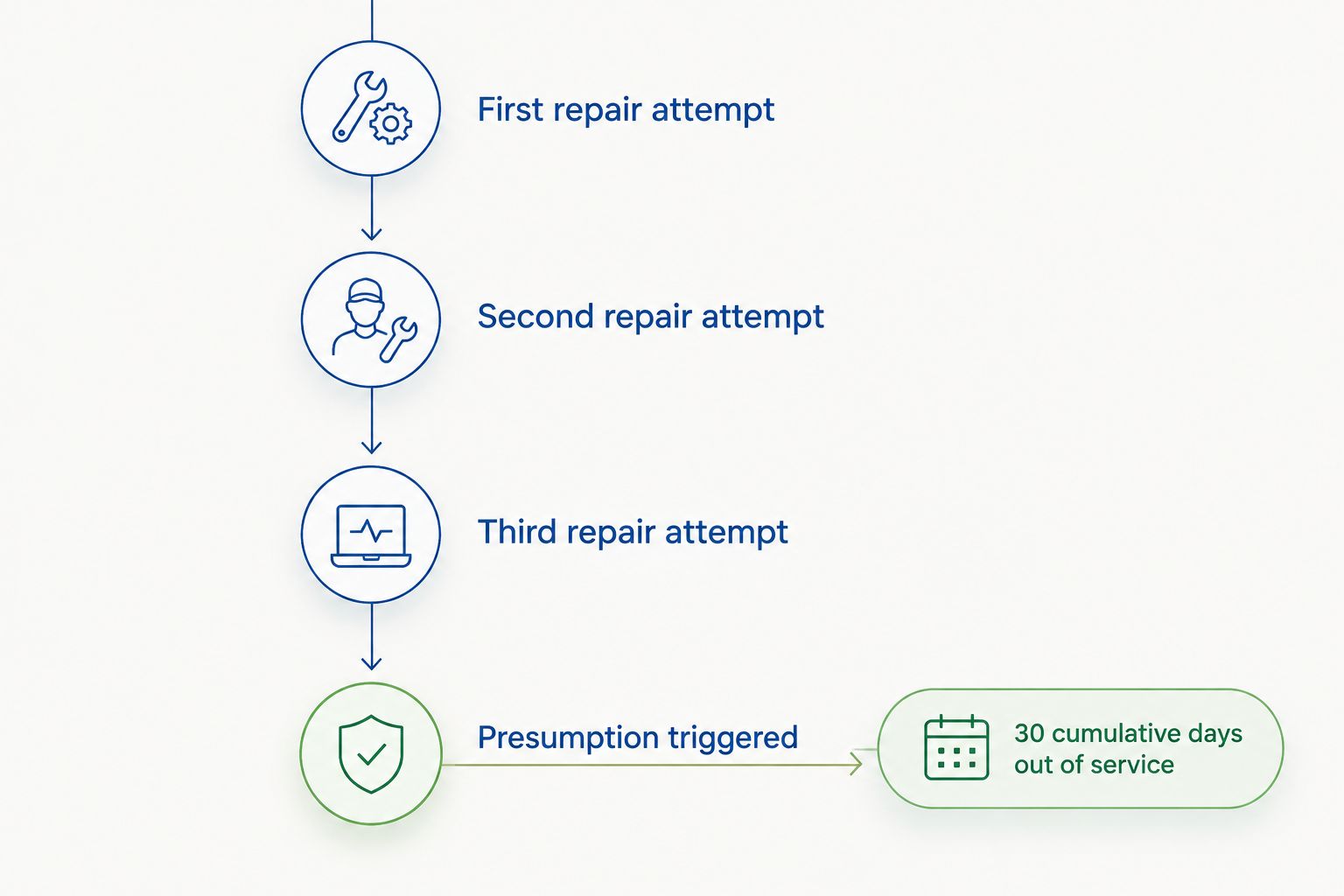
- Under California's Song-Beverly Act, four repair attempts for the same defect (or 30 cumulative days out of service) can trigger a presumption of a lemon.
- Tesla and BMW show up more often for electronics and build-quality complaints than for safety-critical defects.
Why this matters
A lemon law claim isn't about a car that's merely annoying — it's about a documented, repeated defect that a manufacturer couldn't fix within a reasonable number of attempts. The brands below show up disproportionately in California lemon law filings because their most common defects (transmission shudder, engine stalling, infotainment failures) tend to recur even after a dealership "fixes" them.
If your car matches a pattern on this list, the team at Khachikyanlawfirm can tell you within a short conversation whether your repair history meets California's threshold. Not every recall qualifies, but a lot of owners don't realize how close they already are.
What makes a brand a repeat lemon law offender
- A defect tied to a specific component, not a one-off part failure — transmissions and engines dominate the list because the same part fails across thousands of vehicles.
- Multiple failed repair attempts for the identical problem, documented on repair orders.
- A defect that persists after a recall or technical service bulletin (TSB) was already issued.
- Cumulative days out of service that stack up across several visits rather than one long repair.
- A safety-related defect, which only needs two repair attempts (instead of four) to trigger the presumption in California.
- Consistent complaint volume reported through NHTSA and owner forums across multiple model years, not just one bad batch.
Brands with the most lemon law claims in California: at a glance
| Brand | Common defect pattern | Vehicles most affected | Key limitation |
|---|---|---|---|
| Ford | PowerShift dual-clutch transmission shudder | Focus, Fiesta (2011-2016) | Later model years largely resolved the issue |
| Nissan | CVT transmission shudder and failure | Altima, Sentra, Rogue | Extended CVT warranties can complicate the claim timeline |
| Hyundai / Kia | Engine oil consumption, stalling, fire risk | Sonata, Sorento, Optima (2011-2019) | Many units already covered by recall repairs |
| Jeep / Chrysler (Stellantis) | Uconnect infotainment failure, engine stalling | Cherokee, Grand Cherokee, Charger | Infotainment alone rarely meets the safety-defect standard |
| Chevrolet / GM | Transmission shudder, diesel emissions faults | Cruze, Equinox, Silverado (Duramax) | Emissions issues often route through a separate settlement track |
| BMW | Electrical faults, timing chain wear | 3 Series, X3, X5 (N20/N26 engines) | High repair cost doesn't automatically mean lemon status |
| Mercedes-Benz | Air suspension failure, electronic faults | E-Class, GLE, S-Class | Luxury trims often get faster dealer buybacks before a claim is filed |
| Tesla | Panel gaps, drivetrain software faults | Model 3, Model Y | Over-the-air fixes can reset the repair-attempt clock |
| Toyota | Frame rust, historical unintended acceleration | Tacoma, Camry | Lowest overall claim rate of any mainstream brand |
| Honda | CVT shudder, infotainment glitches | Civic, CR-V | Complaint volume is lower than Ford or Nissan for the same defect type |
1. Ford: most lemon law claims tied to transmission defects
Ford's PowerShift dual-clutch automatic transmission, installed in Focus and Fiesta models from 2011 through 2016, produces shuddering, delayed engagement, and premature clutch wear that dealerships often can't resolve permanently. The defect generated one of the most cited transmission-related lemon law patterns in California through the back half of the 2010s and continues to surface in older units still on the road in 2026.
Ford lemon law signs:
- Jerking or hesitation during low-speed acceleration
- Grinding or shuddering when shifting from first to second gear
- Repeated dealer visits for the "same" transmission concern
What doesn't automatically qualify:
- A single software recalibration that resolves the shudder
- Vehicles outside the original PowerShift model years
Most relevant if you own: a 2011-2016 Ford Focus or Fiesta with three or more transmission-related repair visits.
Verdict: file a claim if the shudder has returned after two or more repair attempts.
2. Nissan: most lemon law claims tied to CVT failure
Nissan's continuously variable transmission (CVT), used across the Altima, Sentra, and Rogue lineups, is one of the most consistently reported drivetrain complaints in California. Owners describe shuddering, whining, and outright transmission replacement well before the vehicle hits 100,000 miles.
Nissan lemon law signs:
- A whining or humming noise under acceleration
- Loss of power or hesitation on hills
- A transmission replacement under warranty followed by the same symptoms
What doesn't automatically qualify:
- A CVT fluid flush that permanently resolves the noise
- Vehicles already replaced under an extended CVT warranty with no recurrence
Most relevant if you own: an Altima, Sentra, or Rogue with a CVT that's been serviced more than twice for the same complaint.
Verdict: file a claim if the transmission has been replaced or serviced three or more times.
3. Hyundai/Kia: most lemon law claims tied to engine failure
Hyundai and Kia share engine platforms, and both brands were subject to a wave of recalls tied to oil consumption, connecting rod bearing wear, and in some cases engine fire risk in vehicles built between roughly 2011 and 2019. Even after the recall repairs, some owners report stalling or knocking that returns within months.
Hyundai/Kia lemon law signs:
- Loud knocking noise from the engine
- Engine stalling while driving, not just at idle
- A recall repair followed by the same symptom within the warranty period
What doesn't automatically qualify:
- A completed recall with no recurring symptoms
- Normal oil consumption within the manufacturer's stated range
Most relevant if you own: a Sonata, Sorento, or Optima from the affected model years with a post-recall symptom recurrence.
Verdict: consult an attorney if the engine issue returned after the recall repair.
4. Jeep/Chrysler (Stellantis): most lemon law claims tied to electronics and stalling
Jeep and Chrysler models under the Stellantis umbrella generate a steady volume of California complaints tied to the Uconnect infotainment system freezing or rebooting, alongside intermittent stalling in the Cherokee and Grand Cherokee.
Jeep/Chrysler lemon law signs:
- The vehicle stalls or loses power at low speed
- Uconnect screen repeatedly freezes or reboots
- Multiple software updates fail to resolve the same fault
What doesn't automatically qualify:
- Infotainment glitches with no safety impact
- A single software update that resolves the complaint
Most relevant if you own: a Cherokee or Grand Cherokee with documented stalling incidents.
Verdict: document and monitor if the issue is infotainment-only; file a claim if stalling is involved.
5. Chevrolet/GM: most lemon law claims tied to transmission shudder and diesel faults
Chevrolet's 8-speed automatic transmission, paired with the Duramax diesel in trucks like the Silverado, produces shudder and rough shifting that some owners report persisting through multiple dealer visits. Equinox and Cruze models add their own transmission complaints on top of that.
Chevrolet/GM lemon law signs:
- Harsh or delayed shifting between gears
- Shudder under light acceleration in the Silverado or Equinox
- Emissions-related fault codes reappearing after repair
What doesn't automatically qualify:
- A transmission fluid service that fully resolves the shudder
- Emissions issues already resolved through a separate manufacturer settlement
Most relevant if you own: a Silverado, Equinox, or Cruze with three or more transmission-related repair orders.
Verdict: file a claim if the shudder persists after two repair attempts.
6. BMW: most lemon law claims tied to electrical faults
BMW's N20 and N26 turbocharged four-cylinder engines carry a documented history of timing chain wear, and the brand overall generates a steady stream of electrical system complaints across the 3 Series, X3, and X5.
BMW lemon law signs:
- A rattling or ticking noise from the timing chain area
- Repeated electrical warning lights with no clear diagnosis
- Dashboard or infotainment resets that recur after service
What doesn't automatically qualify:
- A high repair bill alone, without a repeated defect pattern
- A single electrical glitch resolved on the first visit
Most relevant if you own: a 3 Series, X3, or X5 with an N20/N26 engine and a documented timing chain complaint.
Verdict: consult an attorney if the same fault has required three or more visits.
7. Mercedes-Benz: most lemon law claims tied to air suspension failure
Mercedes-Benz models equipped with air suspension, particularly the E-Class, GLE, and S-Class, generate a recognizable complaint pattern of sagging ride height and compressor failure, often alongside unrelated electronic faults.
Mercedes-Benz lemon law signs:
- Visible sag on one corner of the vehicle
- Repeated air suspension compressor replacements
- Electronic faults that reappear after a software update
What doesn't automatically qualify:
- A single suspension component replaced under normal wear
- Cosmetic electronic glitches with no functional impact
Most relevant if you own: an E-Class, GLE, or S-Class with a suspension component replaced more than once for the same issue.
Verdict: file a claim if the suspension defect has recurred after repair.
8. Tesla: most lemon law claims tied to build quality and drivetrain software
Tesla's Model 3 and Model Y generate a steady volume of California complaints around panel gaps, water intrusion, and drivetrain faults that sometimes get masked by an over-the-air software update rather than a physical repair.
Tesla lemon law signs:
- Uneven panel gaps or water leaks into the cabin
- A drivetrain fault code that returns after a software patch
- Multiple service center visits logged for the same complaint
What doesn't automatically qualify:
- Cosmetic panel gaps with no functional impact
- A drivetrain fault fully resolved by a single update
Most relevant if you own: a Model 3 or Model Y with a recurring drivetrain fault documented across service visits.
Verdict: document and monitor, then escalate to a claim if the fault returns a third time.
9. Toyota: fewest overall claims, but frame rust and historical acceleration issues persist
Toyota generates the lowest lemon law claim volume of any mainstream brand on this list in 2026, but the Tacoma's frame rust recall and the historical unintended acceleration recall from 2009-2011 still produce occasional claims from owners of affected model years.
Toyota lemon law signs:
- Visible frame rust or perforation on a Tacoma
- A sudden, uncommanded acceleration event with no clear cause
What doesn't automatically qualify:
- Surface rust with no structural impact
- Normal wear consistent with the vehicle's age and mileage
Most relevant if you own: a Tacoma from the recalled frame years with confirmed rust perforation.
Verdict: document and monitor unless there's a structural or safety-related fault.
10. Honda: lowest claim rate among the top ten, mostly CVT and infotainment
Honda closes out the list with the lowest complaint volume among the brands that still show up repeatedly in California filings, largely tied to CVT shudder in the Civic and CR-V and occasional infotainment glitches.
Honda lemon law signs:
- Shudder or hesitation from the CVT under acceleration
- Infotainment freezing that requires a hard reset
What doesn't automatically qualify:
- A single CVT fluid service that resolves the shudder
- Infotainment issues with no safety impact
Most relevant if you own: a Civic or CR-V with a CVT complaint documented across two or more visits.
Verdict: document and monitor, then escalate if the shudder persists.
How this list was ranked
The order above reflects how often each brand's defect pattern shows up across NHTSA complaint data, recall history, and the repair-attempt criteria that matter under California's Song-Beverly Consumer Warranty Act — not marketing reputation or overall sales volume. A brand with strong reliability scores overall can still rank high here if one specific component (a transmission, an engine family) generates a disproportionate share of repeat repairs.
Which brand pattern should concern you most?
If your car is a Ford Focus, Fiesta, or a Nissan with a CVT, the transmission defect pattern above is the strongest match in California in 2026 — document every repair visit and pursue a claim once you hit three attempts for the same complaint. If you own a Hyundai or Kia from the recalled engine years, the fact that a recall already touched your car doesn't close the door; a recurring symptom after the recall repair is still grounds to move forward.
For everyone else, the deciding factor isn't the brand badge — it's whether the same defect has come back after a repair. That's the threshold Khachikyanlawfirm evaluates in every lemon law consultation, and it's worth checking how much a lemon law attorney costs in California before you decide whether to pursue it on your own.
Find out if your car qualifies
A short call can confirm whether your repair history meets California's lemon law threshold.
FAQ
What car brands get the most lemon law claims in California in 2026?
Ford and Nissan generate the most consistent lemon law claim patterns in California in 2026, largely tied to transmission defects, followed by Hyundai and Kia for engine-related issues.
Is Hyundai or Kia more likely to qualify as a lemon?
Both brands show similar claim patterns because they share engine platforms; a Hyundai or Kia qualifies if the engine symptom returns after the manufacturer's recall repair.
How many repair attempts before a car is a lemon in California?
Under the Song-Beverly Consumer Warranty Act, four repair attempts for the same non-safety defect, or two attempts for a safety-related defect, can trigger the presumption. Cumulative repair time of 30 days or more also qualifies.
Does a Tesla qualify for lemon law protection in California?
Yes, Tesla vehicles are covered the same as any other manufacturer under California lemon law. Over-the-air software updates can complicate the repair-attempt count, so documenting each in-person service visit matters.
What's the difference between a recall and a lemon law claim?
A recall is a manufacturer-issued fix for a known defect across many vehicles, while a lemon law claim is an individual case based on your own repair history. A completed recall doesn't cancel your right to file if the defect recurs.
How much does a lemon law attorney cost in California?
Costs vary by case and firm; California's lemon law generally allows a prevailing consumer's attorney fees to be paid by the manufacturer. Details on typical arrangements are covered on the attorney cost page.
Can a used car qualify under California lemon law?
Yes, a used car can qualify if it's still within the manufacturer's original warranty period and the same defect has recurred despite repair attempts.
How long do I have to file a lemon law claim in California?
California's statute of limitations for lemon law claims is generally four years from when you knew or should have known about the defect, though the specifics depend on the facts of your case.
One last thing
Most owners assume a completed manufacturer recall closes the door on a lemon law claim — it doesn't. If the same defect resurfaces after the recall repair, that repair visit still counts toward the threshold, and the clock on your case restarts from the recurrence, not from the original purchase date.


